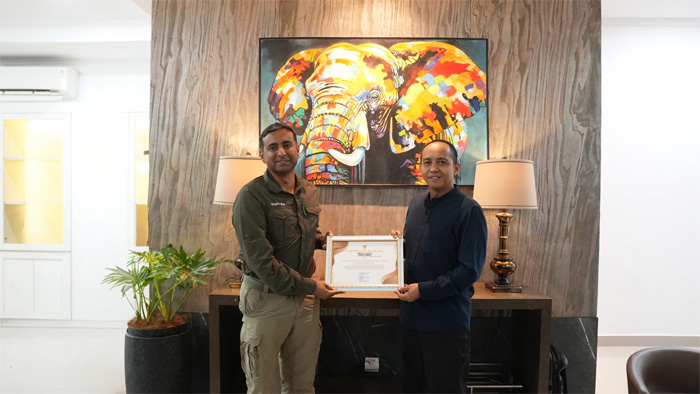
- Indonesia unveils major conservation partnership with Vantara, putting veterinary expertise and field-based care at the heart of wildlife protection
- 10 Hospitals on Wheels to bring medical care directly to wild animals across Indonesia
- Way Kambas Elephant Hospital to become advanced Elephant Treatment and Care Centre for Sumatran elephants
- Training programmes to strengthen the skills of elephant caregivers, veterinarians and wildlife officials across the country
NE WILDLIFE CONSERVATION BUREAU
JAKARTA, AUG 24
Wildlife conservation is entering a new phase in Indonesia — one where the hospital travels to the animal, expertise reaches the forest and conservation increasingly begins where wildlife actually lives. In a major expansion of its wildlife-health architecture, the Indonesian Government has joined hands with Vantara to strengthen veterinary care, field capabilities and in-situ conservation, beginning with specialist training, mobile wildlife hospitals and a major upgrade of the Way Kambas Elephant Hospital.
The initiative was announced by Raja Juli Antoni, Minister of Forestry of the Republic of Indonesia, at a press conference in Jakarta on Monday, with Vantara providing specialist veterinary expertise, technical support, infrastructure assistance and capacity-building support.
The partnership brings together the Government of Indonesia, Vantara and PT Fauna Land Group, with the programmes designed to strengthen conservation led by Indonesian authorities and address the health and welfare needs of wildlife in their natural habitats.
When the hospital goes to the wildlife
At the heart of the initiative is a fundamental shift towards in-situ wildlife healthcare — taking medical expertise and facilities closer to animals rather than relying solely on conventional fixed-location hospitals.
The programme will include 10 Hospitals on Wheels, designed to provide veterinary services to wild animals across Indonesia in their natural environments.
It will also introduce capacity-building programmes for elephant caregivers, veterinarians and other officials involved in wildlife management, strengthening local expertise in animal health and field care.
Antoni said the partnership was ultimately about building Indonesia’s own long-term conservation capacity.
“Wildlife conservation is ultimately our responsibility, and we must ensure that Indonesia has the facilities, expertise and resources to care for our wildlife wherever they need us,” he said.
“Through this partnership, we are strengthening our own wildlife health and conservation infrastructure, with Vantara supporting us with its experience, expertise and resources.”
Importantly, he stressed that the facilities and programmes created through the cooperation would remain under Indonesian ownership and management.
“All the facilities and programmes under this cooperation will be owned, operated and managed by the Government of Indonesia and our relevant authorities, ensuring that they serve Indonesia’s conservation priorities and our wildlife for generations to come,” Antoni said.
Way Kambas gets a new lease of life for elephants
A major component of the initiative is the transformation of the Way Kambas Elephant Hospital into an advanced Elephant Treatment and Care Centre, equipped with modern tools, technologies and medical infrastructure.
The upgraded centre is expected to support 62 Sumatran elephants under human care as well as nearly 100 wild Sumatran elephants in the surrounding landscape.
The project is significant for one of Indonesia’s most iconic and threatened species, while also strengthening the country’s ability to respond to wildlife-health challenges at the landscape level.
The broader programme will combine veterinary medicine with animal welfare, rehabilitation, conservation breeding and rewilding, creating a more connected approach to protecting threatened species.
Vantara takes Jamnagar expertise to the forests
For Vantara, the collaboration represents a significant expansion of its international conservation engagement, taking expertise developed through its animal-care operations at Jamnagar, Gujarat, into Indonesia’s natural landscapes.
Vivaan Karani, CEO, Vantara, said the organisation viewed the partnership as an opportunity both to contribute expertise and learn from Indonesia’s long conservation experience.
“Indonesia is home to some of the world’s most extraordinary biodiversity, and it is a privilege for Vantara to support the country in protecting this natural heritage for future generations,” he said.
Karani said Vantara would bring its experience in wildlife health, veterinary care, animal husbandry and conservation, while working closely with Indonesian institutions.
“Most importantly, we want this partnership to deliver something practical and lasting for wildlife,” he added.
Danny Gunalen, CEO, Fauna Land, said the collaboration could help build local capacity and strengthen infrastructure available to wildlife.
“Indonesia is blessed with extraordinary wildlife and biodiversity, and protecting this natural heritage is a responsibility we all share,” he said.
“We hope this partnership will build local capacity, strengthen the infrastructure available to wildlife, and, most importantly, make a real and lasting difference to the animals and the people dedicated to protecting them.”
Beyond elephants: A broader conservation blueprint
The initiatives announced in Jakarta form part of a wider cooperation framework under an existing Memorandum of Understanding (MoU) between the Government of Indonesia and Vantara.
The broader areas of cooperation encompass wildlife health and veterinary care, in-situ and ex-situ conservation, animal welfare, conservation breeding, rehabilitation, rewilding and capacity building.
Vantara will work with the Indonesian Government, relevant national institutions and Fauna Land in areas aligned with Indonesia’s national conservation priorities and applicable laws and policies.
The collaboration also follows Vantara’s Five-Year Plan and its recent voluntary commitments to the CITES management authority of India to further strengthen support for conservation in the natural range of wildlife.
Its international engagement thus seeks to extend the organisation’s experience in rescue, rehabilitation, veterinary treatment, specialised animal care, conservation breeding and rewilding into partnerships focused increasingly on animals in their natural habitats.
The larger message from Jakarta is unmistakable: modern wildlife conservation cannot end at the gates of a rescue centre. Its ultimate test is whether animals can remain healthy, protected and viable in the landscapes where they belong.
And with mobile hospitals entering the field, local caregivers receiving specialist training and Way Kambas receiving a new-generation elephant-care facility, Indonesia is seeking to put that principle into practice.