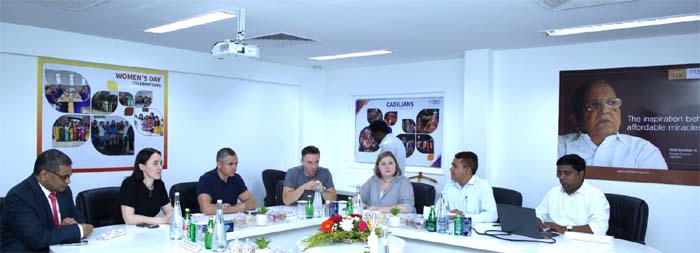
- Cadila Pharmaceuticals hosts Krasnodar Deputy Governor Alexander Ruppel at Bhat-Dholka facility to deepen bilateral healthcare cooperation
- Talks focus on technical exchange, export expansion, market access and resilient pharmaceutical supply chains
- Russia sees scope for localised production and joint ventures in biosimilars, vaccines and APIs
- Cadila looks to widen its international footprint through strategic alignment with Russia’s evolving healthcare market
NE BUSINESS BUREAU
AHMEDABAD, SEPT 8
Could the next big chapter in India-Russia healthcare cooperation be written through medicines, manufacturing and market partnerships? A high-level Russian delegation led by Alexander Ruppel, Deputy Governor of Krasnodar Region, explored precisely that possibility during a visit to Cadila Pharmaceuticals’ corporate facility at Bhat-Dholka on Tuesday, opening discussions on deeper pharma collaboration, export opportunities and joint healthcare solutions.
The delegation held detailed discussions with senior executives of Cadila Pharmaceuticals, with the engagement focusing on technical cooperation, export expansion, strategic market access and dependable pharmaceutical supply chains. The interaction underlined the growing scope for India and Russia to leverage their respective capabilities to strengthen access to essential medicines and build more resilient healthcare ecosystems.
Dr. Sunil Kumar Singh, Assistant Vice President (Head of Representation – Russia), Cadila Pharmaceuticals, said the visit could create new avenues for long-term cooperation.
“We are honored to host the Russian delegation and explore deeper strategic alignment between India and Russia. This visit opens vital pathways to broaden international export footprint and address evolving global healthcare demands for both countries. We look forward to driving long-term value for patients worldwide with affordable healthcare solutions.”
From market access to manufacturing
The discussions went beyond conventional trade and explored opportunities for technical exchange, international market access and export-led growth. Both sides stressed the importance of reliable healthcare supply chains capable of ensuring uninterrupted availability of essential medicines across international markets.
The engagement also brought a strategic dimension to the India-Russia pharmaceutical relationship, with opportunities for deeper manufacturing partnerships and knowledge sharing emerging as key areas of potential collaboration.
Russia eyes joint ventures in high-value pharma
Highlighting the broader economic and diplomatic significance of the engagement, Alexander Ruppel said India’s pharmaceutical capabilities offer substantial scope for mutually beneficial partnerships.
“This visit marks a key milestone in reinforcing the bilateral relationship between Russia and India. India’s pharmaceutical expertise is globally recognized, and we see strong potential to explore each other’s markets.”
Ruppel further identified localised production and joint ventures in biosimilars, vaccines and active pharmaceutical ingredients (APIs) as areas where both countries could create significant value.
“By focusing on localized production and exploring joint ventures in biosimilars, vaccines, and active pharmaceutical ingredients (APIs), both nations can unlock immense market potential and foster sustainable healthcare innovation.”
Cadila positions pharma as a bridge
The visit concluded with both sides expressing commitment to translating the dialogue into actionable collaboration, backed by mutual investment, technical expertise and stronger commercial linkages.
The engagement comes at a time when pharmaceutical security, diversified supply chains and affordable access to healthcare are becoming increasingly important across global markets. For India and Russia, deeper cooperation in pharmaceuticals could therefore serve not merely as a trade opportunity but as a strategic bridge linking manufacturing, innovation, healthcare access and economic partnership.
For Cadila Pharmaceuticals, the interaction with the Krasnodar delegation could potentially open another avenue to strengthen its international presence while contributing to a broader India-Russia healthcare partnership built around affordable medicines, localised manufacturing and shared expertise.