- 2040 roadmap targets a spectacular jump from $28 billion exports in 2025-26 to $100 billion, with value addition, innovation and branding at its core
- Commerce Secretary Rajesh Agrawal calls for a decisive shift from low-margin OEM manufacturing to globally recognised Indian designs, brands and intellectual property
- Five priority missions focus on global market access, MSME scale-up, faster trade processes, ‘Crafted by India’ branding and next-generation talent
- Sector eyes ₹15 lakh crore manufacturing output, nearly ₹60 lakh crore economic value and 1 crore jobs as a key pillar of Viksit Bharat 2047
NE BUSINESS BUREAU
MUMBAI, AUG 21
India’s gems and jewellery industry is preparing to polish a new identity for itself on the global stage — not merely as the world’s skilled manufacturing workshop, but as a powerhouse of design, innovation, intellectual property and home-grown brands.
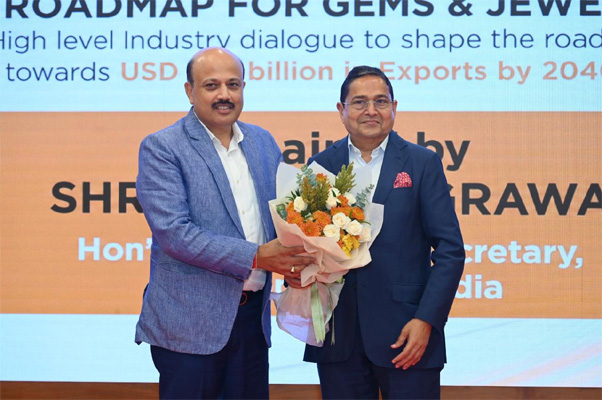
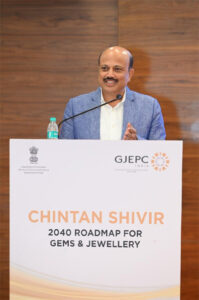
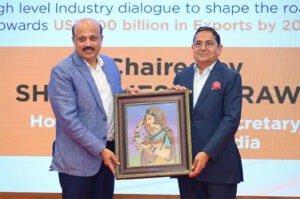
At the ‘Chintan Shivir – 2040 Roadmap for Gems & Jewellery’ convened by the Department of Commerce in association with the Gem & Jewellery Export Promotion Council (GJEPC) in Mumbai on Thursday, the Government and industry set their sights on an ambitious USD 100-billion export target by 2040, seeking to transform the sector from an OEM-led manufacturing base into a global ODM and branding powerhouse.
The roadmap envisages exports rising from USD 28 billion in 2025-26 to USD 100 billion by 2040, with the sector targeting a 1.2 per cent contribution to India’s GDP and 14 per cent of total merchandise exports.
From craftsmanship to global brand power
Commerce Secretary, Government of India, Rajesh Agrawal, said the real catalyst for taking the sector from around USD 29 billion to USD 100 billion would be a comprehensive ecosystem built around innovation, global design leadership and trust.
India’s greatest strength, he noted, was not its access to gold, silver or rough diamonds, but its vast reservoir of skilled craftspeople. The next phase of wealth creation, therefore, must come from design, innovation and global branding, rather than basic manufacturing.
Agrawal called for a clear departure from low-margin OEM work and urged stronger collaboration between educational institutions, academic incubators and industry to tackle real-world challenges confronting the sector.
He also underlined the need to make craftsmanship an aspirational career, upgrade human capital and harness technologies such as Artificial Intelligence and 3D printing to create differentiated products.
India’s history, culture and stories, he said, should increasingly find expression in jewellery designs, enabling the industry to turn its cultural heritage into a powerful instrument of soft power.
The Commerce Secretary also stressed the importance of transparent, technology-enabled trust networks across domestic and export markets, particularly as younger consumers increasingly demand authenticity, traceability and differentiated experiences.
Five missions to reshape the jewellery map
Held under the guidance of Commerce and Industry Minister Piyush Goyal, the Chintan Shivir placed value addition at the heart of the 2040 strategy, with a strong push towards finished, design-led and branded jewellery under the emerging ‘Crafted in India’ proposition.
Director General, DGFT, Lav Agarwal, said India had already established a formidable position in the global gems and jewellery trade, but must now move decisively up the value chain.
The next challenge, he said, was to establish India as a global brand and a destination for design and value-added jewellery, with Government and industry working in mission mode to create the right ecosystem, support new exporters and enhance the global value of Indian jewellery.
The deliberations were organised around five priority missions:
Mission 1 — Global Market Access:
Focused on leveraging India’s expanding network of Free Trade Agreements and increasing the country’s share in global jewellery consumption. The mission was chaired by DGFT Director General Lav Agarwal.
Mission 2 — MSME Scale-Up:
Focused on enabling the MSME backbone of the industry to expand through better access to finance, technology and markets. The mission was chaired by Additional Development Commissioner, Ministry of MSME, R.K. Rai, with ECGC CMD Sristiraj Ambastha as Co-Chair.
Mission 3 — Export-Import Fast Track:
Focused on making cross-border trade processes simpler, faster and more predictable. The mission was chaired by DGEP Director General Shiv Kumar Sharma.
Mission 4 — Crafted by India:
Focused on creating global recognition and greater value for Indian jewellery through design, intellectual property and branding.
Mission 5 — Next-Generation Talent & Design:
Focused on building the skills, design capabilities and talent pipeline needed to power a USD 100-billion industry.
GJEPC: Policy foundation now needs value-add acceleration
GJEPC Chairman Kirit Bhansali described the industry as standing at a critical inflexion point, with new FTAs, the 15-year tax exemption on rough diamond sales through Special Notified Zones and stronger policy support for MSMEs creating a strong foundation for the next growth phase.
The bigger opportunity now, he said, lies in accelerating value addition, expanding finished jewellery exports and leveraging India’s world-class craftsmanship and manufacturing capabilities.
Bhansali stressed that achieving the USD 100-billion export ambition would require sustained Government-industry collaboration to unlock new markets, scale MSMEs and create a distinctive identity for Indian products.
The discussions also identified an addressable market of approximately USD 128 billion across the midstream and downstream segments, pointing to substantial opportunities for India in high-value categories.
Emerging opportunities in the LGD+ ecosystem, gold mining and refining also featured in the deliberations, alongside the need to consolidate India’s traditional strengths in natural diamonds.
₹15 lakh crore manufacturing target, 1 crore jobs
The roadmap seeks to double manufacturing output to approximately ₹15 lakh crore and expand the sector’s overall economic value to nearly ₹60 lakh crore.
Employment, too, is central to the vision, with the industry looking to double employment to around 1 crore, while simultaneously building a new generation of designers, technologists, artisans and entrepreneurs.
The Chintan Shivir concluded with a commitment to retain India’s leadership in traditional segments such as natural diamonds while aggressively pursuing emerging value pools.
The underlying message was unmistakable: India cannot achieve the next leap merely by making more jewellery; it must create jewellery that the world recognises as Indian.
From craftsmanship to creativity, from manufacturing to intellectual property, and from OEM production to globally celebrated brands, the 2040 roadmap seeks to place ‘Crafted in India’ at the heart of India’s next jewellery revolution.