
R ARIVANANTHAM
CHENNAI, OCT 17
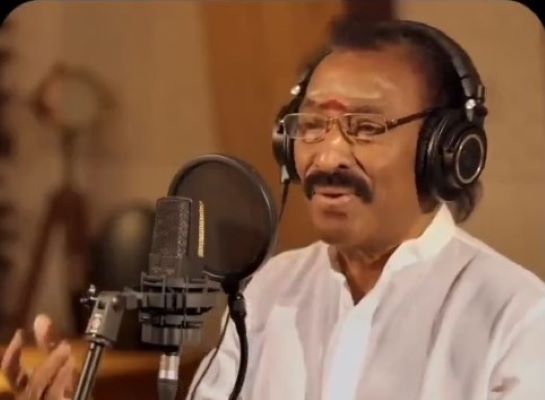
Tamil cinema has lost a composer who could make a theatre erupt with a few stirring notes, turn the streets of Chennai into a musical celebration and give romance a melody that lingered long after the screen went dark. Veteran music director and singer Devanesan Chokkalingam, popularly known as Deva and affectionately hailed as Thenisai Thendral—the breeze of sweet music—died in Chennai on Saturday, October 17, at the age of 75. His passing closes a remarkable chapter in South Indian film music, but the songs that made him a household name will continue to soundtrack the lives of millions.
Deva’s achievement lay not merely in the number of films he scored or the hits he delivered. He understood the pulse of popular culture: the rhythms that animated working-class neighbourhoods, the exuberance of festival streets, the swagger of a larger-than-life hero and the tenderness of an ordinary love story. He translated these sensibilities into a musical language that was unmistakably his own. He made popular music sound proudly rooted in the streets, yet perfectly at home on cinema’s grandest stage.
- Veteran composer Deva, 75, leaves behind a musical legacy spanning more than 400 films across four languages
- His gaana-inspired sound brought Chennai’s street rhythms into mainstream Tamil cinema
- Iconic collaborations with Rajinikanth in Annamalai, Baashha and Arunachalam helped define an era
- From infectious mass numbers to enduring romantic melodies, his repertoire crossed generations
- Tamil Nadu Chief Minister C. Joseph Vijay leads tributes to the composer celebrated for winning the hearts of ordinary people
- Vairamuthu, Khushbu Sundar, Vijay Sethupathi, Chinmayi Sripaada and other film personalities mourn the loss
From Chennai’s streets to the mainstream
Deva emerged as a distinctive voice in Tamil cinema at a time when the industry was navigating the formidable musical presence of Ilaiyaraaja and the arrival of A. R. Rahman. Rather than imitate either, he carved out a space through accessible melodies, lively orchestration, rhythmic invention and an instinctive understanding of what audiences wanted to hear.
His work helped bring gaana, the earthy, energetic folk-music tradition associated particularly with North Chennai, into mainstream Tamil film soundtracks. What might once have been heard primarily in neighbourhood celebrations and local performances found a wider audience through cinema. Deva did not simply borrow a sound; he helped make it part of Tamil popular culture.
His prolific output reflected both his versatility and the extraordinary demand for his music. Across nearly four decades, he composed for more than 400 films in Tamil, Telugu, Kannada and Malayalam. In 1996 alone, he reportedly scored 36 films—a measure of the pace at which he worked during his peak years.
The sound that announced Rajinikanth
For generations of moviegoers, Deva’s name will remain inseparable from Superstar Rajinikanth. Their association produced a musical identity that became part of the actor’s cinematic mythology.
In Annamalai, Baashha and Arunachalam, Deva supplied more than songs and background scores. His music amplified the hero’s entrance, sharpened the dramatic tension and gave Rajinikanth’s screen persona an unmistakable sonic signature. The stirring title music associated with the Superstar became a cultural cue in its own right: a few notes were enough to generate anticipation before the action even began.
The partnership worked because Deva understood the precise balance between power and popular appeal. His compositions carried swagger without losing their accessibility, combining energetic rhythms and folk-inflected flourishes with the theatrical scale demanded by a major star vehicle.
Yet the Rajinikanth association, defining though it was, represents only one part of Deva’s contribution. His musical catalogue reached across genres, moods and generations, ensuring that he would be remembered as more than the composer behind a superstar’s signature sound.
The many moods of a musical journey
Deva’s filmography included memorable soundtracks for Aasai, Kadhal Kottai, Nerrukku Ner, Vaali, Kushi, Ninaithen Vandhai, Priyamudan and Panchathanthiram, among numerous others. These works demonstrated his ability to move between high-energy popular numbers, romantic melodies, comedy-driven songs and music shaped by the emotional demands of a story.
His association with Kamal Haasan’s films revealed a different dimension of his craft, while his collaborations with Vijayakanth became part of the popular musical memory of another generation of Tamil filmgoers. His songs could energise a mass entertainer, underscore a romantic moment or become inseparable from a film’s comic and dramatic rhythms.
Deva also composed devotional music and wrote and sang gaana numbers himself. His appeal rested partly on this closeness to the audience: the music was immediate, memorable and often made for singing along. His songs did not always ask listeners to admire musical complexity from a distance; they invited them to participate.
The title Thenisai Thendral captured this duality. His music could arrive with the force of a crowd-rousing anthem, yet linger with the gentleness of a familiar tune.
A legacy that extended beyond the hit parade
Deva’s journey was shaped by learning, persistence and the support of fellow musicians. He trained in piano under Dhanraj Master and studied Indian classical music on the harmonium under J. B. Krishna. His brothers, Sabesh and Murali, who worked as instrumentalists, also played an important role in his early musical journey.
A significant early encouragement came from legendary composer M. S. Viswanathan, who reportedly conferred on him the title Thenisai Thendral at a felicitation in 1985 and urged the film industry to recognise his potential. Deva subsequently established himself through film assignments and steadily built a career that would make him one of Tamil cinema’s most prolific composers.
His legacy is also a reminder that film music is not created in isolation from society. Deva’s strongest work drew energy from everyday life—from popular speech and street culture to the collective excitement of a cinema audience. In carrying these influences into commercial soundtracks, he widened the vocabulary of mainstream Tamil film music.
His recognition included the Kalaimamani award, while the enduring popularity of his songs became an achievement beyond any single honour. The music continued to circulate through theatres, celebrations, radio, television and digital playlists, reaching listeners who encountered the songs long after their original releases.
Chief Minister Vijay, film fraternity mourn the loss
Tamil Nadu Chief Minister C. Joseph Vijay expressed shock and deep sadness at Deva’s death, recalling how the composer won the hearts of ordinary people through gaana songs. He noted Deva’s work across more than 400 films in Tamil, Telugu, Malayalam and Kannada, and said his music and songs would remain an enduring part of Indian film-music history. Vijay described the death as a tremendous loss to Tamil cinema and conveyed condolences to the bereaved family, colleagues and music lovers.
Lyricist Vairamuthu, who worked with Deva on several celebrated films, shared an emotional tribute, reflecting on the composer’s musical instinct and the strength of their collaborations. Recalling soundtracks including Annamalai, Baashha, Arunachalam, Vaali, Kushi, Nerrukku Ner, Aasai and Panchathanthiram, he underlined Deva’s role in the success of their songs and the special affinity audiences felt between Deva’s music and Rajinikanth’s screen presence.
Actor Khushbu Sundar described herself as devastated, recalling that Deva had been among friends only days earlier. She remembered him as sweet-natured and light-hearted, and said his contribution to music and cinema was immeasurable.
Actor Vijay Sethupathi paid tribute to the composer’s indelible mark on Tamil film music, saying his songs would live on in people’s memories. Singer Chinmayi Sripaada also expressed shock at his passing, while composer and actor G. V. Prakash Kumar remembered him as a legend.
Premallatha Vijayakanth recalled Deva’s close association with her late husband, actor Vijayakanth, and the enduring popularity of songs such as Vaararu Vaararu Azhagar Vaararu. The tributes reflected the breadth of Deva’s connections across the film industry—not only as a composer of celebrated hits, but as a colleague and friend whose work accompanied several generations of artists.
When the breeze becomes immortal
A composer’s life is often measured through films, awards and chart-toppers. Deva’s more lasting measure may be found in the way his music continues to summon collective memories: a Superstar’s entrance, a romantic refrain, a gaana beat that draws people to their feet or a familiar song that instantly transports listeners to another time.
His passing has silenced the man behind those melodies, but not the music itself. The rhythms he brought from the streets into cinema, the songs that travelled beyond language and the signature sound he helped create for one of Indian cinema’s biggest stars will remain part of Tamil popular culture.
The Thenisai Thendral may have stilled, but the breeze he set in motion will continue to blow wherever his songs are heard.