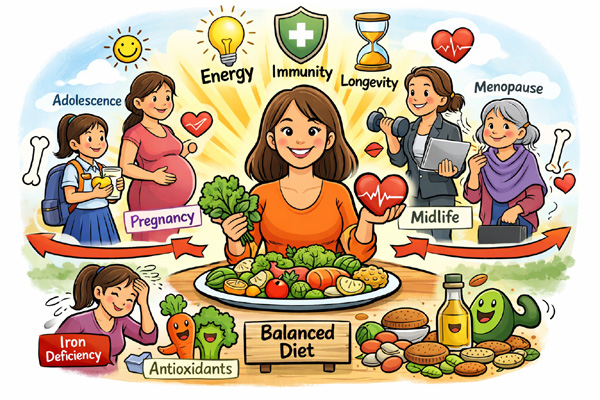
- From puberty to menopause, nutrition silently recalibrates a woman’s biology
- Beyond calories, nutrient density drives energy, hormonal balance and resilience
- Hidden deficiencies—especially iron—continue to sap vitality among Indian women
- Antioxidants and healthy fats emerge as long-term shields against chronic disease
- Daily diet diversity—not diet fads—holds the key to sustained wellness
NEELANJANA SINGH
A woman’s body is in a constant state of motion—growing, adapting and renewing itself across life stages. From the first hormonal shifts of adolescence to pregnancy, midlife transitions and menopause, each phase places distinct physiological demands on the body.
These transitions influence metabolism, bone strength, heart health, fertility and body composition. Increasingly, research reinforces a crucial insight: everyday diet choices play a decisive role in how well women navigate these changes.
“The foods women consume daily shape hormonal balance, inflammation, oxidative stress and even cellular ageing—ultimately determining their energy levels, immune resilience and long-term wellness.”
Life Stages, Changing Needs: Nutrition as a Lifelong Anchor
Hormonal shifts across a woman’s life demand evolving nutritional strategies.
- Adolescence is a critical window to build bone mass and metabolic reserves, laying the foundation for reduced cardiometabolic risk later
- Reproductive years require adequate protein, fibre, healthy fats and micronutrients to support fertility and endocrine stability
- Pregnancy significantly raises needs for protein, iron, folate, B vitamins, calcium and zinc for maternal health and foetal development
- Menopause brings declining oestrogen levels, increasing vulnerability to cardiovascular disease, type 2 diabetes and osteoporosis
“Nutritional adequacy is not static—it must evolve with each life stage to meet the body’s changing physiological demands.”
Energy Is Not Just Calories: The Nutrient Quality Equation
Energy is often mistaken as a simple function of calorie intake. In reality, efficient energy production depends on nutrient quality, not just quantity.
- Protein preserves lean muscle mass, stabilises blood glucose and supports immune defence
- Iron enables oxygen transport and cellular respiration
- Micronutrients act as catalysts for metabolic processes
“Adequate protein and bioavailable iron are fundamental to sustaining energy, stamina and immune competence.”
Iron deficiency remains a major concern.
As per NFHS-5, anaemia continues to affect a large proportion of women of reproductive age in India.
Cultural patterns—where women often consume smaller portions of protein-rich foods—can compound deficiencies.
“The result is cumulative fatigue, slower recovery from illness and reduced metabolic resilience over time.”
Diet Diversity: The Foundation of Immunity
Beyond macronutrients, diversity in diet—especially from plant sources—plays a central role in immune strength.
Fruits, vegetables, legumes, nuts and seeds provide:
- Polyphenols
- Carotenoids
- Bioactive compounds
These nutrients:
- Combat oxidative stress
- Reduce chronic inflammation
- Regulate immune responses
- Protect against cellular degeneration
“Diet diversity is one of the most effective, yet often overlooked, strategies for preventing lifestyle diseases and supporting healthy ageing.”
Antioxidant-rich diets are linked to:
- Improved metabolic markers
- Lower visceral fat accumulation
- Better long-term health outcomes
Fats That Protect: Rethinking Everyday Oils
As oestrogen declines, lipid profiles often worsen and inflammation increases, raising cardiovascular risks.
A 2021 analysis in The Lancet identifies cardiovascular disease as a leading cause of death among women globally, particularly after midlife.
This underscores the importance of fat quality.
- Unsaturated fats support heart health
- Antioxidant-rich oils improve endothelial function
- Bioactive compounds reduce inflammation
Common edible oils—such as olive, rice bran, sesame and palm—contain natural antioxidants like tocotrienols and carotenoids, which:
- Help maintain healthier lipid levels
- Protect against oxidative damage
- Support overall cardiovascular health
“When consumed in balance, the right dietary fats contribute not just energy, but essential protective functions.”
Antioxidants, Pregnancy & Cellular Protection
Pregnancy increases oxidative stress, which can impact both maternal and foetal health.
Excess free radicals may:
- Impair placental function
- Contribute to gestational diabetes
- Lead to intrauterine growth restriction
The World Health Organization highlights vitamin A deficiency as a concern in pregnant women, linking it to infection risk and adverse outcomes.
Including carotenoid-rich foods and antioxidant nutrients in daily diets helps:
- Strengthen immune function
- Support reproductive health
- Preserve cellular integrity
- Maintain hormonal balance
“Antioxidants act as a critical defence system, especially during high-demand phases such as pregnancy.”
Bone Health: Building Early, Preserving Always
With advancing age and declining oestrogen, bone turnover accelerates.
Key nutrients include:
- Calcium and protein to maintain bone density
- Vitamin K to support bone metabolism
- Antioxidants to reduce inflammation-driven bone loss
“Bone health is cumulative—what is built early must be protected through consistent nutrition later in life.”
The Long View: Consistency Over Fads
Long-term wellness is not shaped by short-lived diet trends but by consistent, balanced eating habits sustained over years.
A wholesome diet should include:
- Adequate protein
- Sufficient fibre
- Healthy fats
- Essential micronutrients
“Choosing balance and diversity at every meal is a simple yet powerful step towards sustained vitality and disease-free living.”
Equally vital is regular physical activity, which complements nutrition in maintaining metabolic stability and overall well-being.