NE HEALTH BUREAU
BHAVNAGAR, AUG 30
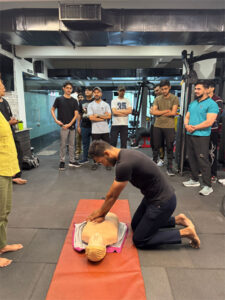
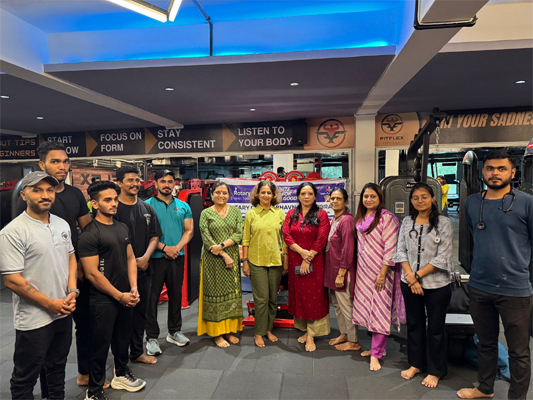
With an aim to save the life during the golden hour, The Rotary Club of Bhavnagar Vibrant organized a Cardiopulmonary resuscitation (CPR) training session at FitFlex Gym here on Friday. The session was conducted by Dr. Shilpa Doshi and Dr. Komal Shah, along with their interns Meera and Swaraj.
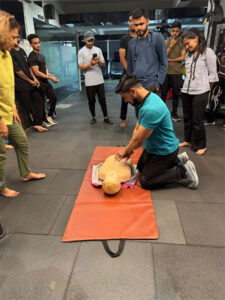
Gym trainers and members actively participated and learnt the correct techniques of performing the CPR, an essential life-saving skill that can make a difference in emergencies. The training highlighted the importance of being prepared to respond quickly and effectively in critical situations.
President Namrita Chadha thanked Dr. Shilpa Doshi and Dr. Komal Shah and her team for sharing their expertise and emphasized Rotary’s commitment to spreading life-saving knowledge within the community.
Club President Rtn. Namrita Chadha, Secretary Rtn. Sunita Shah, and member Rtn. Krishna Shah were also present to encourage and support the initiative.
This project reflects Rotary’s commitment to community welfare and spreading awareness about health and safety.
Know Cardiopulmonary resuscitation (CPR)
Cardiopulmonary resuscitation (CPR) is an emergency procedure used during cardiac or respiratory arrest that involves chest compressions, often combined with artificial ventilation, to preserve brain function and maintain circulation until spontaneous breathing and heartbeat can be restored.
How to perform CPR?
Check the scene for safety, form an initial impression and use personal protective equipment (PPE)
If the person appears unresponsive, Check for responsiveness, breathing, life-threatening bleeding or other life-threatening conditions using shout-tap-shout
If the person does not respond and is not breathing or only gasping, CALL 9-1-1 and get equipment, or tell someone to do so
Kneel beside the person. Place the person on their back on a firm, flat surface
The American Red Cross CPR guidelines recommend 100 to 120 chest compressions per minute, 30 at a time.
Remember these five points:
- Hand position: Two hands centered on the chest
- Body position: Shoulders directly over hands; elbows locked
- Compression depth: At least 2 inches
- Rate of compressions: 100 to 120 per minute
- Allow chest to return to normal position after each compression
Give 2 breaths
- Open the airway to a past-neutral position using the head-tilt/chin-lift technique
- Pinch the nose shut, take a normal breath, and make complete seal over the person’s mouth with your mouth.
- Ensure each breath lasts about 1 second and makes the chest rise; allow air to exit before giving the next breath
Note: If the 1st breath does not cause the chest to rise, retilt the head and ensure a proper seal before giving the 2nd breath If the 2nd breath does not make the chest rise, an object may be blocking the airway
Continue giving sets of 30 chest compressions and 2 breaths. Use an AED as soon as one is available! Minimize interruptions to chest compressions to less than 10 seconds.