NE NEWS SERVICE
COIMBATORE, AUG 31
When disaster leaves families searching for loved ones and an entire nation struggling to comprehend the scale of devastation, a helping hand matters—but so does a larger vision for preventing the next catastrophe.
Join Sadhguru "In Solidarity with Nepal" | 30 August | Live at 4:45 PM IST #NepalFloodshttps://t.co/o8zWT4ZMwD
— Sadhguru (@SadhguruJV) August 30, 2026
Against the backdrop of Nepal’s devastating floods, Sadhguru has combined immediate humanitarian assistance with a call for long-term regional cooperation, urging the creation of a five-nation Himalayan Board to coordinate disaster preparedness and safeguard the fragile mountain ecosystem.
- Sadhguru calls for a five-nation Himalayan Board as Nepal battles one of its worst recent flood disasters
- Pledges ₹1 crore from Isha Nepal to the Nepal Prime Minister’s Disaster Relief Fund for rescue and relief operations
- Urges Nepal, India, China, Pakistan and Bhutan to coordinate disaster preparedness and protect the Himalayan ecosystem
- “The mountains do not know your political affiliations” — Sadhguru seeks coordinated action beyond national boundaries
- Appeals against attributing natural disasters to “God’s will” or supernatural forces, stressing the need to understand physical causes
- Leads a solemn prayer gathering in Kathmandu and consoles families of victims and those still missing in the catastrophe
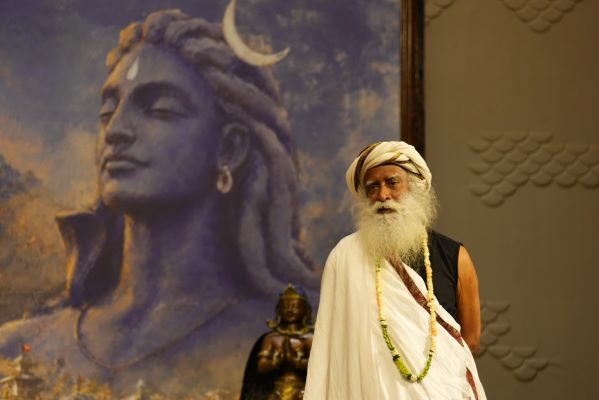
Addressing the “In Solidarity with Nepal” gathering in Kathmandu on Sunday, Sadhguru announced that Isha Nepal would contribute ₹1 crore to the Nepal Prime Minister’s Disaster Relief Fund, while calling for Nepal, India, China, Pakistan and Bhutan to work together to protect the Himalayas and respond collectively to disasters.
The gathering was organised in place of Isha Foundation’s scheduled programme, which was cancelled following the devastating flash floods along the Nepal-Tibet border. The 90-minute event brought together people mourning the dead, families awaiting news of missing relatives and others seeking solace amid the continuing crisis.
Beyond borders, a common Himalayan responsibility
Sadhguru called for an institutional mechanism bringing together the five countries through which the Himalayan ranges extend.
“An organisation that includes all the countries through which the Himalayan ranges run must be created immediately.”
He stressed that although political administrations may remain separate, the Himalayas must be viewed as one ecological and geographical system that needs to be protected for future generations.
“This is not about nationalities and political affiliations. It is about humanity.”
He argued that even if the countries cannot manage the mountain region through a single institution, they should at least establish a common mechanism for consultation and coordination.
“Even if you cannot manage it as one organisation, at least the consultation should happen as one organisation. There has to be a certain coordination in what we do.”
His appeal assumes added urgency as the Himalayan region faces growing risks from glacier instability, landslides, flash floods and other hazards. The latest disaster has once again exposed the vulnerability of communities and infrastructure in the high mountains
“The mountains do not know your politics”
Making the case for cooperation beyond national boundaries, Sadhguru said nature does not recognise the political divisions created by human beings.
“The mountains do not know your political affiliations. They do not know what language you speak or what absurd things you do.”
He described the Himalayas as simultaneously one of Earth’s most magnificent and most fragile systems.
The recent catastrophe, he said, demonstrated how little human beings can predict when massive natural forces are suddenly unleashed.
His argument was particularly pointed in the context of Nepal, a relatively small country now confronting an enormous humanitarian and logistical challenge.
The disaster, triggered by a glacial collapse and associated flash flooding in the Himalayan region, has devastated communities, destroyed infrastructure and left thousands dead or missing. Rescue operations have involved Nepali, Indian and Chinese personnel, with difficult terrain and continuing flood risks complicating the search.
₹1 crore for Nepal’s relief effort

Moving from appeal to action, Sadhguru announced the ₹1-crore contribution by Isha Nepal to the Nepal Prime Minister’s Disaster Relief Fund.
“To help Nepal, which has gone through such a tremendous disaster, ₹1 crore will be given to the Nepal Prime Minister’s Disaster Relief Fund.”
He also announced that a Kaal Bhairava Karma would be conducted at the Isha Yoga Centre in Coimbatore for those who lost their lives in the devastating floods.
The financial contribution comes at a time when Nepal is mounting an enormous rescue and recovery operation amid extensive damage and continuing threats from flooding in affected areas.
“Do not reduce human suffering to philosophy”
Sadhguru also used the occasion to caution against interpreting disasters through supernatural explanations.
“Looking for reasons for such disasters, like saying this is God’s will, is pointless because it is merely a physical phenomenon.”
He emphasised the need to distinguish between spiritual dimensions of human life and the physical laws governing natural phenomena.
Philosophical or spiritual interpretations, he argued, should never be allowed to diminish the suffering of people confronting death, displacement and loss.
The message was especially significant at a gathering where families were grieving and many were still waiting for news about missing relatives.
A lesson before the next disaster
Actor Manisha Koirala, who attended the Kathmandu gathering, asked what lesson people should draw from such a catastrophe.
Sadhguru’s response shifted the discussion from disaster recovery to preparedness—and from fear to awareness.
“As a human being, we should not wait until disasters come.”
He said the first fundamental understanding required to live intelligently is an awareness of human impermanence.
“We are all impermanent, and we must know this every moment.”
If that awareness remains alive, he said, people would plan and live their lives in a far more intelligent manner.
The message transformed the gathering from merely a prayer meeting into a reflection on how humanity should respond to an increasingly uncertain natural environment.
From mourning to collective responsibility
The Kathmandu gathering carried an emotional dimension as people prayed for those who had died and those who remained missing. Sadhguru also met and consoled relatives of victims.
The event’s sombre mood reflected the scale of the unfolding tragedy. Nepal’s latest disaster has demonstrated how a single Himalayan event can rapidly become a cross-border humanitarian crisis, affecting local communities, pilgrims, workers and foreign nationals alike.
For Sadhguru, therefore, the answer cannot end with relief after disaster strikes.
It must begin with coordinated monitoring, preparedness, early warning, ecological protection and collective responsibility.
His proposed Himalayan Board may be only an idea at present, but the catastrophe has given the proposal a sharper context: the Himalayas may be divided by national borders, but the risks they generate do not stop at those borders.
And in the aftermath of Nepal’s tragedy, Sadhguru’s message is ultimately a simple one:
Help those in distress today—but build the cooperation that may save lives tomorrow.