- Operation Sindoor shows precision, speed, and synergy of modern warfare
- India’s defence transformation hinges on AI, robotics, quantum tech, and networked operations
- Technological superiority now the ultimate weapon in achieving battlefield dominance
- Delhi Defence Dialogue spotlights synergy of innovation, self-reliance, and national security
NE DEFENCE BUREAU
NEW DELHI, NOV 11
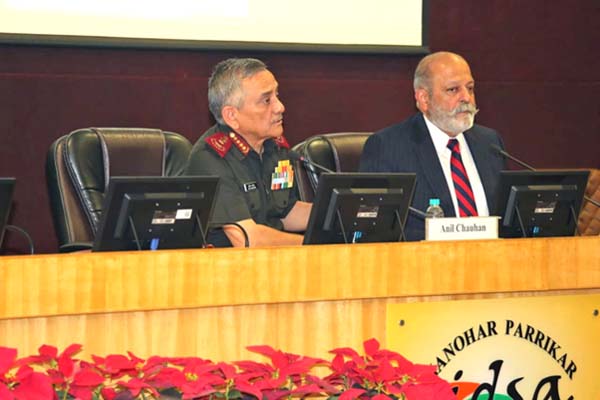
“Operation Sindoor is a compelling example of modern warfare, where precision strike capabilities, network-centric operations, digitised intelligence, and multi-domain tactics were effectively deployed within a compressed time-frame,” said Chief of Defence Staff (CDS) General Anil Chauhan, while addressing the Delhi Defence Dialogue 2025 on ‘Impact of Technology on Modern Warfare’ in New Delhi on Tuesday.
Underscoring the critical role of technology as the ultimate determinant of victory, the CDS observed, “Technological superiority has become a decisive factor in determining success on the battlefield.” He urged India’s defence leadership to rapidly adapt to evolving realities shaped by innovation, digitisation, and integrated command structures.
General Chauhan noted that warfare, though rooted in timeless principles of strategy and leadership, is now being redefined by disruptive technologies, real-time data analytics, and joint operations across land, sea, air, space, and cyber domains. “Those who innovate faster and integrate smarter will dominate tomorrow’s conflicts,” he remarked.
The two-day Delhi Defence Dialogue, organised by the Manohar Parrikar Institute for Defence Studies and Analyses (MP-IDSA), is themed ‘Harnessing New Age Technology for Defence Capability Development’ and coincides with MP-IDSA’s 60th Foundation Day. The event was inaugurated by Defence Minister Rajnath Singh and features senior policymakers, military strategists, researchers, and industry leaders.
In his welcome address, Ambassador Sujan Chinoy, Director General of MP-IDSA, underlined the growing convergence between defence, innovation, and national strategy. “Global militaries are transitioning from the industrial age to the information and cyber age,” he said, stressing that Artificial Intelligence, Robotics, and Quantum Computing are becoming critical tools in the arsenal of national power.
He also emphasised the need for a fine balance between foreign technology acquisition and domestic innovation, calling India’s Aatmanirbharta in Defence Manufacturing policy a cornerstone of sustainable military growth. “True strategic autonomy can only come from indigenous capability,” he said.
The Delhi Defence Dialogue aims to create a platform for collaboration between the government, armed forces, academia, and the private sector, focusing on emerging technologies, cybersecurity, advanced manufacturing, and data-driven decision-making.
Experts at the conference are expected to deliberate on how India can accelerate defence modernisation, build resilient supply chains, and strengthen its position as a technology-driven military power in the Indo-Pacific region and beyond.