
- From 200 lions in the 1980s to 891 today, Gir’s conservation saga inspires pride—and a renewed responsibility
- “Gir and its lions are woven into my entire consciousness; they flow through my veins and throb in my heart”
- Nathwani recalls four decades of conservation, from open-well protection to railway safeguards and disease response
- As lions expand across Greater Gir, protected corridors, natural prey and freedom from human disturbance become critical
- On World Lion Day, a passionate plea: Protect Gir, respect its lions and preserve their wild future
PARIMAL NATHWANI
For more than four decades, Gir has been more than a forest to me—it has been an emotion, a living ecosystem and an inseparable part of my consciousness. Its lions have shaped my memories, stirred my imagination and strengthened my resolve to see that this magnificent species survives and thrives in the wild for generations to come.
My connection with Gir and its lions goes back more than four decades. Gir and its lions are woven into my entire consciousness; they flow through my veins and throb in my heart. I have observed and experienced Gir and its majestic lions countless times. I have witnessed Gir’s splendour in every season – in the early morning, under the midday sun, and at twilight. It is as if I have become an integral part of the entire Gir ecosystem.
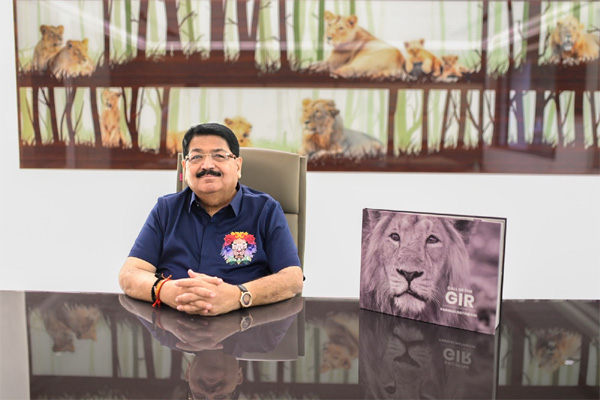
Every time I visit, I experience renewed vigour and vitality. The moment I return, a deep yearning to go back takes hold. It always feels as though Gir is waiting for me, calling out to me. That is why I named my coffee table book on Gir “Call of the Gir.” Words seem inadequate to express the emotions and realizations of my inner mind regarding Gir and its lions.
From 200 lions to a conservation triumph
When I first set foot in Sasan around 1987, the population of Asiatic lions was around 200. At that time, Sasan and other villages in Gir felt like seamless extensions of the forest itself—small, picturesque villages that offered a sense of profound peace. Sighting a lion was a delight, and every newborn cub brought new hope to Gir.
Today, as lions roam across the vast landscape of Greater Gir, I feel a sense of immense pride and satisfaction. A population of 891 is no small achievement. This stands as one of the most successful wildlife conservation sagas, not just in India, but globally.
It is no exaggeration to say that this is the result of the vision and continuous, proactive guidance of the Honourable Prime Minister, Shri Narendra Modi. Of course, equal credit goes to the tireless efforts of Forest Department officers, personnel, lion-loving experts, veterinarians, local villagers, and dedicated individuals from various sections of society.
A personal journey of protecting the king of Gir
For years, I have been a witness to the dedication of Gujarat Forest Department officials—ranging from top brass to the guards and trackers who act as frontline soldiers—alongside local residents and the wider community of Gir and lion enthusiasts committed to safeguarding their present and future.
To resolve the challenges faced by Gir and its lions, I have in my personal capacity as well as in my capacity as the corporate head at Reliance Industries taken various initiatives alongside these dedicated individuals.
I have made humble contributions towards taking comprehensive measures to ensure lions are not accidentally injured or killed in open wells and on railway tracks. We have constructed parapet walls around nearly 2,828 open wells.
To prevent lions from straying onto railway lines, I have actively and persistently pursued measures such as erecting mesh fencing along several of their movement corridors and enforcing train speed limits.
I am grateful for the opportunity to participate in such endeavours.
When disease and tragedy tested the conservation resolve
Time and again I have raised issues concerning Gir and its lions across various governmental and non-governmental forums, including Parliament.
To treat lions affected by Babesiosis or Canine Distemper Virus (CDV) and to prevent the spread of infection, we brought in experts from our Vantara team on an emergency basis.
Similarly, exhaustive efforts were made to save ‘Jay’ and ‘Veeru’, a pair of lions injured in a fatal territorial battle. However, the regret of being unable to save this legendary pair of lions will stay with me for the rest of my life.
Currently, numerous resorts and homestays have sprung up in lion-inhabited areas, resulting in significant noise and light pollution that harms lions and other wildlife. I have appealed to the Government to curb this, and I will continue to do so.
The lion’s world is changing faster than ever
Nevertheless, the Gir of today is vastly different from the Gir of four decades ago.
While lions have adapted to changing conditions, the environment surrounding them is evolving at an even faster pace.
Today, an increasing number of lions are moving outside the sanctuary in small, reserved forest patches, dense thickets of invasive Prosopis juliflora (ganda baval), vegetation along riverbeds and streams near human settlements, as well as agricultural and industrial zones.
This stands as a testament to their remarkable adaptability; recently, we observed that lions have independently chosen Barda as their second home.
But adaptability alone cannot secure the future of the Asiatic lion.
What lions require are protected wildlife corridors, adequate natural prey, a life free from human disturbance, and interconnected natural habitats that can sustain them over the long term.
That is the conservation challenge before us today.
Let the roar endure
Over these four decades, my emotional bond and attachment to Gir and its lions have only deepened. Gir and the lions are complementary to each other.
On the occasion of World Lion Day, we humans should take at least one pledge: to refrain from littering or polluting Gir, and to avoid harassing or interfering with its lions.
The lion has survived because generations of people cared enough to protect its habitat, respect its space and stand up for its future.
Today, as the roar of the Asiatic lion resonates across Greater Gir, our responsibility is greater than ever.
Let us ensure that the lion does not merely survive in our memories, photographs and stories. Let us preserve the wild, living Gir where the lion can continue to roam free.
Parimal Nathwani is a Rajya Sabha MP, an ardent lion lover, and Director of Corporate Affairs at Reliance Industries Limited.
Read also