
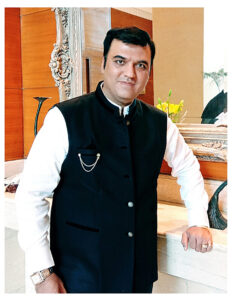
CELEBRITY MASTER CHEF DR KAVIRAJ KHIALANI
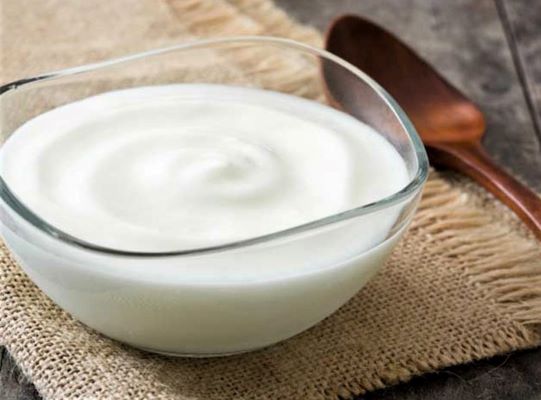
What if one of the simplest ingredients in your refrigerator could help you eat more thoughtfully without sacrificing a spoonful of pleasure? Cool, creamy and wonderfully versatile, curd—or dahi—has long been a star of Indian kitchens, finding its way into everything from refreshing chaas and cooling raitas to luxurious gravies, marinades and comforting curd rice. Beyond its familiar taste, curd can contribute valuable protein, calcium and beneficial live cultures to a balanced diet, making it an ingredient worth celebrating.
In this Sunday Special, Celebrity Master Chef Dr Kaviraj Khialani explores the culinary versatility of curd and presents six tempting recipes that bring together traditional wisdom, contemporary tastes and wholesome ingredients. The message for food lovers is simple: eating better need not mean eating bland.
- From gut-friendly probiotics to calcium and protein, discover why humble dahi deserves a daily place on your plate
- Celebrity Master Chef Dr Kaviraj Khialani serves up six delicious ways to turn curd into a wholesome culinary superstar
- Rainbow salad, chickpea-cucumber delight and nutrient-packed bowls bring colour, crunch and nourishment together
- From aromatic ginger-curd chicken to comforting kadhi and classic curd rice, tradition gets a nutritious makeover
- Smart ingredient swaps, fresh herbs, nuts and seeds add flavour and variety to everyday meals
From ancient tradition to modern tables
A popular legend traces the discovery of fermented milk to travellers crossing a desert, who carried milk in a goatskin bag slung across a camel. Warmth and naturally occurring microorganisms are said to have transformed the milk into a tangy, thickened preparation. Though the precise origins of fermented milk are difficult to establish, the story captures the ancient relationship between food preservation and culinary discovery.
Curd, commonly known as dahi in India, is generally produced by fermenting milk with lactic-acid bacteria. During fermentation, these microorganisms convert lactose, the natural sugar in milk, into lactic acid, giving curd its characteristic tang and texture. The exact cultures and fermentation process can vary.
Although the words curd and yoghurt are often used interchangeably in everyday conversation, they are not always identical: yoghurt is generally made using particular starter cultures, while traditional homemade dahi may contain different combinations of bacteria.
Why curd deserves a place on your plate
Curd offers several nutritional advantages when included as part of a balanced diet.
- Protein power: Helps support muscle maintenance and the body’s normal growth and repair processes.
- Calcium for bones: Contributes calcium, an essential mineral for maintaining healthy bones and teeth.
- Digestive support: Live cultures in curd may support gut health, although benefits vary by culture and individual.
- Everyday nourishment: Provides nutrients that can complement meals built around vegetables, pulses, whole grains and fruit.
- A versatile ingredient: Its creamy texture can help create satisfying dressings, dips and marinades without relying entirely on richer ingredients.
Curd is not a miracle food or a guaranteed route to longevity. Its benefits depend on the overall diet, portion sizes, individual tolerance and the type of curd consumed. Those who are lactose-intolerant may tolerate some fermented dairy products better than milk, but responses differ. People with milk allergy should avoid dairy unless advised otherwise by their healthcare professional.
Now, let the culinary adventure begin!
SIX CURD CREATIONS TO MAKE HEALTHY EATING DELICIOUS
RAINBOW SALAD WITH INDIANA DRESSING
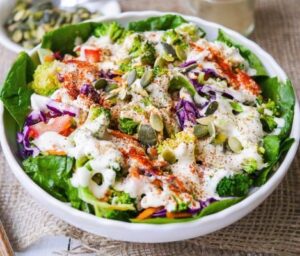
Colourful, crunchy and creamy—with vegetables, sprouts, nuts and a tangy curd dressing.
Ingredients
Salad base and vegetables
- Iceberg or assorted lettuce leaves — 1 cup
- White cabbage, shredded — ¼ cup
- Purple cabbage, shredded — ¼ cup
- Tomato, cubed — 1
- Small onion, sliced — 1
- Broccoli florets, blanched — 1 cup
- Small carrot, cubed and boiled — 1
- Sprouts — ½ cup
For the dressing
- Thick curd, beaten — 1 cup
- Crushed cumin powder — to taste
- Lime juice — 2 tsp
- Salt and pepper — to taste
- Honey — 1 tsp
- Flaxseeds — 2 tsp
- Dates, chopped — 2–3
- Sliced almonds or cashews — 2 tsp
- Chaat masala — ¼ tsp
- Mint leaves — 8–10
For garnish: Paprika, chaat masala, mint, parsley, microgreens or olives.
Method
- Wash and prepare all the vegetables.
- Arrange the lettuce leaves on a serving plate.
- Mix the beaten curd with cumin, lime juice, salt, pepper, honey, flaxseeds, dates, nuts, chaat masala and mint.
- Combine the prepared vegetables and sprouts.
- Toss with the dressing just before serving, adjusting the seasoning as required.
- Arrange over the lettuce and garnish with fresh herbs or microgreens.
Chef’s variation: Add boiled or grilled chicken for a non-vegetarian version, or try prawns or grilled lamb. For a fruitier vegetarian twist, include plums or peaches.
CHICKPEA, CUCUMBER AND CURD DELIGHT
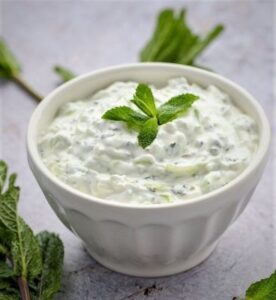
A refreshing combination of protein-rich chickpeas, crisp cucumber and tangy curd.
Ingredients
For the curd mixture
- Beaten curd — 1½ cups
- Roasted, crushed cumin — ½ tsp
- Rock salt or sea salt — ¼ tsp
- Fresh basil leaves — 4–5
For the relish
- Cucumber, cubed — 1
- Boiled chickpeas — ½ cup
- Indian gooseberries (amla), boiled and cubed — 2
- Dates, chopped — 2–3
- Mint leaves — 4–5
- Crushed black pepper — ½ tsp
- Melon seeds or chia seeds — 1 tsp
Method
- Prepare the cucumber, chickpeas, amla, dates and mint.
- Combine the relish ingredients and leave for 10–12 minutes.
- Mix the curd with roasted cumin, salt and basil.
- Fold the relish into the curd mixture, adjust the seasoning and chill for 20 minutes.
- Serve alongside a main course, with parathas or as a dip with crackers.
Nutrition note: Chickpeas contribute plant protein and fibre, while cucumber adds freshness and crunch.
ADRAKI DAHI WALA MURGH
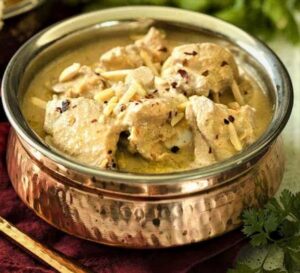
Chicken simmered in an aromatic ginger-curd gravy, enriched with warming spices.
Ingredients
- Chicken, curry cuts with bones — 750 g
- For a vegetarian alternative: paneer or extra-firm tofu
For the marinade
- Oil — 2 tsp
- Ginger paste — 1 tsp
- Chopped green chillies — 1 tsp
- Salt — to taste
- Crushed black pepper — ½ tsp
- Lime juice — 2 tsp
- Thick beaten curd — 1 cup
For the gravy
- Oil — 1 tsp
- Ghee — 2 tsp
- Boiled onion paste — 1 cup
- Ginger-garlic paste — 1 tsp
- Black cardamom — 2
- Bay leaves — 2
- Water or chicken stock — 1 cup
- Salt — to taste
- Kasuri methi — 1 tsp
- Garam masala — ½ tsp
- Cashew or almond paste — 2 tsp
- Fresh cream — 2 tbsp
- Rose water — 2 tsp
- Ginger juliennes and blanched almonds, for garnish
Method
- Mix the chicken with the marinade ingredients and refrigerate for 30–45 minutes.
- Heat the oil and ghee in a pan. Add the black cardamom and bay leaves, followed by the onion paste. Cook until lightly browned.
- Add the ginger-garlic paste and green chillies, sautéing until aromatic.
- Add the marinated chicken and cook for 2–3 minutes, stirring to coat it in the spices.
- Mix in the cashew or almond paste and a little water or stock. Cover and simmer until the chicken is thoroughly cooked, about 20–25 minutes or as needed.
- Stir in kasuri methi, garam masala, cream and rose water. Adjust the seasoning and garnish with ginger juliennes and blanched almonds.
Chef’s tip: Keep the heat moderate when adding curd to help prevent the gravy from splitting. For food safety, ensure the chicken reaches an internal temperature of 74°C.
TEMPERED TRIVIA CURD RICE
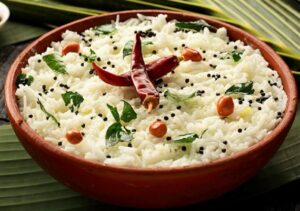
A beloved comfort-food classic, refreshed with nuts, seeds and fragrant tempering.
Ingredients
- Cooked and cooled basmati, kolam or brown rice — 1 cup
- Thick beaten curd — 2 cups
- Salt — to taste
- Oil — 1 tsp
- Ghee — 1 tsp
- Asafoetida (hing) — a pinch
- Mustard seeds — ½ tsp
- Cumin seeds — ½ tsp
- Dried red chilli — 1, slit
- Green chilli — 1, slit
- Chana dal — 1 tsp
- Milk — ¼ cup
- Roasted, crushed peanuts — 2 tbsp
- Assorted flax, sunflower, pumpkin or melon seeds — 2 tsp
- Chopped mint and coriander — 2 tbsp
Method
- Combine the cooked rice with beaten curd, milk and salt. Refrigerate for about 20 minutes.
- Heat the oil and ghee in a small pan.
- Add hing, mustard seeds, cumin, chillies and chana dal. Allow the spices to crackle and the dal to turn lightly golden.
- Pour the tempering over the curd rice and mix well.
- Finish with roasted peanuts, assorted seeds, mint and coriander.
Chef’s tip: Brown rice can add more fibre than white rice. Keep the dish refrigerated until serving, particularly in warm weather.
DAHI PAKODE WALI KADHI
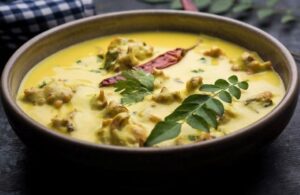
Golden gram-flour fritters immersed in a gently spiced, tangy curd curry.
Ingredients
For the pakode
- Besan — 1 cup
- Salt — to taste
- Baking soda — a pinch
- Red chilli powder — ½ tsp
- Cumin powder — ¼ tsp
- Ajwain — ½ tsp
- Medium onion, sliced — 1
- Chopped coriander — 1 tbsp
- Chopped green chillies — 1 tsp
- Water — as required
- Oil — 1 tsp for the mixture, plus oil for frying
For the kadhi
- Beaten curd — 1½ cups
- Besan — 1½ tbsp
- Salt — to taste
- Turmeric powder — ½ tsp
- Red chilli powder — ¼ tsp
- Water — as required
- Kasuri methi — 1 tsp
- Chopped ginger — 1 tsp
- Oil or ghee — 2 tsp
- Hing — a pinch
- Curry leaves — 8–10
- Slit red and green chillies — 1–2
- Mustard seeds — ½ tsp
- Cumin seeds — ½ tsp
- Chopped coriander — 2 tbsp
Method
- Combine the besan, salt, baking soda, spices, onion, coriander, chillies and enough water to make a thick dropping batter.
- Heat oil and fry small portions until golden. Drain and set aside.
- Whisk the curd, besan, salt, turmeric, chilli powder and about two cups of water until smooth. Rest for 20 minutes.
- Heat oil or ghee in a pan. Add hing, mustard, cumin, curry leaves, ginger and chillies.
- Pour in the curd mixture, add kasuri methi and simmer for 12–15 minutes, stirring regularly.
- Adjust the seasoning and consistency. Add the pakode shortly before serving and garnish with coriander.
Serve with steamed rice or jeera rice.
A lighter option: Bake or air-fry the fritters instead of deep-frying, or use smaller portions of pakode to reduce the overall oil content.
BOWL OF ESSENTIAL NUTRIENTS
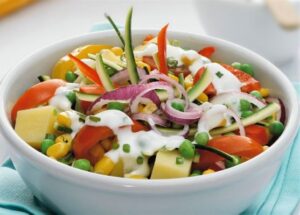
A vibrant mix of vegetables, fruit and a creamy amla-curd dressing.</text>
Ingredients
- Boiled sweet corn — ½ cup
- Boiled green peas — ½ cup
- Tomato, cut into wedges — 1
- Apple, cubed — 1
- Lime juice — 2 tsp, for the apple
- Onion, sliced — 1
- Cucumber, cubed — 1
- Boiled potato, cubed — 1
- Red, green or yellow capsicum, cubed — ½
For the dressing
- Beaten curd — 1 cup
- Salt and pepper — to taste
- Cooked amla pulp — 2 tsp
- Crushed cumin — ½ tsp
- Mint leaves — 4–5
- Cream cheese — 1 tsp
- Cashew powder — 2 tsp
Method
- Toss the apple with lime juice to help prevent discolouration.
- Combine the corn, peas, tomato, apple, onion, cucumber, potato and capsicum in a bowl.
- Whisk the curd with amla pulp, cumin, mint, cream cheese, cashew powder, salt and pepper.
- Chill the vegetables and dressing separately for 15–20 minutes.
- Drizzle the dressing over the salad just before serving and garnish with herbs, nuts, seeds or microgreens.
Chef’s variation: Add boiled eggs or grilled chicken for a non-vegetarian version. For a more filling vegetarian bowl, include chickpeas or another cooked pulse.
The takeaway: Eat for nourishment, cook for pleasure
Curd’s greatest culinary strength is its adaptability. It can cool a spicy meal, lend body to a gravy, transform raw vegetables into a satisfying salad or turn leftover rice into a comforting dish. Paired with pulses, vegetables, fruit, whole grains, herbs and modest quantities of nuts and seeds, it can become part of a varied, nourishing eating pattern.
The secret is balance: choose suitable portions, moderate added sugar and salt, use oil thoughtfully and handle dairy safely. A single ingredient cannot promise a longer life, but better everyday food choices can support long-term health.
Celebrity Master Chef Dr Kaviraj Khialani is a Mumbai-based hotel-restaurant and food consultant. He is specialised in over 33 international cuisines and has quality experience with hotels and airlines as a part of his long journey of over two decades in his chosen field. Chef Kaviraj is a renowned author, academician, food designer, writer and has also been awarded several national awards and global recognitions for his talent & outstanding achievements. Besides having been featured on several food shows on ColorsTV and Star Plus he is a mentor, coach and guide to aspiring to be future chefs and hoteliers of tomorrow.
He can be contacted at twitter: @kaviraj_chef, Mobile: 91 9820939336. Mail: chefkaviraj249@gmail.com