- RAG hosts two-day national academic meet featuring India’s leading experts
- New COPCORD survey to screen 7,000 rural Gujaratis for rheumatic diseases
- Focus on integrative medicine, frontline clinical challenges, and scientific writing
NE HEALTH BUREAU
AHMEDABAD, NOV 15
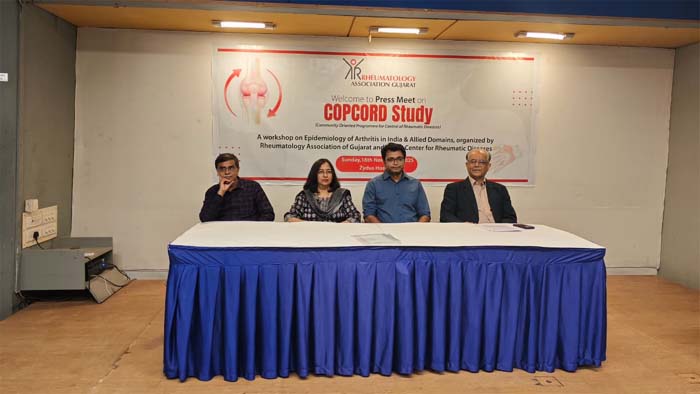
India’s top rheumatologists, clinicians and researchers have convened in Ahmedabad for a major two-day academic conclave organised by the Rheumatology Association Gujarat (RAG) on November 15–16. The meet brings together senior experts and postgraduate students for intensive scientific exchange, interdisciplinary learning, and collaborative discussions on arthritis and autoimmune rheumatic diseases.
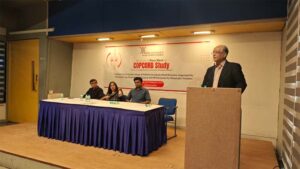
The conclave features two of the country’s foremost voices in rheumatology — Dr. Arvind Chopra, Ayush Distinguished Scientist Chair and Director, Centre for Rheumatic Diseases, Pune, and Dr. Durga Prasanna Misra, Editor-in-Chief of the Indian Journal of Rheumatology and Professor, Department of Clinical Immunology & Rheumatology, SGPGI, Lucknow.
Sharing insights on the meeting’s objectives, Dr. Reena Sharma, President of RAG, said, “Rheumatic and musculoskeletal disorders are among the most prevalent and burdensome conditions in India, but are neglected and under-reported. With over 19.5 crore Indians living with arthritis-related pain, there is an urgent need for greater awareness, better integration between modern and traditional systems, and stronger clinical collaboration. This meeting aims to address exactly that by uniting diverse disciplines on a common platform to advance understanding and improve patient outcomes.”
The Alarming National Burden
According to recent data published by Dr. Chopra and colleagues under WHO’s COPCORD initiative, nearly 65% of arthritis sufferers in India are women, and one in five women experiences bone and joint pain of rheumatic nature. Their extensive research spans 21 surveys covering 55,000+ people, including 60% from rural settings.
Rheumatoid arthritis (RA) affects 0.5%–0.8% of India’s population, with earlier surveys estimating 42 lakh cases, the majority being women, including 11.7 lakh young women of reproductive age—a reflection of the profound social and economic burden.
Moreover, 5.4 crore Indians live with osteoarthritis, predominantly affecting knees and spine, making it a leading cause of disability. Over 1.72 crore people suffer from musculoskeletal pain linked to occupational strain and lifestyle factors.
“Women are more prone to rheumatic diseases, while obesity, age, manual labour, tobacco consumption, and low socio-economic status are the other key risk factors,” said Dr. Chopra, who has led COPCORD studies in India since 1996 and serves as the nation’s Chief Coordinator for the global program.
New Gujarat COPCORD Survey Launched
A key outcome of the conclave is the initiation of a fresh COPCORD survey that will screen around 7,000 rural residents of Gujarat for all categories of rheumatic diseases. Data collection and publication are expected to take 6–8 months.
Scientific Sessions Highlight Frontline Challenges
Day 1 features sessions on:
- Epidemiology and Management of Chikungunya Fever and Post-Chikungunya Arthritis
- Clues to Clinch the Diagnosis of Vasculitis in Medical OPDs
- Common Clinical Dilemmas in Patients with Pre-existing Autoimmune Rheumatic Disease
Day 2 includes sessions on:
- Burden of Arthritis: A COPCORD Data Perspective by Dr. Chopra
- Arthritis: An Ayurvedic Perspective
- Interactive discussions on Function and Quality of Life
- A hands-on Quality of Life (QOL) assessment workshop
A major highlight is the Scientific Writing Workshop, equipping young clinicians with practical skills in medical publishing through sessions such as:
- Beyond the p-value: Weaving Statistics into a Compelling Narrative
- Anatomy of a Manuscript: A Deep Dive into the IMRaD Framework
- Thinking Like a Reviewer: A Live Manuscript Autopsy
Integrative, Multidisciplinary Model
The conclave is designed to strengthen collaboration between rheumatology, internal medicine, public health, and Ayurveda, aligning with India’s shift toward evidence-backed holistic healthcare.
Dr. Reena Sharma added, “Our goal is to create a platform that empowers clinicians and researchers to combine scientific precision with compassionate patient care. By linking modern rheumatology with Ayurveda and public health, we can move closer to developing effective strategies for prevention and control of arthritis and related disorders.”
Faculty and postgraduate students from rheumatology, internal medicine, community medicine, and Kayachikitsa (Ayurveda) from leading institutions are participating. The event is coordinated by Dr. Sapan Pandya, Vice-President of the Indian Rheumatology Association, Dr. Deepak Saxena, Director of IIPH Ahmedabad, and Dr. Kiran Kale, Assistant Director, CCRAS.
Similar integrative meetings were recently held in New Delhi, Pune, Gorakhpur and Varanasi, with upcoming conferences planned in Calicut, Bangalore, Chennai, Hyderabad, Kolkata and Guwahati, continuing the nationwide effort to enhance awareness and understanding of arthritis across medical and community platforms.