NE DEFENCE BUREAU
NEW DELHI/CHENNAI, APR 30
In a significant leap for India’s maritime defence capability, the Defence Research and Development Organisation (DRDO) and the Indian Navy have successfully conducted the maiden salvo launch of the Naval Anti-ship Missile-Short Range (NASM-SR), marking a defining moment in the country’s indigenous missile development programme.
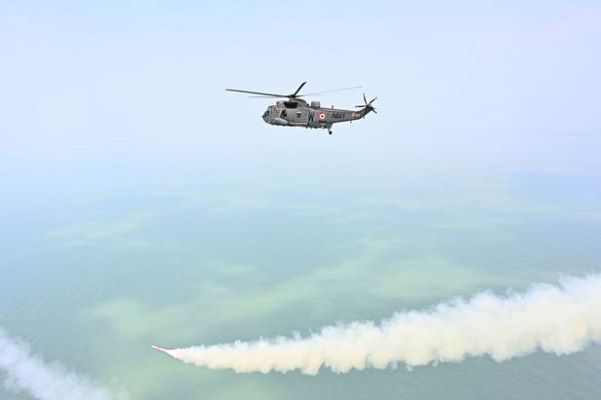
The @DRDO_India & Indian Navy successfully jointly conducted the maiden Salvo launch of Naval Anti-ship Missile-Short Range (NASM-SR) from Indian Navy’s helicopter platform, off the coast of Bay of Bengal in Odisha.
Raksha Mantri Shri @rajnathsingh complimented DRDO, Indian… pic.twitter.com/oPmiyAOZlG
— रक्षा मंत्री कार्यालय/ RMO India (@DefenceMinIndia) April 29, 2026
The historic trial took place off the coast of the Bay of Bengal near Odisha, where two missiles were launched in quick succession from a single naval helicopter—a first-of-its-kind demonstration of salvo capability for an advanced air-launched anti-ship system.
- Maiden Salvo Success: Two NASM-SR missiles fired in rapid succession from a single naval helicopter
- Precision Strike Proven: Missiles demonstrated waterline hit capability with high accuracy
- Fully Indigenous Tech: Advanced navigation, avionics and control systems developed in India
- Strategic Boost: Enhances maritime strike power and strengthens self-reliant defence ecosystem
The mission met all its objectives with precision, as confirmed by data captured through sophisticated tracking systems including radar, electro-optical sensors and telemetry deployed by the Integrated Test Range (ITR), Chandipur. Notably, the missiles successfully executed waterline hits, underscoring their lethal accuracy against enemy vessels.
Developed with cutting-edge indigenous technologies, the NASM-SR is powered by a solid propulsion booster and long-burn sustainer, ensuring extended operational capability. The missile integrates advanced subsystems such as a high-performance seeker, fibre-optic gyroscope-based inertial navigation system, radio-altimeter, and a high-bandwidth two-way data link, all designed and built within India.
The system has been spearheaded by Hyderabad-based Research Centre Imarat in collaboration with key DRDO laboratories including Defence Research & Development Laboratory (Hyderabad), High Energy Materials Research Laboratory (Pune), Terminal Ballistics Research Laboratory (Chandigarh) and ITR Chandipur. Production is being undertaken with strong participation from Indian industries and start-ups, reinforcing the ‘Atmanirbhar Bharat’ vision in defence manufacturing.
The test was witnessed by senior DRDO scientists, representatives from the Indian Navy and the Indian Air Force, along with development-cum-production partners, highlighting seamless coordination across defence and industry stakeholders.
Lauding the achievement, Defence Minister Rajnath Singh said the successful trial would significantly enhance the operational capabilities of India’s armed forces. “This milestone reflects the growing strength of indigenous defence technologies and will greatly bolster our maritime strike preparedness,” he noted.
Secretary, Department of Defence R&D and DRDO Chairman Samir V Kamat also congratulated the teams, calling the salvo launch a major technological accomplishment.
With this breakthrough, India has not only demonstrated advanced strike capability from airborne platforms but also reaffirmed its commitment to building a self-reliant, future-ready defence ecosystem, capable of safeguarding national interests across maritime frontiers.