
- IAACON 2026 brings together more than 200 national and international experts to examine robotics, artificial intelligence and surgical precision
NE HEALTH BUREAU
AHMEDABAD, OCT 27
What if an artificial intelligence-assisted surgical plan, a robotic system and a surgeon’s clinical judgement could work together to help a patient walk with greater confidence after joint replacement? That question captured the spirit of IAACON 2026, where orthopaedic specialists examined how technology, surgical expertise and evidence-based medicine are reshaping the treatment of damaged hip, knee and shoulder joints.
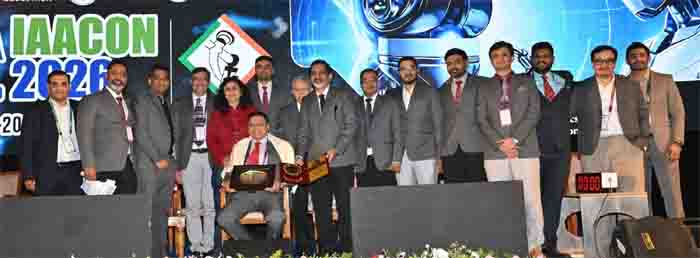
The 22nd annual conference of the Indian Arthroplasty Association concluded in Ahmedabad after three days of scientific deliberations, clinical learning and discussions on advances in joint replacement surgery. The gathering brought together 205 national faculty members and nine international experts, alongside orthopaedic surgeons and postgraduate students from across India.
Held under the theme “Evolving Arthroplasty: Robotics, Kinematics & Innovation,” IAACON 2026 explored how robotic-assisted procedures, artificial intelligence, advanced imaging and evolving surgical techniques could contribute to more precise operations and better-informed clinical decisions.
The conference also highlighted Gujarat’s growing importance in joint replacement surgery, with the state recognised among India’s leading centres in terms of surgical volumes.
Beyond the robot: Can technology improve patient outcomes?
Robotic-assisted surgery and artificial intelligence are increasingly influencing the way surgeons plan and perform joint replacement procedures. Yet the central question remains whether technological advances translate into meaningful benefits for patients.

At IAACON 2026, specialists examined image-based, imageless and AI-enabled three-dimensional robotic technologies and their potential applications in modern arthroplasty.
The discussions covered pre-operative planning, bone preparation, implant positioning and the assessment of joint alignment and balance during surgery. These tools can provide surgeons with additional information and assist with procedural precision, while the surgeon remains responsible for clinical judgement and treatment decisions.
The broader significance lies in the possibility of tailoring procedures more closely to individual patients rather than relying exclusively on standardised approaches.
However, technology is not a substitute for sound surgical judgement, appropriate patient selection or postoperative rehabilitation. The benefits of robotic assistance can vary according to the procedure, technology used, surgeon experience and the patient’s condition.
The conference’s emphasis on innovation therefore raised an important issue for modern healthcare: technological sophistication must ultimately be assessed against clinical evidence, safety, accessibility and the outcomes that matter to patients.
Three lakh hip and knee replacements a year: The growing demand
India performs more than three lakh hip and knee replacement surgeries annually, according to the conference material, reflecting the growing demand for treatment of debilitating joint conditions.
Joint replacement can help appropriate patients experiencing severe pain, restricted movement and reduced quality of life when conservative treatments no longer provide sufficient relief.
For many, the objective extends beyond pain reduction. Regaining mobility can make it easier to perform everyday activities, return to work, maintain social connections and preserve independence.
Gujarat’s substantial joint replacement activity has strengthened its position in India’s orthopaedic healthcare landscape. Ahmedabad’s medical institutions and specialist community provided a setting for discussions on the clinical and technological developments influencing the field.
As surgical volumes grow, however, the challenge is not simply to increase the number of procedures. Ensuring appropriate patient selection, consistent standards of care, infection prevention, effective rehabilitation and long-term follow-up remains equally important.
The conference’s scientific programme addressed several of these concerns, including implant alignment and design, surgical outcomes, infection prevention and enhanced recovery protocols.
Hands-on training takes centre stage at B. J. Medical College
The scientific meeting was preceded by a cadaveric workshop at B. J. Medical College, Ahmedabad, offering participants practical training in specialised surgical techniques.
Approximately 70 faculty members and 180 delegates participated in the workshop, which covered three procedures:
- Direct anterior approach to hip replacement.
- Unicondylar knee replacement.
- Reverse shoulder replacement.
Cadaveric training enables surgeons to study anatomical structures and practise surgical approaches in a controlled educational setting. Such opportunities are particularly valuable when specialists are learning techniques that require a detailed understanding of anatomy, instrumentation and operative planning.
The workshop complemented the conference’s broader emphasis on surgical education, technical proficiency and the exchange of clinical experience.
For younger surgeons, exposure to different approaches and direct interaction with experienced faculty can help strengthen their understanding of complex procedures before they encounter similar challenges in clinical practice.
The programme also underscored an essential principle: innovation in surgery requires not only advanced equipment but also rigorous training, technical competence and a continuing commitment to patient safety.
Chief Minister highlights the human value of restored mobility
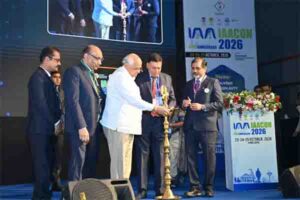
Gujarat Chief Minister Bhupendra Patel inaugurated IAACON 2026, highlighting the transformative effect that joint replacement surgery can have on patients’ lives.
He emphasised that restoring mobility enables individuals to regain independence, return to work and participate more actively in their communities. Continued advances in surgical techniques and professional training, he noted, contribute to improving standards of patient care.
The message placed the conference’s technological discussions in a broader social context. For patients living with severe joint pain, the ultimate measure of success is not the sophistication of a surgical system but the extent to which treatment helps them resume everyday activities safely and comfortably.
Dr. H. P. Bhalodia, Organising Chairman, said the conference provided a valuable opportunity for surgeons to critically evaluate emerging technologies and exchange diverse clinical perspectives. He stressed the importance of collaborative learning and evidence-based discussions as new tools enter orthopaedic practice.
Dr. Dhiraj Marothi Jain, Organising Secretary, highlighted the value of meaningful scientific dialogue.
He observed that active participation by delegates and faculty encouraged a deeper understanding of complex clinical situations and contributed significantly to professional development.
The conference was jointly supported by the Indian Arthroplasty Association, Indian Orthopaedic Association, Gujarat Orthopaedic Association, Ahmedabad Orthopaedic Society and Ahmedabad Arthroplasty Association.
Robotics, kinematics and innovation: The science behind the surgery
The academic programme featured 35 scientific sessions and four structured debates, complemented by surgical video presentations, complex case discussions and dedicated learning opportunities for young orthopaedic surgeons.
Topics included implant alignment and design, infection prevention, surgical outcomes and enhanced recovery protocols. Interactive sessions allowed participants to examine clinical decision-making, operative planning and approaches to challenging surgical situations.

Kinematics—the study of movement—has an important place in arthroplasty because a successful joint replacement must do more than position an implant correctly. The reconstructed joint must also function in a way that supports movement and the patient’s individual needs.
Robotic systems and advanced planning tools can help surgeons assess alignment and balance, while developments in implant design and surgical techniques continue to influence how procedures are planned and evaluated.
Nevertheless, the availability of sophisticated technology raises important questions about affordability, access and the evidence required to establish its value across different patient groups.
For healthcare systems, the challenge is to ensure that innovation complements sound clinical practice and that the benefits of new approaches are assessed through reliable evidence rather than technological novelty alone.
As IAACON 2026 concluded, participants returned to their institutions with fresh clinical insights, stronger professional connections and a clearer view of the innovations shaping hip, knee and shoulder replacement surgery.
The conference reinforced a fundamental principle of modern orthopaedics: the real measure of surgical progress is not how advanced the technology becomes, but how effectively it helps patients recover mobility, independence and quality of life.