R ARIVANANTHAM
CHENNAI, AUG 20
For someone struggling to swallow, a sip of water can become an ordeal, a meal a source of anxiety and even sleep can be disturbed by the body’s inability to move food normally. But for two elderly patients battling rare disorders of the food pipe, advanced endoscopy has transformed that daily struggle into a story of renewed comfort and recovery.
- Gleneagles Chennai successfully treats two rare food-pipe disorders in elderly patients through advanced incision-free procedures
- 73-year-old woman with complex Achalasia and large Epiphrenic Diverticulum undergoes D-POEM, described by hospital as Tamil Nadu-first
- 73-year-old patient regains near-normal swallowing after years of progressive difficulty, vomiting and severe weight loss
- 75-year-old Belgium-born man living in India finds relief after nearly a decade of Zenker’s Diverticulum through Z-POEM
- Specialised endoscopic procedures tackle complex swallowing disorders without external surgical incisions
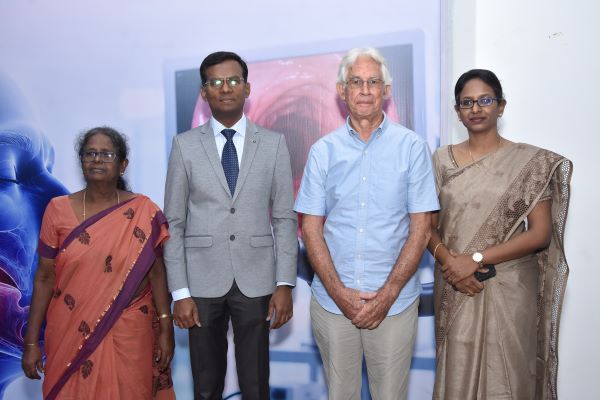
In two complex cases, Gleneagles Hospital Chennai, part of the Fortis Healthcare Network, has successfully treated elderly patients with rare swallowing disorders through advanced minimally invasive endoscopic procedures—offering relief without conventional external surgery.
The hospital has reported a particularly significant milestone in the case of a 73-year-old woman from Jayankondam in Ariyalur district, who had been struggling with swallowing for nearly three years and whose condition had deteriorated sharply in the two months before treatment.
She was diagnosed with Achalasia complicated by a large Epiphrenic Diverticulum and was successfully treated with Diverticular Peroral Endoscopic Myotomy (D-POEM).
According to the hospital, Dr B. Mahadevan is the first doctor in Tamil Nadu to perform D-POEM for an Epiphrenic Diverticulum.
The second case involved a 75-year-old man from Belgium who has been living in India, who had endured the debilitating effects of Zenker’s Diverticulum for nearly 10 years. He was successfully treated with Z-POEM and modified Septotomy.
Together, the two cases highlight the expanding possibilities of therapeutic endoscopy in managing difficult disorders of the oesophagus—particularly in elderly patients for whom conventional surgery can carry additional challenges.
Three years of swallowing difficulty—and a complex diagnosis
The 73-year-old woman had initially lived with progressive difficulty swallowing both food and liquids. But her condition worsened dramatically during the two months preceding treatment.
She began struggling even to tolerate liquids, experienced frequent vomiting and suffered significant weight loss.
Investigations revealed Achalasia accompanied by a large Epiphrenic Diverticulum, creating a particularly complex clinical picture.
The challenge was compounded by several existing medical conditions, including diabetes, hypertension, hypothyroidism, chronic kidney disease and a previous cardiac stent.
For such a patient, avoiding an external surgical procedure could carry considerable significance.
On March 30, 2026, Dr B. Mahadevan and his team performed D-POEM, an advanced endoscopic procedure carried out entirely through the mouth.
The technique enabled the medical team to address both the abnormal muscular tightness associated with Achalasia and the diverticulum through an endoscopic route, without an external surgical incision.
Her recovery was encouraging.
She was discharged after three days, and at the one-month follow-up she reported marked improvement in swallowing.
Repeat investigations showed near-normal swallowing function, while endoscopy demonstrated a healthy, well-healed oesophagus with no continuing swallowing disorder.
A decade of regurgitation ends with Z-POEM for the 75-year old Belgium man
The second patient had endured his condition for almost 10 years.
The 75-year-old man from Belgium, who has been living in India for nearly five decades, had developed Zenker’s Diverticulum, a pouch-like abnormality that can trap food and lead to regurgitation and other troublesome symptoms.
His symptoms included regurgitation of undigested food, coughing and a persistent gurgling sensation in the throat.
Over time, the condition began interfering with his sleep and eating habits. He also lost 5 kg over six months.
Evaluation at Gleneagles Hospital Chennai revealed a large 5-cm Zenker’s Diverticulum containing retained food residue.
On July 7, 2025, Dr Mahadevan and his team performed Z-POEM with modified Septotomy, again using an endoscopic approach without an external incision.
At his one-month follow-up, the diverticulum had opened and flattened, allowing food to pass normally.
The outcome was striking: the patient reported complete relief from regurgitation, nighttime disturbances and the persistent gurgling sensation.
“Advanced endoscopic techniques allowed us to treat…”
Dr B. Mahadevan, Senior Consultant, Gastroenterology, Gleneagles Hospital Chennai, said: “Both cases were clinically challenging, but advanced endoscopic techniques allowed us to treat these conditions without external surgery. D-POEM was particularly valuable in addressing the complex Achalasia and Epiphrenic Diverticulum in the first patient.”
The cases illustrate how therapeutic endoscopy has moved well beyond its traditional diagnostic role.
Procedures such as D-POEM and Z-POEM can provide a minimally invasive route to treating structural and muscular abnormalities of the oesophagus, potentially avoiding the trauma associated with conventional open or laparoscopic surgery in appropriately selected patients.
“Long-standing swallowing disorders can significantly affect…”
Dr S. Niranjani, Chief Operating Officer & Hospital Head, Gleneagles Hospital Chennai, said: “Long-standing swallowing disorders can significantly affect nutrition and quality of life. These cases demonstrate the value of advanced, minimally invasive treatment for complex conditions.”
That impact is particularly important in elderly patients.
Persistent swallowing difficulties can affect not only eating but also nutritional status, hydration, sleep, social interaction and overall quality of life. In severe cases, patients may progressively restrict their food and liquid intake because eating itself becomes uncomfortable or frightening.
The successful outcomes in these two patients demonstrate how appropriate diagnosis and access to specialised endoscopic expertise can potentially change that trajectory.
“Our commitment to advanced minimally invasive care”
R. Y. Bharath Kanth Reddy, Chief Executive Officer, Chennai & Hyderabad Cluster, Gleneagles Hospitals, said: “These cases reflect our commitment to advanced minimally invasive care and specialised endoscopic treatment for complex conditions.”
The hospital’s experience with the two cases underscores the importance of multidisciplinary expertise when managing unusual oesophageal disorders, particularly where advanced endoscopic intervention can offer an alternative to conventional surgery.
From a woman who had reached the point where even liquids were difficult to tolerate to a man who had lived for nearly a decade with food regurgitation and disruptive throat symptoms, the two cases share a simple but profound outcome: the return of something most people take for granted—the ability to eat and swallow without fear.