
- Beyond the lens: Three-day workshop explores how wildlife photography can turn visual storytelling into a powerful voice for biodiversity conservation.
- Where compassion meets conservation: KPCSD Coordinator Prof C N Pandey invokes Mahatma Gandhi’s principle of ahimsa and calls for greater respect for all forms of life.
- Action, story and science: Veteran wildlife photographer Mukesh A Acharya urges participants to combine striking images with scientific understanding.
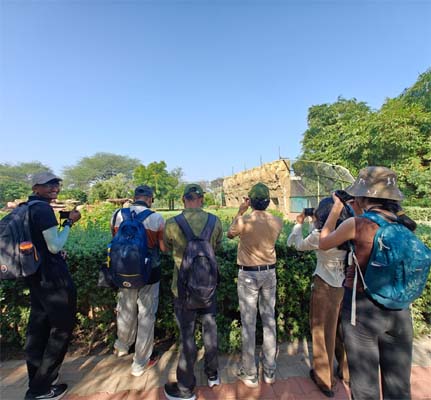
- From campus to the wild: Field photography at Indroda Nature Park and IIT Gandhinagar introduces participants to wildlife behaviour, composition and responsible photography.
- A celebration of nature’s wonders: Exhibition showcases wildlife, colours and textures of nature, alongside Acharya’s photographs of Uttarakhand’s Valley of Flowers.
NE WILDLIFE CONSERVATION BUREAU
GANDHINAGAR, OCT 9
Can a photograph do more than capture a fleeting moment in the wild? At IIT Gandhinagar, a three-day workshop explored how the camera can become an instrument of environmental awareness—helping people look beyond the beauty of an image to understand the biodiversity it represents and the responsibility involved in protecting it.
Organised by the Dr Kiran C Patel Centre for Sustainable Development (KPCSD) from October 2 to 4 as part of National Wildlife Week 2026, the hands-on workshop, titled “Wildlife Photography and Filming for Biodiversity Conservation and Sustainable Development”, brought together students, staff and residents of the IIT Gandhinagar community to discover how photography and filmmaking can strengthen the connection between people and the natural world.
From appreciating nature to protecting it
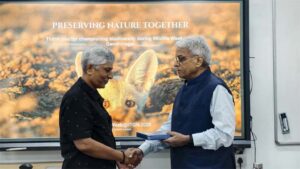
Opening the workshop, Prof C N Pandey, Coordinator, KPCSD, highlighted the importance of National Wildlife Week and the need to nurture a deeper relationship with nature. Linking wildlife conservation with Mahatma Gandhi’s principle of ahimsa, he emphasised compassion, respect and love for all forms of life.
“Appreciation of nature should ultimately translate into greater care and responsibility towards our natural environment. Developing a deeper connection with wildlife allows us to understand not only its beauty but also our responsibility towards protecting it,” Pandey said.
The message set the tone for a workshop that went beyond technical instruction, encouraging participants to recognise that documenting nature can also inspire people to value and safeguard it.
When action, story and science converge
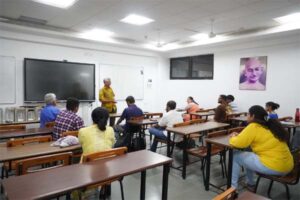
Mukesh A Acharya, renowned wildlife photographer, visual artist and nature educator with more than four decades of experience, introduced the workshop’s central approach: bringing together “action, story, and science” to make wildlife photography more meaningful.
“The coming together of action, story and science allows photography to go beyond visual appeal and become a meaningful medium for understanding nature and communicating conservation messages,” Acharya said.
The resource team—Acharya, Wilkis James, Aayush Dudhiya and Arijit Reeves—shared their experience of photography, filmmaking and nature conservation throughout the three days. Participants were also encouraged to learn about the Wildlife Protection Act and develop a better understanding of the natural resources and biodiversity in their surroundings.
Learning to observe before pressing the shutter
The programme covered the fundamentals of photography and composition, camera equipment and techniques, wildlife behaviour, field craft and photo editing. Participants had opportunities to put their learning into practice during a field visit to Indroda Nature Park in Gandhinagar and photography sessions on the IIT Gandhinagar campus.
The resource persons underlined that wildlife photography demands patience, sustained observation and continuous learning. Understanding light, exposure and ISO, they explained, comes through practice rather than technical knowledge alone.
The campus itself offered a valuable learning ground, with its biodiversity providing opportunities for participants to observe, explore and document nature beyond the formal workshop.
An exhibition that brought nature into focus
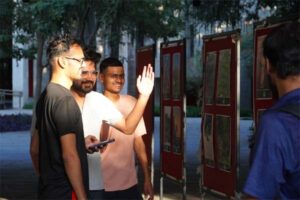
The workshop concluded with a photography exhibition featuring images under two themes: “Wild Feet & Fur” and “Colours and Textures of Nature.” A special exhibition of Acharya’s photographs of Uttarakhand’s Valley of Flowers offered another window into the beauty and diversity of the natural world.
The images brought together different ways of seeing wildlife and nature—from animal life to the intricate colours, patterns and textures often overlooked in everyday surroundings.
The larger takeaway was clear: nature photography can be the beginning of a deeper journey of discovery. By encouraging people to observe more closely, understand what they see and appreciate the value of biodiversity, such initiatives can help turn awareness into a stronger conservation ethic.
Through programmes of this kind, KPCSD at IIT Gandhinagar aims to deepen environmental consciousness and strengthen the bond between people and nature, contributing to a more sustainable future.