

- Experts highlight health benefits: trans-fat-free, antioxidant-rich and ideal for Indian cooking
- Global researchers, medical voices and industry leaders push evidence-based clarity over myths
- Seminar aligns with India’s NMEO–OP mission to boost self-reliance and sustainable edible oil production
NE FEATURES BUREAU
KOLKATA, NOV 25
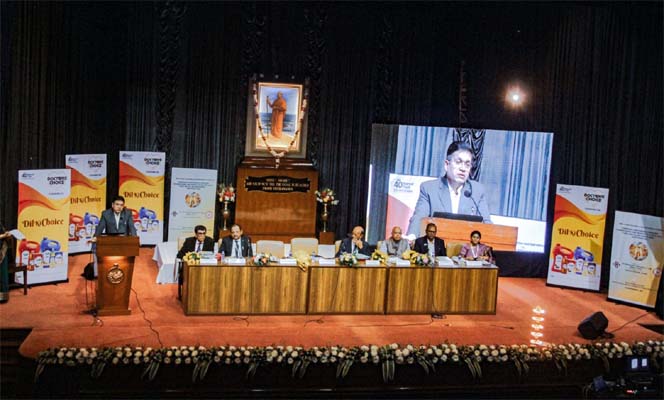
In a strong endorsement of palm oil’s nutritional value and sustainability credentials, the Oil Technologists’ Association of India (Eastern Zone) in collaboration with the Malaysian Palm Oil Council (MPOC) and supported by Jadavpur University, hosted a landmark seminar titled “Unveiling Palm Oil: Science, Health, Innovation, Sustainability and the Way Forward” at the Ramakrishna Mission Institute of Culture, Kolkata, during the 80th Annual Convention and International Conference (ESPT–FOFA 2025).
Positioned as one of the most comprehensive knowledge-led engagements on palm oil in recent years, the seminar steered clear of rhetoric and put science, health, and verified data at the centre of the conversation.
Palm oil’s health benefits take centre stage
Experts debunked long-standing misconceptions and emphasised the nutritional strength of palm oil—especially for Indian households.
Key highlights included:
- Trans-fat-free composition, making it a safer alternative to hydrogenated fats
- Rich in natural antioxidants such as tocotrienols and carotenoids that support heart and cellular health
- Balanced fatty acid profile offering stability for deep-frying, traditional cooking and industrial food applications
- Neutral flavour and high heat tolerance, ideal for the diverse culinary needs of Indian kitchens
The seminar underlined that modern scientific evaluations consistently reaffirm palm oil as a stable, nutritionally balanced, and versatile edible oil when consumed as part of a healthy diet.
“Science, not assumptions, must guide the edible oil debate”
A key message that resonated throughout the session was the need to replace opinion-driven narratives with hard data.
The initiative’s core commitment lies in cutting-edge interdisciplinary research—from agronomy and biodiversity to greenhouse-gas impacts and supply-chain verification.
The seminar aimed to place scientific integrity at the forefront, ensuring discussions are informed by data, not by assumptions.
Researchers and medical voices reiterated that palm oil is one of the most studied edible oils globally, with substantial evidence supporting both its nutritional suitability and its compatibility with India’s food culture and processing sector.
Socio-economic lifeline for millions
Speakers highlighted the human side of the palm oil ecosystem, noting that it supports the livelihoods of millions of smallholder farmers across Asia, Africa and Latin America. The seminar emphasised:
- Fair and equitable trade practices
- Employment generation and rural development
- Cultural relevance and heritage linked to palm cultivation
By strengthening India’s domestic value chain, palm oil also aligns with the National Mission on Edible Oils – Oil Palm (NMEO–OP), launched in 2021 to enhance self-reliance and reduce import dependence.
Sustainability and innovation at the core
A major thrust of the discussion centred on sustainability, echoing global frameworks such as the UN Sustainable Development Goals (SDGs). The platform promoted:
- Harmonisation of global certification systems
- Increased transparency across the supply chain
- Reducing environmental footprint through modern agronomy and precision farming
- Stronger cross-border collaboration for responsible growth
The seminar also explored innovations in climate-resilient cultivation, land-use optimisation, regenerative practices and green processing technologies, positioning palm oil as a crop that can evolve responsibly with the right governance.
A multi-stakeholder pathway for the future
Bringing together scientists, medical experts, industrialists, policymakers, and consumers, the initiative created a cross-sector platform aimed at moving the palm oil conversation towards balanced understanding and constructive progress.
The organisers underscored that evidence-based clarity is essential not only for public health and nutrition but also for unlocking sustainable growth opportunities in India’s edible oil sector.