NE HEALTH BUREAU
CHENNAI, JAN 29
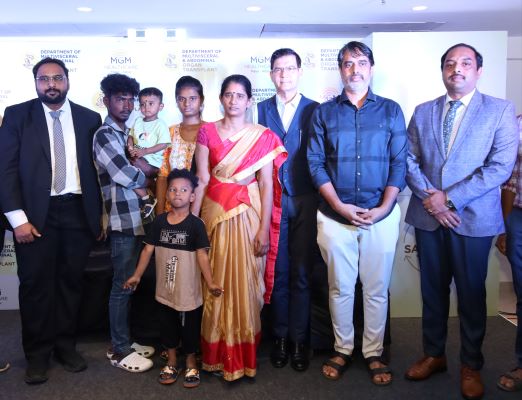
In a landmark feat of paediatric transplant medicine, MGM Healthcare Malar, Adyar, has successfully performed a live mono-segment liver transplant on a two-year-old child weighing just nine kilograms, suffering from primary hyperoxaluria, a rare and life-threatening genetic disorder. The procedure has eliminated the child’s dependence on dialysis, offering a renewed chance at normal growth and recovery.
- Rare genetic disorder primary hyperoxaluria crippled kidneys before age two
- Grandmother steps in as donor for live mono-segment liver transplant
- Sequential liver-first strategy halts oxalate damage, ends dialysis
- Multi-visceral transplant team executes one of the most complex paediatric procedures
- Child stabilised, thriving, and prepared for future kidney transplant
The child was admitted with severe vomiting, stunted physical growth, and advanced kidney failure, requiring peritoneal dialysis—a form of dialysis that uses the abdominal lining to filter blood. Detailed investigations revealed primary oxaluria, a rare inherited condition in which the liver fails to produce key enzymes needed to clear excess oxalates, toxic metabolic by-products that accumulate in the body, form kidney stones, and progressively destroy kidney function.
Doctors determined that while the child ultimately required a kidney transplant, performing it without correcting the liver defect would lead to immediate recurrence of the disease. A liver transplant was therefore a critical prerequisite to ensure long-term renal survival.
The procedure was made possible by the child’s grandmother, who donated a portion of her liver. Surgeons performed a live donor mono-segment liver transplant, one of the most technically demanding procedures in paediatric transplantation. The surgery was uneventful, and the child’s recovery has been rapid and smooth, with kidney function improving steadily. Importantly, dialysis was discontinued within weeks, and the child is now being prepared for a kidney transplant in the coming months.
The surgery was carried out by a Multi-visceral transplant team led by Dr Anil Vaidya MD, Chair and Director, Institute of Multi-Visceral and Abdominal Organ Transplant, MGM Healthcare Malar, with support from Dr Senthil Muthuraman, Senior Consultant, and Dr Venkatesh BS, Consultant, Multi-Visceral Transplant. Anaesthesia was managed by Dr Dinesh Babu, Senior Consultant, Anaesthesiology, along with late Dr Nivash Chandrasekaran, Senior Consultant, and Dr Saravanan, Senior Consultant. Pre- and post-operative kidney care was overseen by the nephrology team headed by Dr Srinivasa Prasad ND, Senior Consultant, while the hospital’s intensive care unit played a pivotal role in post-surgical recovery.
Explaining the complexity of the case, Dr Anil Vaidya MD said, “Performing a liver transplant on such a young and underweight child is undeniably complex. Typically, we would wait for a child to gain more weight, but given the severity of his condition, we needed to act promptly. By addressing the liver first, we ensured that the kidneys would function properly afterward. This sequential approach will allow the boy’s body to gradually clear the excess oxalates. Now, within weeks, he’s no longer dependent on dialysis and is thriving. He requires immunosuppressants to ensure the transplant’s success, and we look forward to the upcoming kidney transplant at the right time.”
Highlighting the institutional approach, Venugopal Bhat, COO, MGM Healthcare Malar, said, “We are immensely proud to have achieved this rare and complex milestone. This case shows that renal issues from severe genetic conditions such as primary oxaluria can be successfully treated even at a very young age. The surgery was uneventful thanks to meticulous pre-operative preparation, including thorough assessment of the child’s vascular status and infection profile. Instead of performing the liver and kidney transplants together, as is done at many centres, we adopted a carefully planned sequential approach in the child’s best interest. Following the liver transplant, the child was closely monitored in our ICU for a week, with support from nephrology and other specialist teams. The success of this procedure reflects the seamless coordination and dedication of our multidisciplinary teams.”