R ARIVANANTHAM
CHENNAI, FEB 27
In a development that could reshape both personal and political narratives, Sangeetha Sornalingam, wife of actor-turned-politician and Tamilaga Vettri Kazhagam (TVK) chief Vijay, has reportedly filed a divorce petition before the family court in Chengalpattu under provisions of the Special Marriage Act, 1954.
- Wife Sangeetha moves court under Special Marriage Act, alleging emotional cruelty and extramarital relationship; notice issued for April hearing
- Legal battle unfolds as actor-turned-politician Vijay prepares to position Tamilaga Vettri Kazhagam as a governance alternative
- Personal life enters public scrutiny amid Tamil cultural ethos of ‘oruvanukku oruthi’ and expectations of moral leadership
- Political observers weigh impact on women voters, youth appeal and credibility in Tamil Nadu’s emotionally driven electoral landscape
The petition, filed after nearly 25 years of marriage, alleges emotional cruelty, mental distress and an extramarital relationship, according to legal filings cited in media reports. The court has issued a notice directing Vijay to appear for a hearing scheduled on April 20. Neither Vijay nor his office has issued an official public statement so far.
The couple, who married in August 1999, have two children—Jason Sanjay and Divya Shasha.
Legal Fault Lines: Divorce Petition Anchored in Special Marriage Act
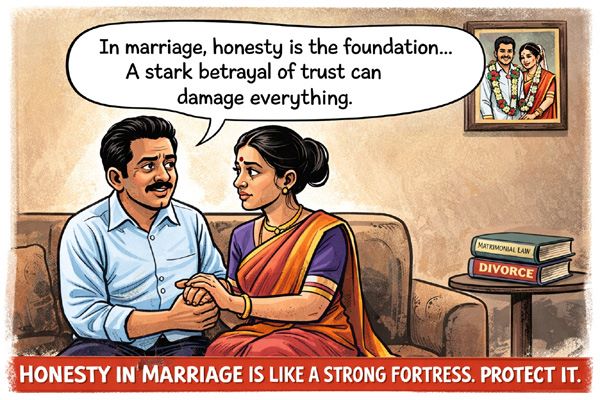
According to the petition filed under Sections 27(1)(a) and 27(1)(d) of the Special Marriage Act, the petitioner has alleged adultery and cruelty as grounds for divorce.
The affidavit reportedly states: “This caused her deep emotional pain and mental suffering, amounting to betrayal and violation of marital trust.”
It further adds: “The Petitioner cannot continue in a relationship that has become a constant source of mental agony, indignity, humiliation and suffering.”
The filing claims she became aware of the alleged relationship in 2021 and that reconciliation efforts between 2021 and 2022 failed.
Legal experts note that under Indian matrimonial law, cruelty includes not only physical harm but also emotional neglect, humiliation, and mental distress—especially when substantiated by patterns of conduct.
If the court finds sufficient grounds, it may grant divorce, permanent alimony, child-related arrangements, and property settlements based on evidence presented during proceedings.
Political Crossroads: Personal Storm Meets Public Ambition
The legal development comes at a crucial juncture in Vijay’s political journey, as he positions TVK as a challenger in Tamil Nadu’s Dravidian political space.
Political analysts say the controversy could have mixed implications:
- Credibility Factor: Tamil Nadu politics has historically placed emphasis on perceived personal integrity and family values.
- Women Voter Sentiment: Women voters, a decisive electoral bloc, may respond based on perceptions of respect toward family responsibilities.
- Youth Reaction: Younger voters, particularly urban supporters, may distinguish between personal and political domains.
- Sympathy vs Scrutiny: Public figures in Tamil Nadu often experience both empathy and heightened scrutiny during personal crises.
A senior political observer said: “Vijay’s political identity is still evolving. How he handles this personally and publicly will influence perceptions of leadership maturity.”
Tamil Cultural Lens: ‘Oruvanukku Oruthi’ and Public Morality
Tamil society traditionally reveres the concept of “oruvanukku oruthi”—one man, one woman—a cultural ideal deeply embedded in literature, cinema and political imagery.
This ethos has historically shaped public expectations from leaders, especially cinema personalities who transition into politics.
Former Chief Minister M G Ramachandran cultivated an image of personal discipline and moral leadership, while Dravidian icon M Karunanidhi navigated complex personal and political lives amid public debate.
Among actors-turned-politicians and leading stars, personal lives have occasionally intersected with political trajectories. Kamal Haasan and Sarath Kumar experienced marital separations while continuing public careers, while actor Dhanush’s separation drew nationwide attention.
Despite such precedents, Tamil Nadu’s electorate has historically judged leaders on a broader matrix—including governance credibility, charisma and ideological positioning.
Women and Youth Reactions: Empathy, Privacy and Accountability
Initial reactions among women voters and youth appear diverse.
Some women voters expressed empathy toward Sangeetha, emphasising emotional dignity and respect in marriage. Others cautioned against premature judgment, stressing that legal proceedings must run their course.
Youth voices on social media reflected a generational shift, with many arguing that personal issues should not overshadow political agendas unless they raise questions of public ethics.
A first-time voter from Chennai said: “People will watch how Vijay responds—with dignity, responsibility and transparency.”
Political Stakes Ahead of Electoral Debut
The timing of the legal proceedings is politically significant, as Vijay prepares to formally enter electoral politics under TVK’s banner.
His political brand has largely been built on:
- Clean image and outsider appeal
- Youth mobilisation
- Anti-corruption messaging
- Governance-focused narrative
How the unfolding legal case influences voter perception—especially among women and family-centric voters—may shape his early political trajectory.
At the same time, history suggests that Tamil Nadu voters have often separated personal controversies from political performance when leaders demonstrated administrative capability and public connect.
Legal Process and What Lies Ahead
The Chengalpattu family court will now examine:
- Evidence supporting claims of cruelty or adultery
- Responses and defence filed by Vijay
- Possibility of reconciliation or mediation
- Settlement, alimony and legal dissolution if granted
Until adjudication, the allegations remain claims under legal examination.