NE DEFENCE BUREAU
NEW DELHI, MAR 31
In a major boost to Aatmanirbhar Bharat in naval capability, the Indian Navy has simultaneously strengthened its combat and survey fleet with the delivery of indigenous stealth frigate INS Dunagiri and survey vessel (large) INS Sanshodhak at Garden Reach Shipbuilders & Engineers Limited (GRSE), Kolkata on March 30, 2026.
The Daring Eagle
A New Chapter in #Aatmanirbharta Begins… Rise Above#IndianNavy's indigenously built stealth frigate, #Taragiri will be commissioned on 03 April 2026.
Watch, what the commissioning crew has to say…
When the Sailors Speak, the Seas… https://t.co/QztgkyczwQ pic.twitter.com/yBPqOQV39A
— SpokespersonNavy (@indiannavy) March 31, 2026
- Stealth Frigate ‘Dunagiri’ Marks Quantum Leap in Combat Power & Design
- Survey Vessel ‘Sanshodhak’ Completes Four-Ship Hydrographic Project
- GRSE Kolkata Emerges as Nerve Centre of Indigenous Warship Building
- Advanced Weapons, Sensors and Survey Tech Boost Maritime Edge
- 75–80% Indigenisation Fuels MSMEs, Jobs and Strategic Autonomy
- From Warfighting to Ocean Mapping, Navy Expands Multi-Domain Capability
Stealth Power: INS Dunagiri Joins the Fleet
Dunagiri (Yard 3023), the fifth ship of the Nilgiri Class (Project 17A) and the second built at GRSE, “was delivered to the Indian Navy on 30 Mar 2026 at GRSE, Kolkata, marking a major milestone in achieving self-reliance in warship design and construction.”
Stride in India’s maritime capability!
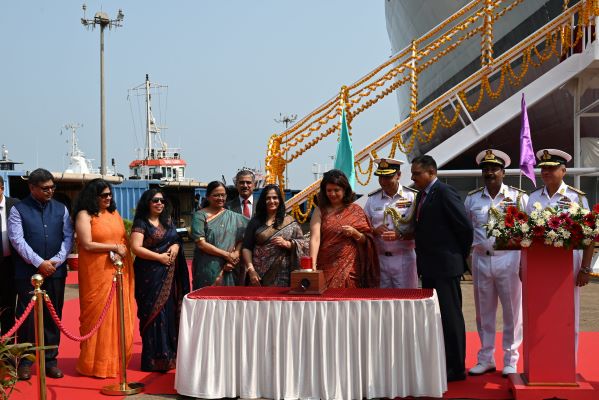
The first of the 11 Next Generation Offshore Patrol Vessels (NGOPVs) was launched at @goashipyardltd, on #31Mar 26 by Mrs Shagun Sobti in the presence of VAdm Tarun Sobti, Deputy Chief of the Naval Staff.
The construction of NGOPVs is… pic.twitter.com/mpdyrusxgU
— SpokespersonNavy (@indiannavy) March 31, 2026
A reincarnation of the earlier INS Dunagiri, a Leander-class frigate that served from 1977 to 2010, the new platform represents a generational leap.
“This state-of-the-art frigate reflects a quantum leap in naval design, stealth, firepower, automation and survivability and is an admirable symbol of Aatmanirbharta in warship building.”
Designed by the Warship Design Bureau, the Project 17A frigates “are versatile multi-mission platforms, designed to address current and future challenges in the maritime domain.”
Built using the philosophy of integrated construction, the warship incorporates advanced systems including:
- BrahMos Surface-to-Surface Missiles
- MFSTAR radar and MRSAM air defence system
- 76mm Super Rapid Gun Mount
- Anti-submarine rockets and torpedoes
Configured with Combined Diesel or Gas (CODOG) propulsion and an Integrated Platform Management System, Dunagiri is among the most advanced warships in the Navy’s arsenal.
Notably, “the experiences gained from construction of the first four P17A ships have enabled compressing of build period of Dunagiri to 80 months, in comparison to 93 months taken for first of class (Nilgiri).”
With nearly 75% indigenous content, the project has engaged over 200 MSMEs, generating employment for about 4,000 personnel directly and over 10,000 indirectly.
Survey Strength: INS Sanshodhak Completes Strategic Fleet
In parallel, Sanshodhak (Yard 3028), the fourth and final Survey Vessel (Large), “was delivered to the Indian Navy on 30 Mar 2026,” completing a key hydrographic capability project.
“The SVL ships are designed and built as per classification rules of Indian Register of Shipping… The ship is capable of full-scale coastal and deep-water Hydrographic survey of port/Harbour approaches and determination of navigational channels/ routes. The ship’s role also includes collecting oceanographic and geophysical data for defence and civil applications.”
With a displacement of about 3,400 tonnes and length of 110 metres, Sanshodhak is equipped with cutting-edge systems including:
- Data Acquisition and Processing System
- Autonomous Underwater Vehicle (AUV)
- Remotely Operated Vehicle (ROV)
- Digital Side Scan Sonar and DGPS
Powered by twin diesel engines, “the ship can achieve speeds in excess of 18 knots.”
“The delivery of Sanshodhak is a testimony to the relentless efforts of the Government of India and the Indian Navy towards Aatmanirbhar Bharat and is a tribute to the collaborative efforts of a large number of stakeholders, MSMEs and the Indian industry in enhancing the maritime prowess of the nation in the Indian Ocean Region.”
With over 80% indigenous content, the vessel underscores India’s growing capability in specialised naval platforms.
Together, the induction of INS Dunagiri and INS Sanshodhak marks a defining moment in India’s naval modernisation—blending combat strength with ocean intelligence, and reinforcing the nation’s march towards maritime self-reliance.