- “1 in 100 children in India at risk; early screening before age 3 is critical”
- Experts call for national diagnostic pathway beyond metros
- Diet, exercise & integrated therapy key; medicines in select cases
- AI tools, telemedicine reshaping autism detection and care
- Doctors earmark ₹5 lakh aid for 100+ underprivileged children
R MANICKAVASAGAM
AHMEDABAD, APR 1
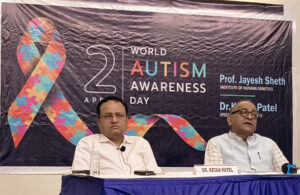
On the eve of World Autism Awareness Day – April 2, leading Gujarat experts issued a strong call for early diagnosis, integrated treatment, and India-specific protocols, while also addressing critical clinical questions surrounding Autism Spectrum Disorder (ASD).
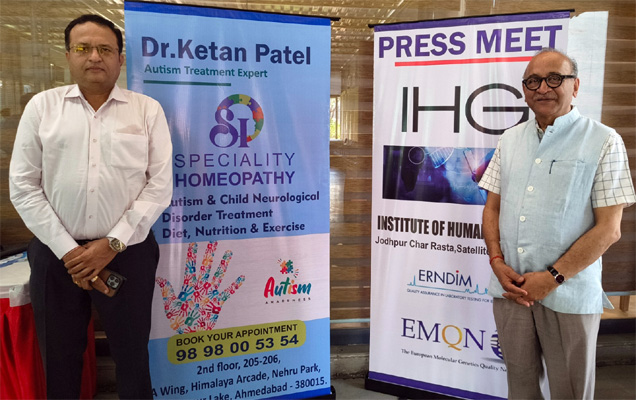
“Autism often presents before the age of three, and early clinical markers like lack of eye contact, delayed speech, poor social interaction, repetitive behaviours, and sensory sensitivity are signals no pediatrician should miss,” said Dr Ketan Patel, stressing the importance of early identification.
“Rise in Autism: Better Detection + Real Factors”
Addressing the global surge in autism cases, Dr Patel clarified: “The rising prevalence is a combination of improved diagnostic frameworks, increased awareness, genetic predisposition, and environmental triggers like pollution and maternal health conditions—not just overdiagnosis.”
He added that while global figures suggest 1 in 36 children, India is witnessing roughly 1 in 100 children affected, making it a growing public health concern.
“India Needs Standardised Screening Beyond Metros”
Highlighting systemic gaps, Dr Jayesh Sheth noted: “Diagnostic consistency in India is still uneven. Metro cities have access, but semi-urban and rural regions lack structured screening pathways. A national standardised protocol is urgently needed.”
“Autism is Not Mental Retardation”
Dr Sheth emphasised clinical clarity: “Autism is not mental retardation. It is a neurological wiring issue affecting communication and cognition. In nearly 50% cases, genetic factors play a role. Early diagnosis significantly improves outcomes.”
Comorbidities & Clinical Complexity
Experts flagged that autism rarely occurs in isolation: “Conditions like ADHD, epilepsy, anxiety, and gastrointestinal issues frequently co-exist. Clinicians must adopt an integrated, multidisciplinary management approach rather than isolated treatment.”
“Early Intervention is a Game-Changer”
Both doctors underlined the critical window: “The earlier the intervention—ideally before age 3—the better the long-term outcomes. Evidence-based therapies like behavioural therapy, speech therapy, occupational therapy, along with personalised diet and lifestyle plans, show measurable improvements.”
Role of Pediatricians as First Responders
Dr Patel stressed capacity building: “Pediatricians must be trained to identify early red flags, counsel parents, and ensure timely referral to specialists. They are the first line of defence in autism care.”
Medication vs Behavioural Therapy
On treatment balance, he clarified: “About 80% of cases can be managed with diet, exercise, and behavioural therapies. In 20%—especially with metabolic or genetic complications—medication becomes necessary. The approach must be individualised.”
He added: “Homeopathy has shown effectiveness in managing genetic, metabolic, and mitochondrial (syndromic) autism, helping control up to 90% of gene-related disruptions alongside lifestyle interventions.”
Technology Transforming Autism Care
On modern tools, Dr Sheth said: “AI-based screening, telemedicine, and digital therapeutics are revolutionising early detection and therapy access, especially in underserved areas.”
Parent Counselling & Mental Health
Experts emphasised emotional support: “Doctors must guide families through denial, stigma, and long-term caregiving stress. Counselling is as important as clinical treatment. Acceptance leads to better outcomes.”
India’s Clinical Roadmap Ahead
The doctors outlined three priorities: “First, a national screening protocol; second, capacity building of pediatricians and therapists; third, increased research funding in genetics and neurodevelopment.”
Myth Busted
They decisively addressed a persistent misconception: “Autism is not caused by parenting style or vaccines alone. It is a complex neurodevelopmental condition influenced by multiple factors.”
Precautions for Expectant Mothers
Experts advised preventive care:
- Maintain balanced nutrition and regular exercise
- Monitor thyroid and hormonal levels
- Avoid infections (TORCH screening)
- Reduce exposure to pollution and toxins
- Ensure regular prenatal check-ups
Financial Aid & Gujarat Initiative
The doctors revealed a major support initiative: “We are providing up to ₹5 lakh annually for treatment, genetic testing, and therapies for over 100 underprivileged children.”
They added: “Doctors across all systems—Allopathy, Homeopathy, Ayurveda—are coming together in Gujarat to create a unified, faster, and more effective treatment ecosystem.”
Symptoms to Watch (18–24 months)
- Delayed or absent speech
- Lack of eye contact
- Prefers isolation
- Repetitive behaviours
- Sensory sensitivity (noise, touch)
- Sudden emotional outbursts
“If two or more symptoms are observed, parents should seek immediate medical evaluation,” doctors advised.
Global Awareness
The World Health Organization marks April 2 as awareness day, with landmarks like the Eiffel Tower and Burj Khalifa illuminated in blue to spread awareness.