NE SCIENCE & TECH BUREAU
CHENNAI, APR 7
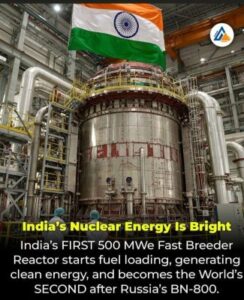
In a landmark achievement for India’s nuclear energy programme, the 500 MWe Prototype Fast Breeder Reactor (PFBR) at Kalpakkam, Tamil Nadu, successfully attained first criticality at 08:25 PM on Monday (April 6, 2026), marking the start of a controlled nuclear fission chain reaction and a decisive step toward long-term energy security and technological self-reliance.
- First criticality achieved on April 6, 2026
- Produces more fuel than it consumes
- Fully indigenous nuclear technology
- Key to India’s three-stage nuclear programme
- Enables future thorium-based energy
Criticality Milestone: The Reactor Comes Alive
Today, India takes a defining step in its civil nuclear journey, advancing the second stage of its nuclear programme.
The indigenously designed and built Prototype Fast Breeder Reactor at Kalpakkam has attained criticality.
This advanced reactor, capable of producing more fuel…
— Narendra Modi (@narendramodi) April 6, 2026
First criticality marks the moment a reactor sustains a controlled chain reaction—one of the most crucial stages in nuclear commissioning.
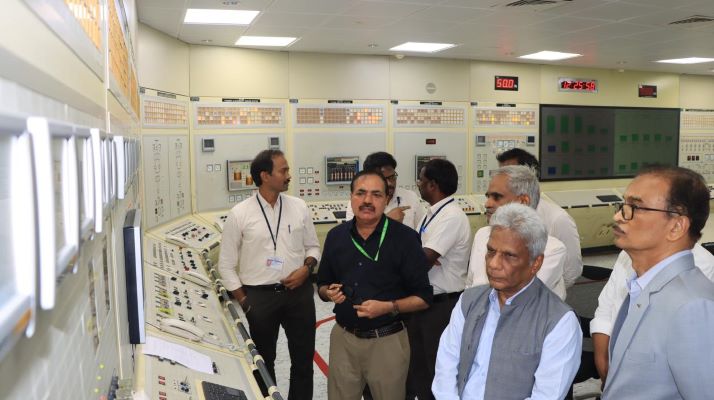
“The criticality was achieved in the presence of Dr Ajit Kumar Mohanty, Secretary, DAE & Chairman, AEC, Shri Sreekumar. G. Pillai, Director, IGCAR, Shri Allu Ananth, CMD-In-Charge, BHAVINI and Shri K.V. Suresh Kumar, Former CMD, BHAVINI & Homi Sethna Chair after meeting all the stipulations of the Atomic Energy Regulatory Board (AERB), which had issued clearance after a rigorous review of safety of the plant systems.”
Breeder Technology: Generating More Fuel Than Consumed
Fast Breeder Reactors represent a transformative leap in nuclear science by producing more fissile material than they use.
“Fast Breeder Reactors are a cornerstone of India’s long-term nuclear strategy.”
The PFBR uses Uranium-Plutonium Mixed Oxide (MOX) fuel, surrounded by a Uranium-238 blanket, where fast neutrons convert it into Plutonium-239. The reactor is also designed to eventually utilize Thorium-232, converting it into Uranium-233 for future energy generation.
Indigenous Engineering: A Triumph of Indian Science
The PFBR is a fully indigenous achievement, reflecting decades of research and engineering excellence.
“Achieving this milestone demonstrates the strength of India’s indigenous design, engineering and manufacturing ecosystem.”
- Designed by Indira Gandhi Centre for Atomic Research (IGCAR)
- Built and commissioned by Bharatiya Nabhikiya Vidyut Nigam Ltd (BHAVINI)
- Developed under the Department of Atomic Energy (DAE)
- Cleared by Atomic Energy Regulatory Board (AERB) after rigorous safety validation
Strategic Role: The Backbone of India’s Three-Stage Programme
The PFBR plays a pivotal role in India’s long-term nuclear roadmap.
“With the achievement of first criticality, India moves closer to realizing the full potential of its three-stage nuclear power programme.”
It bridges existing pressurized heavy water reactors with future thorium-based systems, ensuring optimal use of limited uranium while unlocking vast thorium reserves.
Sustainable Future: Clean Energy with Advanced Safety
The PFBR integrates cutting-edge safety and sustainability features for next-generation nuclear power.
“The attainment of first criticality represents not only a technological milestone but also a major step towards a sustainable and self-reliant energy future for Viksit Bharat.”
With liquid sodium cooling, a closed fuel cycle, and advanced safety systems, the reactor ensures efficient, low-carbon, and reliable base-load energy while minimizing nuclear waste.