- President pays rich tributes to Dr B R Ambedkar, underscores his multidimensional nation-building legacy
- From Constitution to economy—Ambedkar’s contributions span banking, irrigation, labour and federal finance
- Education, especially for marginalised sections, key to strengthening social harmony and equity
- “True harmony lies beyond caste, class, language and region,” says President Murmu
- Gujarat’s grassroots initiatives in welfare and sustainability hailed as models of inclusive development
NE NEWS SERVICE
GANDHINAGAR, APR 14
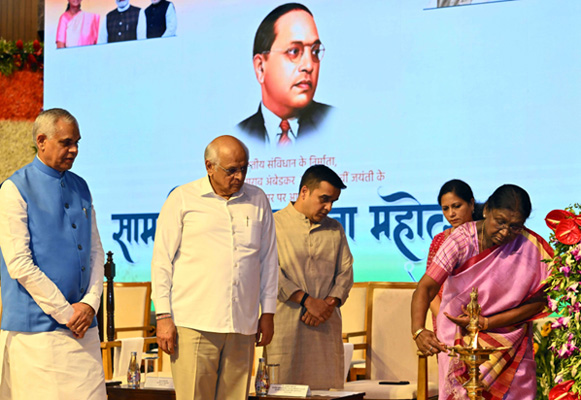
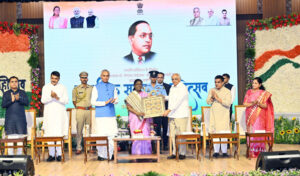
The President of India, Droupadi Murmu, graced the Samajik Samrasta Mahotsava at Lok Bhavan on Tuesday, marking the birth anniversary of B R Ambedkar.
Addressing the gathering, the President offered her tributes to Bharat Ratna Babasaheb, stating that the nation remains indebted to his unparalleled contributions. “Babasaheb made multifaceted contributions to the country’s progress and in the sphere of social justice, including the drafting of our Constitution,” she said.
Highlighting lesser-discussed dimensions of Ambedkar’s work, she noted, “By disseminating detailed information regarding his work in the fields of banking system, irrigation infrastructure, electricity grid, labour management framework and the revenue-sharing mechanism between the Centre and the States, citizens will be able to gain a comprehensive understanding of his remarkable contributions as a nation-builder.”
Emphasising the transformative role of education, President Murmu said, “Babasaheb always emphasised the importance of education. In our Constitution, education has been accorded the status of a Fundamental Right and provisions have been made in higher educational institutions to safeguard the interests of students belonging to marginalized sections.” She added, “It is the collective responsibility of all to encourage people from these marginalized sections to pursue education. The spirit of social harmony is strengthened through holistic education, particularly moral education.”
Drawing attention to the deeper ethos of unity, she observed, “Compassion towards all beings and social harmony are complementary in nature. The welfare of all and the unity of society are intrinsically interlinked. True harmony is reflected when individuals rise above divisions of caste, class, language, and region, and uphold the principle of equality without discrimination. All the children of Mother India are one—united in spirit and bound by a shared sense of harmony.”
Reiterating the central theme of the event, the President asserted, “The spirit of harmony is essential for the holistic, inclusive and equitable development of our country.” She expressed satisfaction that Gujarat is actively strengthening this spirit through initiatives such as tree plantation, sanitation, animal husbandry, agricultural development, and public welfare programmes.
She also recalled the enduring relevance of Ambedkar’s concluding speech in the Constituent Assembly, noting, “Social democracy is a way of life that embraces liberty, equality and fraternity as its fundamental principles.”
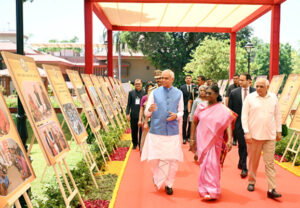
The Mahotsav, held in the presence of dignitaries and citizens, stood as a tribute to the ideals of equality and unity that continue to shape India’s democratic journey.