
R ARIVANANTHAM
CHENNAI, MAY 14
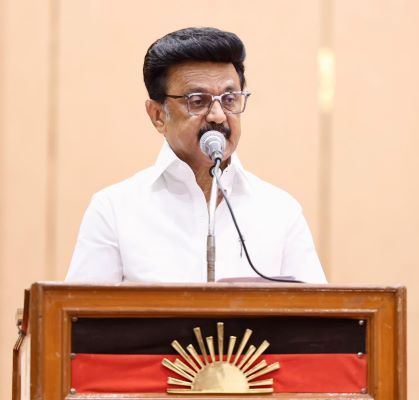
In an emotionally charged, politically explosive and introspective address at Anna Arivalayam on Thursday, M. K. Stalin broke his silence on the DMK’s electoral setback, accepted complete responsibility for the defeat and unveiled a sweeping roadmap to rebuild the party from the grassroots level.
— DMK (@arivalayam) May 14, 2026
Addressing district secretaries of the Dravida Munnetra Kazhagam, Stalin delivered a fiery speech packed with emotion, self-criticism, warnings against infighting and a powerful call for organisational transformation.
- M. K. Stalin accepts full responsibility for DMK’s 2026 electoral defeat
- DMK chief compares setback to past political comebacks and declares “the Sun will never set”
- Stalin announces statewide review committee and dedicated website to collect cadre and public feedback
- Calls for end to factional politics, stronger grassroots unity and aggressive social media mobilisation
- Warns cadres against internal blame game; vows DMK will “bounce back stronger and win again”
“What happens to the Sun? It never disappears forever. It rises again. Without the Sun, nothing functions. That is not just nature’s law — it is Tamil Nadu politics too,” Stalin declared, invoking the DMK’s iconic Rising Sun symbol and signalling a determined political comeback.
The DMK chief acknowledged that while no party secured an outright majority in the recently concluded Assembly election, the current government had been formed only with the support of alliance partners and defectors. He stressed that despite the defeat, the DMK still secured a significant vote share and remained politically formidable.
Drawing parallels with the party’s turbulent electoral history, Stalin reminded cadres that the DMK had previously suffered crushing defeats before staging dramatic recoveries.
“In 1991 we won only two seats. In 2001 we got just 37. In 2011 we were reduced to 31 seats. Today, we have won 59 seats, and with allies we stand at 73. The vote share gap is only 3.52 percent,” he pointed out.
In one of the speech’s most striking moments, Stalin said many voters were now regretting their decisions.
“People are saying on social media — ‘We thought DMK would win anyway, so we voted casually elsewhere.’ Many are now posting in regret after helping another party come to power,” he said.
Calling the DMK’s five-year rule a “people-centric government that directly benefited crores,” Stalin maintained that the public still recognised the party’s governance achievements despite the electoral outcome.
However, the DMK president firmly rejected attempts to pin the blame on individual leaders or factions.
“As party president, I alone take responsibility for this defeat. If I can claim credit for victory, I must also accept responsibility for defeat. That is justice,” he declared to loud applause.
Stalin urged cadres not to indulge in mudslinging or character assassination during post-poll introspection.
“Criticism is natural after defeat. But it should not become slander. Analysis is necessary, but not blame politics,” he cautioned.
Describing the election as a “new-age tsunami of attraction and illusion,” Stalin warned that Tamil Nadu itself could suffer under the present political arrangement and called on cadres to prepare for a long ideological battle ahead.
In a major organisational announcement, Stalin revealed plans to appoint a special review committee to conduct constituency-wise field studies across Tamil Nadu and submit a detailed report within 20 days.
He also announced the launch of a dedicated website where party cadres and even the general public could openly share feedback, criticism and suggestions about the DMK’s mistakes and future direction.
“Based on these reports and public feedback, we are preparing for massive structural reforms inside the DMK. Those changes will keep this movement alive for another hundred years,” he asserted.
Significantly, Stalin admitted that social media had emerged as a political battlefield bigger than traditional rallies, protests and public meetings.
“Our politics which once happened in tea shops must now happen on social media,” he remarked, urging every cadre to become digitally active and technologically equipped.
The DMK president also took a swipe at rival parties, saying the opposition never had to hide MLAs in luxury resorts despite defeat, unlike others allegedly did during political instability.
He instructed party legislators to aggressively raise issues in the Assembly with data, evidence and sharp arguments while continuing to pressure the government to complete infrastructure projects initiated during the DMK regime.
In a stern message to district leaders, Stalin warned against factionalism and internal ego clashes.
“If there is no unity within us, victory is impossible. Wherever the party is weak, you will find infighting,” he said.
The DMK chief also made it clear that leaders unwilling to work wholeheartedly were free to step aside voluntarily, saying the party had many capable workers ready to take responsibility.
Ending his speech on a high-voltage emotional note, Stalin urged cadres not to lose heart over what he called a “temporary setback.”
“We are owners of many victories. This defeat is only temporary. Let us march towards victory again. Let us plan, work harder, rise again and win again,” he thundered.
The address is being viewed as one of Stalin’s most candid and transformational speeches in recent years — one that may shape the future direction of the DMK after its 2026 electoral jolt.