

- Global experts, innovators, startups and policymakers converge to accelerate India’s composites and specialty fibres ecosystem
- Conference highlights indigenous technologies powering defence, aerospace, renewable energy, mobility and smart textiles
- NTTM reinforces commitment to innovation, commercialization, skill development and industry-academia collaboration
- Graphene-based smart textiles, braided composites and nanofibre filtration emerge as key drivers of future-ready manufacturing
NE BUSINESS BUREAU
AHMEDABAD, JUNE 11
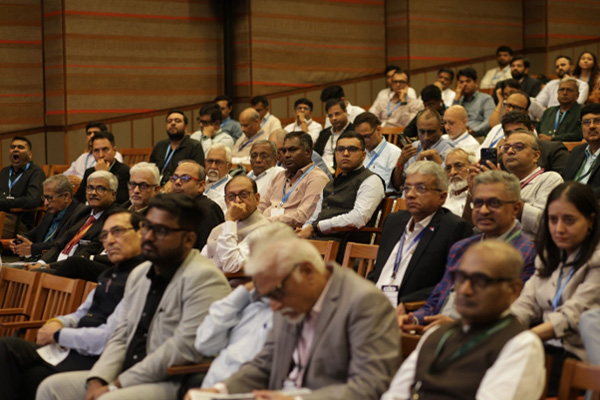
Innovation in advanced materials, composites and specialty fibres took centre stage as the International Conference on Advancements in Composites, Specialty Fibres and Chemicals, organised at ATIRA on June 5 and 6 with support from the National Technical Textiles Mission (NTTM), brought together leading industry experts, researchers, startups and policymakers to chart the future of India’s technical textiles ecosystem.
The two-day conference emerged as a collaborative platform for discussing cutting-edge technologies, indigenous innovation and commercialization opportunities that can strengthen India’s position in advanced manufacturing and contribute to the vision of Viksit Bharat 2047.
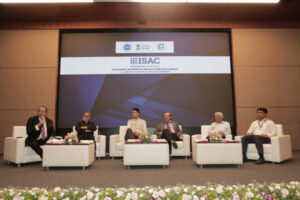
A series of high-level panel discussions explored critical themes shaping the sector, including the strategic role of composites in nation building, their expanding applications in renewable energy and mobility, their growing importance in space, aerospace and defence, and the need to strengthen ecosystem reliability through testing, quality assurance and skill development to create a globally competitive composite industry.
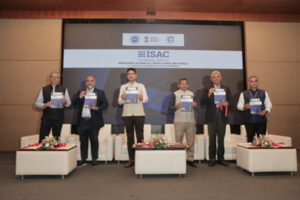
From smart fabrics to space-grade composites, innovators at ATIRA demonstrated how indigenous technologies are weaving the fabric of a stronger, self-reliant industrial India.- Courtesy: PIB
During the deliberations, the National Technical Textiles Mission (NTTM) encouraged ATIRA and ecosystem stakeholders to intensify efforts towards indigenous innovation, stronger industry-academia partnerships, commercialization of research and enhanced capacity building in advanced materials.
Ashok Malhotra, Mission Director, NTTM, reiterated the government’s commitment to supporting cutting-edge technology, research, entrepreneurship and development initiatives that contribute towards India’s vision of becoming a global leader in technical textiles and advanced manufacturing.
One of the conference’s major highlights was the showcase of two startups nurtured under the GREAT Scheme of NTTM, demonstrating how innovation is translating into commercially viable technologies.
Neil Patel presented advanced braided composite structures engineered for defence and automotive applications, offering lightweight yet high-strength alternatives designed for next-generation products.
Meanwhile, Neel Panchal showcased graphene-based conductive inks for smart textiles, opening new possibilities in wearable electronics, intelligent fabrics and healthcare monitoring systems.
The conference also featured two strategic research and development initiatives focused on strengthening indigenous technological capabilities.
Dr. Deepali Plawat highlighted the importance of developing indigenous HEPA filters using nanofibre technology to reduce import dependence and enhance India’s capabilities in high-performance filtration systems.
Dr. Kameswar Rao presented the case for developing CFRP composite slotted waveguide antennas for space and ground-based applications, underscoring the growing role of advanced composites in strategic and high-technology sectors.
The conference reinforced the growing convergence of research, entrepreneurship, policy support and industrial collaboration, positioning advanced materials and technical textiles as key enablers of India’s next phase of manufacturing-led growth and technological self-reliance.