- 38,653 people evacuated and 5,547 rescued as Gujarat mounts a statewide, multi-agency response to relentless monsoon fury
- Army’s Engineer and Medical Relief Columns deployed; 43 stranded civilians evacuated from Navsari
- IAF launches rescue operations in Vadodara; Coast Guard undertakes aerial surveys and evacuations in South Gujarat
- 49 NDRF-SDRF teams deployed as State Emergency Operations Centre and GSDMA coordinate round-the-clock response
- CM Bhupendra Patel wades through Bopal floodwaters for first-hand assessment; orders war-footing drainage, relief and rescue operations
- Bopal, Ambli and Ghuma inspected; Ahmedabad officials told to ensure immediate manpower, equipment, cleanliness and health measures
NE NEWS SERVICE
AHMEDABAD, JULY 24
As floodwaters rose across Gujarat, the country’s uniformed forces moved into the danger zone. Indian Army relief columns, Indian Air Force rescue teams and Indian Coast Guard crews joined hands with NDRF, SDRF, GSDMA, SEOC and district administrations in a massive humanitarian operation aimed at one overriding mission—saving lives and taking people out of harm’s way.
The scale of the response is reflected in the numbers: 38,653 people have been evacuated to safer locations and 5,547 stranded residents rescued during the monsoon season so far, according to the State Emergency Operations Centre (SEOC).
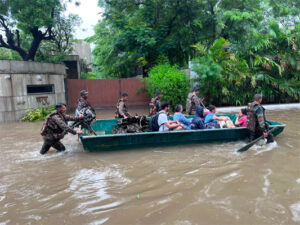
With heavy rainfall continuing to batter several parts of the State, 49 teams of the National Disaster Response Force (NDRF) and State Disaster Response Force (SDRF) have been deployed across Gujarat.
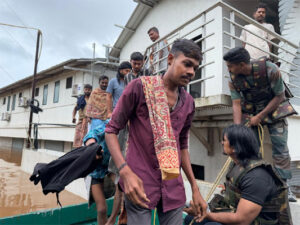
The Indian Army, under the aegis of Southern Command, has mobilised Relief and Rescue Columns, including Engineer and Medical teams, for Humanitarian Assistance and Disaster Relief operations. Teams have been deployed in Ahmedabad, Navsari, Valsad and Silvassa, while additional columns remain ready at Surat, Vadodara and Ahmedabad for immediate deployment as the situation demands.
Army rescue operations began late on July 23 in flood-affected areas of Navsari, where 43 stranded civilians have so far been safely evacuated.
The Indian Air Force is carrying out rescue operations in Vadodara, while the Indian Coast Guard is conducting aerial surveys over flood-affected areas of Navsari, Valsad and Tapi. Coast Guard teams are also engaged in rescue operations in Bilimora and Gandevi, shifting people stranded by rising waters to safer locations.
The Indian Army has said it remains committed to extending timely assistance to affected people and working in close coordination with the civil administration to safeguard lives and support relief operations.
CM wades through Bopal waters, demands war-footing response
The human face of the crisis came into sharp focus in Ahmedabad, where Chief Minister Bhupendra Patel personally walked through waterlogged areas of Bopal to assess the situation first-hand.
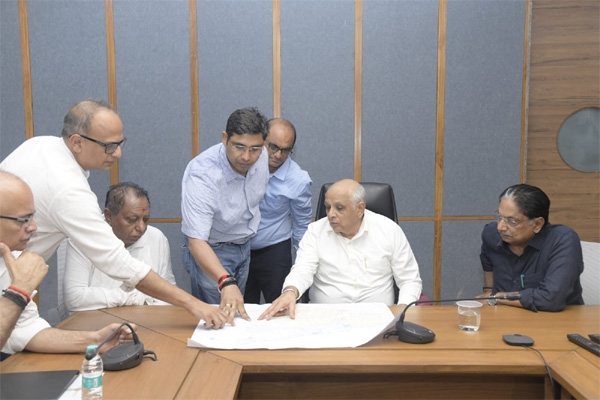
After visiting rain-affected areas including Bopal, Ambli and Ghuma, the Chief Minister held a review meeting with senior officials and officers of relevant departments, including the Ahmedabad Municipal Corporation and the police, in the presence of Minister Rishikesh Patel.
During the meeting, Patel took stock of rainwater accumulation across different parts of Ahmedabad and directed officials to undertake relief work on a war footing to address the difficulties faced by citizens, swiftly resolve waterlogging and accelerate relief operations.
He also directed that cleanliness and health-related activities be accorded priority in affected areas after the rains, recognising the public-health risks that can follow prolonged waterlogging.
During his on-site inspection, the Chief Minister reviewed rainwater drainage, relief efforts and rescue operations with officials and directed them to expedite restoration work and ensure the immediate availability of the required manpower, equipment and arrangements.
He also interacted with local residents in Bopal and listened to their difficulties.
The Chief Minister’s visit came as severe waterlogging affected several parts of Ahmedabad. The city received intense rainfall, with Bopal among the worst-hit areas.
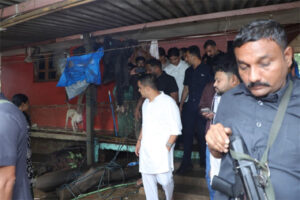
After visiting the rain-hit areas and holding meetings with Valsad district officials, Deputy Chief Minister Harsh Sanghavi said: “In view of the heavy rainfall and the resulting situation in Valsad district, I visited the rain-affected areas of Dhoraji village in Bhilad. I inspected the flood-affected areas and interacted directly with local residents to assess the situation on the ground. I have appealed to people to remain calm, refrain from believing or spreading rumours, and strictly follow the instructions and advisories issued by the administration.”
NDRF, SDRF & ARMY form the rescue backbone
The rescue operation has intensified across South Gujarat.
An SDRF team conducted a rescue operation at Pandor village in Nanapondha taluka of Valsad, while another operation was launched at Dharampuri in Vansda taluka of Navsari.
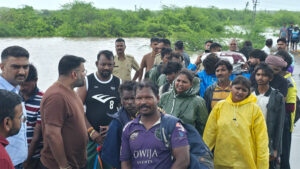
Successful rescue operation in Machhad Village of Jalalpor
In a major NDRF operation at Sarikhurad village in Navsari, 67 people—including women and children were rescued.
About 250 citizens trapped due to waterlogging in the shrimp pond area were safely rescued and relocated to a secure location through the joint efforts of the district administration, police, fire team, and the local boat operators in Machhad Village of Jalalpor.
In Ahmedabad district, three people trapped in rainwater at Chaloda village in Dholka taluka late on Thursday night were rescued by the local administration with SDRF assistance.
In another operation, 20 passengers stranded in a bus between Sarbhat and Badarkha villages were evacuated to safety with the help of a tractor.
At Meghar village in Gandevi taluka, the Indian Coast Guard launched a rescue operation to shift affected residents to safer locations.
The multi-agency response has brought together the Army, IAF, Coast Guard, NDRF, SDRF, State Emergency Operations Centre, GSDMA, police, fire and emergency services, district administrations and local response teams.
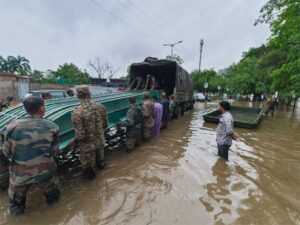
South Gujarat bears the brunt of monsoon fury
Navsari and Valsad remain among the worst-affected districts, with heavy rainfall disrupting normal life and inundating several areas. Surat, Ahmedabad, Kheda, Tapi and Dang have also faced significant rain-related disruption.
The Army has deployed relief columns in affected areas and kept additional teams ready for rapid mobilisation.
The Coast Guard’s aerial surveys over Navsari, Valsad and Tapi are providing vital situational awareness in areas where ground access has been disrupted.
The response is being mounted in close coordination with the civil administration to ensure that evacuation, rescue, relief and restoration efforts move together rather than in isolation.
North & Central Gujarat also under watch
Heavy rainfall continued to affect parts of north and central Gujarat.
The SEOC reported more than three inches of rain in two hours in Deodar taluka of Banaskantha. More than two inches was also recorded in Bhabhar in Banaskantha, Dhansura in Aravalli, Lilia in Amreli and Santalpur in Patan.
The State administration continues to monitor rainfall, water levels, vulnerable locations and emerging incidents as the weather situation evolves.
The India Meteorological Department has forecast further heavy rainfall in parts of Gujarat, prompting continued vigilance and deployment of emergency response resources.
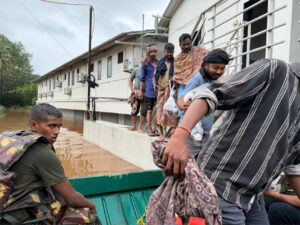
DGP to review statewide emergency response
Director General of Police Gyanendra Singh Malik is scheduled to visit the State Emergency Operations Centre in Gandhinagar to review the situation in rain-affected districts and assess ongoing rescue and relief operations.
The SEOC and GSDMA continue to serve as key coordination points for the State’s disaster response, while district-level administrations are managing local evacuations, relief distribution, drainage and restoration work.
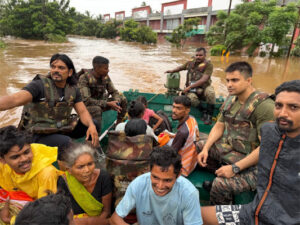
The scale of the operation is extraordinary, but behind every statistic is a human story—a family moved from a flooded home, villagers reached after roads disappear, passengers rescued from stranded vehicles and children carried away from rising waters.
In Gujarat’s hour of monsoon distress, the rescue mission has become a powerful portrait of collective humanitarian action: soldiers entering floodwaters, pilots reaching stranded populations, Coast Guard teams flying into danger, disaster responders working through the night and local officials racing against rising water—each effort converging on one promise: no life should be left behind.