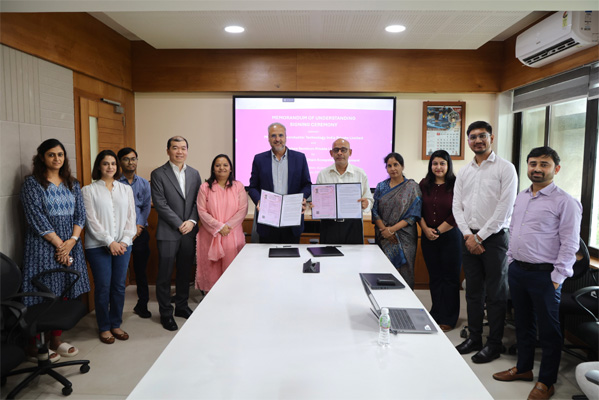
- Strategic MoU seeks to strengthen India’s semiconductor supply chain through supplier investment and industry collaboration
- Micron-Kaynes partnership to engage Gujarat State Electronics Mission, government agencies and industry stakeholders
- Focus on regulatory, infrastructure and operational issues critical to building a resilient semiconductor ecosystem
NE BUSINESS BUREAU
SANAND, AHMEDABAD, JULY 25
India’s semiconductor ambitions are rapidly moving beyond the race to establish chip fabrication and assembly facilities. But can the country build a resilient supplier ecosystem around these mega projects — and ensure that the wider value chain grows alongside semiconductor manufacturing?
Micron Technology and Kaynes Semicon Pvt. Ltd. have taken a strategic step in that direction by signing a memorandum of understanding to support the development of India’s semiconductor supplier ecosystem, with Gujarat emerging as a key platform for industry collaboration and supply-chain development.
The partnership seeks to bring together the Gujarat State Electronics Mission (GSEM), government agencies, industry stakeholders and suppliers to promote collaboration and help address the regulatory, infrastructure and operational challenges associated with building a robust semiconductor supply chain.
The MoU was signed by representatives of Micron and Kaynes in the presence of Gursharan Singh, Senior Vice-President, Global Assembly and Test, Micron Technology; Raghu Panicker, Chief Executive Officer, Kaynes Semicon Pvt. Ltd.; and representatives of GSEM.
From chip plants to the supplier universe
The collaboration is aimed at supporting the growth of India’s semiconductor ecosystem through the exchange of non-commercial industry insights and constructive dialogue across the semiconductor value chain.
The initiative is expected to encourage supplier investment and help stakeholders better understand the ecosystem requirements associated with semiconductor manufacturing — from infrastructure and regulatory frameworks to operational capabilities and supply-chain resilience.
For India, this is a crucial next step. A semiconductor manufacturing ecosystem cannot be built around fabrication or assembly facilities alone. It also requires a dependable network of suppliers, technology partners, logistics providers, equipment providers and specialised service companies capable of meeting the industry’s stringent quality, reliability and delivery requirements.
Why Gujarat’s role matters
The partnership also underlines Gujarat’s growing role in India’s semiconductor strategy.
By engaging GSEM and other stakeholders, the Micron-Kaynes initiative seeks to create a platform for constructive dialogue on the practical issues that can determine the pace and sustainability of semiconductor investments.
The partnership will focus on encouraging supplier participation and helping identify ecosystem-level challenges relating to regulation, infrastructure and operations.
The larger objective is to help create conditions for a more resilient and locally anchored semiconductor supply chain, reducing vulnerabilities and supporting the development of domestic capabilities.
Building the ecosystem around the ecosystem
The Micron-Kaynes partnership comes at a time when India is seeking to establish itself as a significant player in the global semiconductor value chain.
The real test, however, will be whether large semiconductor investments generate a wider industrial network around them. The development of a supplier ecosystem could help create opportunities for Indian companies to participate in the semiconductor value chain while enabling global players to access a more reliable and diversified supply base.
The MoU marks an effort to move that conversation forward by bringing industry, government and suppliers to the same table.
The question now is no longer merely whether India can attract semiconductor manufacturing. It is whether it can build the entire ecosystem required to make that manufacturing globally competitive.