
- Jamnagar District Cooperative Bank unveils ₹25-crore Sahakar Bhavan with RBI-NABARD-compliant infrastructure
- New headquarters to serve farmers and cooperatives across Jamnagar, Devbhumi Dwarka with modern banking facilities
- Bank posts ₹135 crore deposits, ₹780 crore loan disbursement, ₹24 crore profit and zero gross NPA
- 40 branches, 431 service cooperatives and 652 milk societies to power deeper village-level financial inclusion
- Shah pitches 2 lakh-plus new PACS and dairy cooperatives and 20-plus new PACS businesses as engines of rural growth
SEO Keywords: Jamnagar District Cooperative Bank, Sahakar Bhavan Jamnagar, Amit Shah cooperative movement, Gujarat cooperative banking, Sahkar Se Samriddhi, PACS, cooperative banking Gujarat, Jamnagar farmers, Devbhumi Dwarka cooperatives, dairy cooperatives
NE BUSINESS BUREAU
NEW DELHI, JULY 28
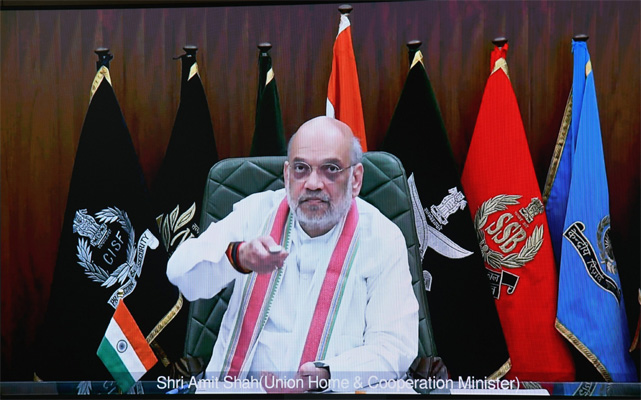
Modernising the cooperative movement is no longer just about better buildings—it is about putting safer banking, stronger institutions and greater financial muscle within farmers’ reach. Underlining this vision, Union Home Minister and Minister of Cooperation Amit Shah virtually inaugurated the newly constructed Sahakar Bhavan, headquarters of Jamnagar District Cooperative Bank in Gujarat, calling institutional modernisation essential to taking the cooperative sector to the next level.
The ₹25-crore facility, built to RBI and NABARD standards, is designed to meet the financial and institutional requirements of farmers, service cooperative societies and dairy institutions across Jamnagar and Devbhumi Dwarka.
“Under the leadership of Prime Minister Narendra Modi, the Ministry of Cooperation has infused new energy and momentum into the cooperative movement,” Shah said.
The new building, constructed on 25,000 sq ft of land with nearly 47,000 sq ft of functional space, has been planned to meet the bank’s requirements for the next 15 years. It houses a training centre, farmers’ hostel, modern conference and meeting halls, secure lockers and dining facilities. A 200-kilowatt solar power plant will also help position the headquarters as a green facility.
Zero-NPA cooperative banking
Shah highlighted the bank’s financial performance as evidence of its operational strength.
“Deposits of ₹135 crore, loan disbursement of ₹780 crore, profit of ₹24 crore and zero NPA are major achievements of Jamnagar District Cooperative Bank,” he said.
The bank, which began operations in 1969 with capital of only ₹2.5 lakh, has now expanded its network to 40 branches and is associated with 431 service cooperative societies, six dairy unions and 652 milk producers’ societies, serving more than 1.5 lakh cooperative members.
Cooperatives as rural growth engines
Shah said the new headquarters would function as an “energy centre” for farmers in Jamnagar and Devbhumi Dwarka, enabling the bank to strengthen its village-level outreach and provide more modern and secure financial services.
He linked the initiative to the Centre’s broader ‘Sahkar Se Samriddhi’ vision, under which more than two lakh new PACS and dairy cooperative societies are being established, while over 20 new business activities are being introduced for PACS.
“More than two lakh new PACS and dairy cooperative societies, along with more than 20 new business activities for PACS, will lay the foundation for rural prosperity,” Shah said.
Next-gen cooperative ecosystem
The Minister also highlighted the online audit of cooperative institutions and efforts to connect different cooperative entities as measures aimed at improving transparency, efficiency and integration.
The inauguration was attended physically or virtually by Gujarat Chief Minister Bhupendrabhai Patel, Cooperation Minister Jitubhai Vaghani, Cabinet Ministers Arjunbhai Modhwadia, Raghavjibhai Patel and Mulubhai Bera, Jamnagar MP Poonamben Maadam, Minister of State and Jamnagar North MLA Rivaba Jadeja, Gujarat State Cooperative Bank Chairman Ajaybhai Patel and Jamnagar District Cooperative Bank Chairman Jitubhai Lal, besides directors, cooperative leaders, officials and farmers.
Shah said he would visit the new headquarters during a future Jamnagar visit and meet representatives of service and dairy cooperatives to discuss expanding the cooperative sector and improving farmer prosperity.
The message from Sahakar Bhavan was unmistakable: modern cooperative institutions, financially sound banks and stronger village-level networks can become the infrastructure of India’s next rural growth story.