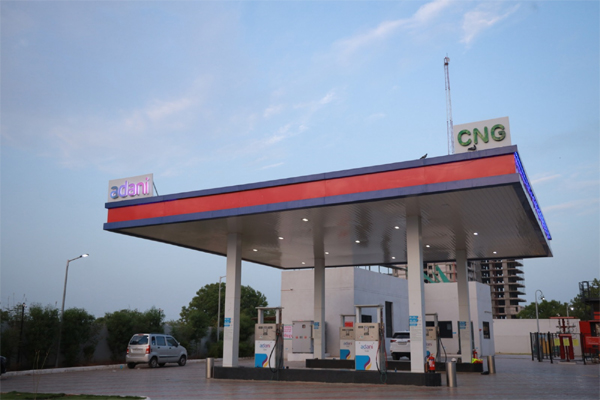
- ATGL raises CNG price by ₹4/kg to ₹94.02 in Ahmedabad and Gujarat from August 1
- Second hike in 12 days comes amid higher sourcing costs, reduced domestic gas availability and supply curtailments
- ATGL says geopolitical tensions and elevated global gas prices have squeezed procurement costs, even as it seeks to cushion consumers
NE BUSINESS BUREAU
AHMEDABAD, AUG 2
For Gujarat’s CNG-dependent motorists, the road has suddenly become costlier: Adani Total Gas Ltd (ATGL) has raised the price of compressed natural gas by ₹4 per kg to ₹94.02, effective August 1, making it the company’s second price increase in just 12 days.
The latest increase brings a fresh squeeze on auto-rickshaw drivers, cab operators, commercial vehicle owners and thousands of commuters who have traditionally turned to CNG as a relatively economical and cleaner alternative to petrol and diesel.
ATGL attributed the revision to a sharp increase in the cost of sourcing natural gas, pointing to reduced availability of domestic gas, supply curtailments and elevated international gas prices amid geopolitical tensions.
“The revision in CNG prices has been necessitated by a significant increase in natural gas sourcing costs arising from reduced availability of domestic gas, supply curtailments, and elevated global gas prices due to geopolitical issues,” an ATGL spokesperson said.
The company maintained that it was absorbing as much of the additional burden as possible to limit the impact on consumers.
“Despite these challenges, ATGL continues to make every effort to minimize the impact on consumers while ensuring uninterrupted supply of CNG, which remains an economical and environmentally friendly fuel option,” the spokesperson added.
Global turbulence reaches the fuel pump
The latest hike underlines how geopolitical turbulence and disruptions in global energy markets can quickly translate into higher transportation costs in local markets.
ATGL had earlier flagged the impact of geopolitical tensions in West Asia on global energy supply chains, saying higher natural gas prices, supply-chain challenges and currency volatility had increased its overall gas procurement costs.
The company has simultaneously maintained its focus on uninterrupted supplies. Its CNG network expanded to 705 stations by the end of FY26, while the company reported double-digit growth in gas volumes during the year.
Second hike in 12 days
The latest ₹4/kg increase follows an earlier revision, making the cumulative impact particularly significant for high-mileage CNG users.
For drivers whose livelihoods depend on daily running, even a seemingly modest increase per kilogram can materially raise monthly fuel expenditure. The impact is likely to be felt most acutely by auto-rickshaw and taxi operators, who have limited scope to absorb recurring fuel-cost increases without eventually passing some of the burden on to passengers.
Yet, compared with conventional automotive fuels, CNG continues to retain its appeal as a relatively cleaner transportation fuel.
The economical-fuel equation under pressure
The price increase nevertheless poses a larger question for India’s transition towards cleaner mobility: how sustainable is the economics of CNG when domestic gas availability tightens and international energy volatility raises procurement costs?
For consumers who switched to CNG precisely for its cost advantage, repeated price revisions could gradually narrow the economic gap with competing fuels.
ATGL, however, has emphasised that its priority remains uninterrupted supply while limiting the burden on consumers.
The latest revision thus reflects a difficult balancing act: keeping a cleaner fuel affordable for consumers while navigating an increasingly expensive and geopolitically vulnerable natural-gas supply chain.