R ARIVANANTHAM
CHENNAI, JUNE 23
In a nation where educational inequality often determines life outcomes, the Ashok Leyland Foundation (ALF) has emerged as a powerful force proving that education can truly become a social leveller. The CSR arm of Ashok Leyland, the flagship company of the Hinduja Group, has built one of India’s largest corporate-backed education initiatives through its flagship programmes — Road to School (RTS) and Road to Livelihood (RTL).
When Classrooms Become Catalysts of Change
- From 36 Schools to 6.26 Lakh Students, the Road to School Programme Rewrites the Future of Underserved India
- 4,585 Government Schools • 4,500+ Villages • 9 States • One Mission: Opportunity for Every Child
- Road to Livelihood Equips Youth with Skills for Employment, Entrepreneurship and Economic Independence
- Women Empowerment, Tribal Inclusion, Digital Literacy and Community Development Power the Movement
- Target: One Million Students Through a Scalable Model of Education, Employability and Social Impact by the year 2029
Addressing the media, N V Balachander, Director and T Sasikumar, Chief Operating Officer – Ashok Leyland Foundation said:
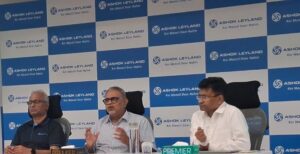
“We started in 2015 with just 36 schools in Tamil Nadu’s Krishnagiri district has today expanded across 4,585 government schools in over 4,500 villages spanning nine states, positively impacting more than 6.26 lakh students. Aligned with the United Nations Sustainable Development Goals and implemented in partnership with Learning Links Foundation, the initiative seeks not merely to improve enrolment but to transform lives through quality education, employability and community empowerment.”
Building Strong Foundations
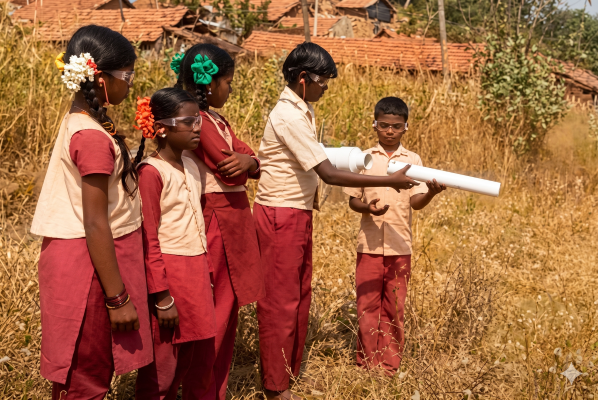
The Road to School programme focuses on students from Grades 1 to 8, strengthening foundational literacy and numeracy while nurturing creativity, physical fitness, health awareness and life skills.
The programme’s integrated model addresses one of India’s biggest educational challenges: ensuring that children not only enter school but continue learning meaningfully.
The results have been impressive:
- More than 15,000 children reintegrated into government schools
- 98% transition rate to high school
- 95% completion rate of Grade 10
- 25-30% improvement in literacy and numeracy outcomes
- 634 students qualifying for the prestigious NMMS scholarship
- Over ₹50 crore worth of welfare benefits unlocked for eligible families
These achievements demonstrate how targeted interventions can convert vulnerable learners into confident achievers.
Beyond Schooling: Preparing Students for Life
Recognising that education must ultimately translate into opportunities, ALF launched the Road to Livelihood programme in 2022.
Designed for students from Grades 9 to 12, RTL equips young people with digital literacy, spoken English, financial awareness, career planning and emotional resilience.
The objective is simple yet profound: help students make informed choices about higher education, vocational training and employment in an increasingly competitive world.
Changing Lives in India’s Toughest Terrains
The programme’s impact is particularly visible in challenging geographies.
In Tamil Nadu’s tribal-dominated Kolli Hills, where access to education remains difficult, RTS supports more than 3,500 students across 58 government schools. Academic outcomes have improved significantly, while community initiatives have brought health camps, learning centres, water restoration projects and infrastructure development to remote habitations.
In Jammu & Kashmir, RTS educators ensured learning continuity even when families migrated during winter months. Through home visits, virtual engagement and sustained parental outreach, students who had drifted away from classrooms were successfully brought back into the learning ecosystem.
In Rajasthan, personalised interventions transformed the educational journey of struggling learners by combining innovative teaching methods with parental involvement.
These stories underscore a simple truth: educational transformation happens when institutions invest in people, not merely programmes.
Empowering Women, Strengthening Communities
The Foundation’s impact extends far beyond classrooms.
Through livelihood initiatives across Tamil Nadu, 550 women received market-oriented vocational training in tailoring, Aari work, mushroom cultivation, beauty services, electrical work and other trades.
The outcome was tangible. 159 women secured employment, generating a combined monthly income exceeding ₹2.8 lakh.
This demonstrates how education ecosystems can become engines of economic empowerment, particularly for women who have historically faced barriers to financial independence.
A Holistic Vision of Development
Ashok Leyland Foundation’s CSR philosophy extends into health, sustainability and community development.
Its initiatives include:
- Type-1 diabetes support for approximately 3,700 children
- Mobile medical clinics benefiting over four lakh people
- Rainwater harvesting and watershed management projects
- Spring restoration programmes
- Tribal entrepreneurship initiatives through the Young Grampreneur Programme
The Foundation’s multi-dimensional approach recognises that educational success is closely linked to health, environment and community well-being.
A Model for Corporate India
The programme’s impact has earned national recognition, including honours from the Society of Indian Automobile Manufacturers (SIAM), the All India Management Association (AIMA), Loyola Institute of Business Administration (LIBA), and other leading institutions.
Yet the most significant achievement lies elsewhere — in creating a scalable model capable of bridging educational inequities across India.
As the Foundation works toward its ambitious goal of reaching one million students, it is setting a benchmark for how Corporate Social Responsibility can move beyond philanthropy to create measurable, sustainable social transformation.
As Ashok Leyland Foundation’s vision succinctly demonstrates, education is not merely about learning; it is about unlocking dignity, opportunity and the power to reshape destinies.
“The vision of the Road to School Programme is to provide holistic development opportunities with a focus on quality education.”
In an era where inclusive growth remains India’s greatest challenge, that vision may well become one of its most enduring success stories.