

- Born from a decade of research and clinical collaborations, Oreejoy’s AI-powered wearable seeks to take sophisticated gait analysis out of specialised labs and closer to patients
- IITGN startup bags ₹10 lakh Boeing BUILD grant after emerging among seven winners from nearly 2,200 applications nationwide
- INSTROLE wearable insole maps pressure beneath the foot, while AI converts walking patterns into personalised mobility and rehabilitation insights
- Technology aims to make gait analysis more accessible and affordable, with the founders saying the wearable approach can reduce costs by around 80%
- From Parkinson’s and stroke rehabilitation to flat-foot and osteoarthritis assessment, Oreejoy is taking its research from laboratory to everyday life
NE SCIENCE & TECHNOLOGY BUREAU
GANDHINAGAR, SEPT 7
What if a patient’s walk could become a window into their health—and a simple insole could capture the information once available only through expensive clinical machines?
That question lies at the heart of Oreejoy Medtech Private Limited, an IIT Gandhinagar startup that is using wearable sensing, artificial intelligence and personalised rehabilitation to rethink how mobility is assessed.
The startup has now won the Boeing BUILD National Finals, earning a ₹10 lakh grant to advance its AI-powered wearable technology. Its achievement came in the fifth edition of Boeing BUILD, Boeing’s University Innovation Leadership Development Program, which attracted around 2,200 applications from across India. Of these, 28 teams reached the National Finals, with seven ultimately selected for the grant.
The recognition places Oreejoy among a select group of emerging innovators working across technology, social impact, sustainability, aerospace and defence, while highlighting the potential of its technology to address a fundamental healthcare challenge: making accurate mobility assessment available beyond expensive and specialised clinical environments.
From a ₹65-lakh machine to an insole that walks with the patient
Oreejoy’s journey has its roots in nearly a decade of research and clinical collaborations across India.
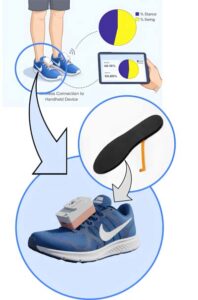
At the centre of its innovation is a wearable insole equipped with pressure sensors, signal-processing capabilities and artificial intelligence. The system analyses the way a person walks by mapping pressure patterns beneath the foot—capturing how weight shifts, how the foot strikes the ground and how gait changes over time.
The idea emerged from a practical problem identified by Prof Uttama Lahiri, Oreejoy’s Founder and Technical Director and Professor in IITGN’s Department of Electrical Engineering.
“When I returned to India in 2012, I began working on mobility disorders affecting people with Parkinson’s Disease and Stroke. At the time, gait analysis depended largely on expensive and bulky pressure-sensitive walkways and camera-based systems, with commercial systems costing approximately ₹25 lakh to ₹65 lakh and requiring specialised facilities. This made us think about whether the same information could be captured through a wearable system and brought closer to the patient or in fact to any user.”
That question set the team on a path towards INSTROLE, a lightweight wearable insole designed to capture mobility data without tying the user to a specialised gait laboratory.
When every step becomes data
With pressure sensors embedded in the insole, INSTROLE captures the forces and patterns generated during walking. The information is recorded through an edge device and can be wirelessly transmitted to the cloud for secure storage, processing and analysis.
The accompanying INSTROLE app then turns complex measurements into information that can be understood and used by both patients and clinicians.
Users can access summaries of their walking and balance performance, while clinicians can examine more detailed gait patterns to support assessment, monitoring and rehabilitation decisions.
The system is already being used with personalised sensory cues to aid walking in people with Parkinson’s, with the technology holding potential for wider neurological rehabilitation applications.
The broader proposition is compelling: take sophisticated gait analytics that traditionally required bulky infrastructure and put it into a wearable format that can travel with the person.
Technology that starts with the person, not the machine
For Oreejoy, however, the innovation is not simply about shrinking clinical technology. It is about making that technology fit naturally into everyday life.
Dr Neelesh Sharma, Oreejoy’s Co-founder and Design Director, explains: “For any solution to make a real difference, it must fit naturally into people’s everyday lives. This is why user needs, comfort and experience have been central to our design approach. The goal has been to create a system that is not only technologically advanced, but also practical and accessible, with our wearable approach helping reduce the cost of gait-analysis technology by around 80 percent.”
That philosophy has shaped Oreejoy’s development from its early days, when an IITGN workshop brought together researchers, clinicians, students and technology developers to identify healthcare challenges and build collaborations across Saurashtra and beyond.
Since then, around 300 individuals have participated in studies across Rajkot, Ahmedabad, Gandhinagar and New Delhi.
Support from IITGN’s research facilities, Tinkerer’s Lab and Research Park has further helped the startup expand its work into post-stroke rehabilitation, flat-foot assessment and osteoarthritis, while future research is exploring applications in sports.
The real test: Can technology change a life?
For all the sophisticated sensors, AI models and cloud infrastructure, Oreejoy’s founders believe the real measure of innovation is far more human: Can it help someone walk through life with greater confidence?
One experience has stayed with the team.
A 75-year-old patient, who initially arrived at the hospital accompanied by his grandchild and dependent on a walking stick, was later able to cross the busy road outside the hospital independently.
It is a small-looking milestone that carries enormous significance.
For the patient, it represents mobility and confidence. For Oreejoy, it illustrates why accessible diagnostics and personalised rehabilitation matter beyond clinical metrics.
From research breakthrough to wider rehabilitation ecosystem
The ₹10 lakh Boeing BUILD grant now gives Oreejoy an opportunity to accelerate the next stage of this journey.
The programme provides early-stage startups with structured learning, mentorship, incubator support and industry expertise, with IITGN’s Innovation and Entrepreneurship Center (IIEC) serving as one of seven incubator partners.
Oreejoy plans to use the momentum to further develop AI-enabled solutions for rehabilitation, while exploring applications extending beyond patients to sports enthusiasts and active individuals.
The vision is ambitious but simple: make mobility assessment more personalised, practical and accessible, while helping people lead more active and fulfilling lives.
From a research question born in 2012 to a national innovation award in 2026, Oreejoy’s journey suggests that sometimes the next big leap in healthcare technology may not require a bigger machine.
It may simply require looking more intelligently at every step we take.