- Three back-to-back flight tests showcase India’s indigenous prowess in ballistic missile interception and maritime strike capability
- Multi-layered Ballistic Missile Defence system proves its ability to counter threats up to Intercontinental Ballistic Missiles
- Maiden flight of Naval Anti-Ship Missile-Medium Range strengthens India’s next-generation maritime warfare arsenal
- Rajnath Singh hails DRDO scientists and industry partners as indigenous defence technologies script a new era of strategic deterrence
NE DEFENCE BUREAU
NEW DELHI, JUNE 13
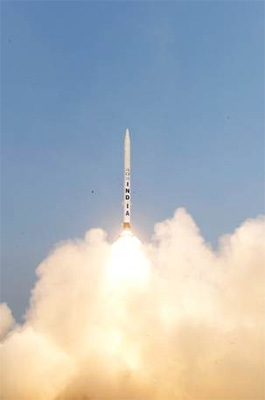
In a landmark demonstration of India’s rapidly advancing indigenous defence ecosystem, the Defence Research and Development Organisation (DRDO) has successfully showcased a suite of next-generation strategic technologies, including a multi-layered Ballistic Missile Defence (BMD) system capable of engaging threats up to Intercontinental Ballistic Missiles (ICBMs) and the maiden flight of the Naval Anti-Ship Missile-Medium Range (NASM-MR).
The successful demonstrations, conducted through three consecutive flight tests on June 10 and 11, mark one of the most significant milestones in India’s quest for strategic self-reliance and reinforce its position among the world’s most technologically advanced defence powers.
According to the Ministry of Defence, the multi-layered Ballistic Missile Defence capability was successfully demonstrated, with interceptor missiles accurately destroying their designated targets under operational conditions.
“The interceptors successfully engaged their respective targets. The systems are designed and developed with latest technologies to address the emerging missile threats.”
The achievement significantly strengthens India’s strategic deterrence architecture amid evolving regional and global security challenges.
In a major endorsement of the programme’s technological maturity, the Ministry noted:
“These tests have put the country in the elite group of nations having BMD capability to engage up to Intercontinental Ballistic Missiles.”
The feat places India among a select handful of nations possessing sophisticated missile shield capabilities capable of defending against long-range ballistic threats.
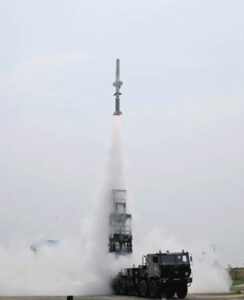
Adding another milestone to the nation’s indigenous weapons programme, DRDO also successfully conducted the maiden flight-test of the Naval Anti-Ship Missile-Medium Range (NASM-MR), a modern precision strike weapon designed to substantially enhance the Indian Armed Forces’ maritime combat capability.
The medium-range anti-ship missile is expected to provide the Navy with a potent indigenous platform capable of strengthening sea-denial and maritime dominance operations in the Indian Ocean Region.
Senior officials from DRDO and the armed forces witnessed the trials, underlining the seamless collaboration between scientists, engineers and military personnel in accelerating India’s defence modernisation programme.
Congratulating the scientific community on the landmark achievement, Raksha Mantri Rajnath Singh praised DRDO for successfully demonstrating these crucial strategic technologies.
“Raksha Mantri Shri Rajnath Singh has congratulated DRDO on successfully demonstrating these crucial technologies.”
Secretary, Department of Defence Research & Development and Chairman DRDO Rajesh Kumar Singh, who closely monitored the trials, applauded the coordinated efforts of DRDO scientists, engineers and industry partners that made the successful demonstrations possible.
“Secretary, Department of Defence R&D and Chairman DRDO Shri Rajesh Kumar Singh closely monitored the trials and applauded the combined efforts of DRDO and industry.”
The latest successes underscore India’s unwavering commitment to ‘Aatmanirbhar Bharat’ in defence manufacturing and highlight the country’s growing capability to design, develop and deploy sophisticated weapon systems capable of addressing future battlefield and strategic challenges.
With an indigenous missile shield capable of intercepting long-range ballistic threats and a new-generation naval strike missile entering the arsenal, India has taken another decisive step towards building a comprehensive, technology-driven defence architecture for the future.