- Immersive field visit turns theory into real-world insight for Ayurvedic scholars
- From sewage to sustainability: decoding zero-waste water ecosystems
- Experts-led demonstrations spark hands-on learning and environmental awareness
NE EDUCATION BUREAU
GANDHINAGAR, APR 24
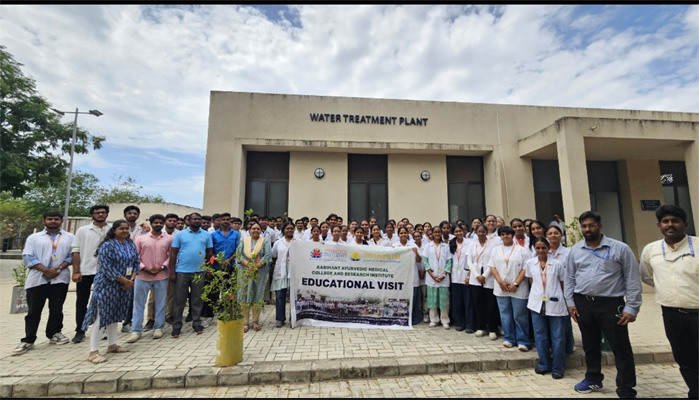
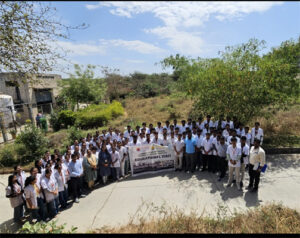
In a refreshing shift from classrooms to cutting-edge infrastructure, students of Swarrnim Startup & Innovation University’s Aarihant Ayurvedic Medical College & Research Institute stepped into the world of advanced water management during an educational tour to the Water Treatment Plant (WTP) and Sewage Treatment Plant (STP) at Indian Institute of Technology Gandhinagar, Palaj.
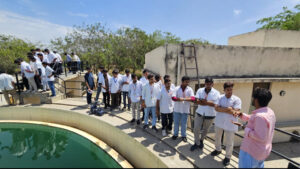
The visit aimed to provide practical exposure to water purification and sewage treatment processes—bridging academic knowledge with real-world applications. Students explored critical stages of water treatment including screening, aeration, coagulation, sedimentation, filtration, and disinfection, alongside key infrastructure such as grit chambers, aeration systems, and sedimentation tanks.
Guided by experts Mr. Pritesh Kumar Mundra and Mr. Jyothish Kumar, the students gained insights into the functioning of the Sewage Treatment Plant, where wastewater from hostels and campus facilities undergoes multi-stage treatment, including anaerobic processing. A highlight of the visit was the eco-friendly use of Canna indica plants in wastewater treatment—demonstrating nature-integrated sustainability.
The treated water is efficiently reused for irrigation and flushing, while the generated sludge is repurposed for biogas production—reflecting a zero-waste approach to resource management.
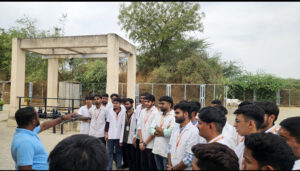
At the Water Treatment Plant, students examined the operations of a 4.6 MLD system, learning about chlorination, alum-based coagulation, filtration techniques, and quality monitoring through parameters such as pH, turbidity, and Total Dissolved Solids (TDS).
The tour also spotlighted innovative rainwater harvesting structures like Jalamandapas, reinforcing the importance of water conservation.
Overall, the field visit significantly enhanced the students’ practical understanding of sustainable water management systems, aligning traditional healing sciences with modern environmental stewardship.