

- Indian Institute of Management Ahmedabad hosts global conference to amplify organ donation awareness
- MOHAN Foundation joins hands to turn compassion into collective action
- Experts, policymakers, youth and NGOs unite to break myths and drive behavioural change
- Technology, storytelling and community engagement emerge as powerful awareness tools
- Global voices from Asia converge to shape India’s future organ donation ecosystem
NE HEALTH BUREAU
AHMEDABAD, APR 7
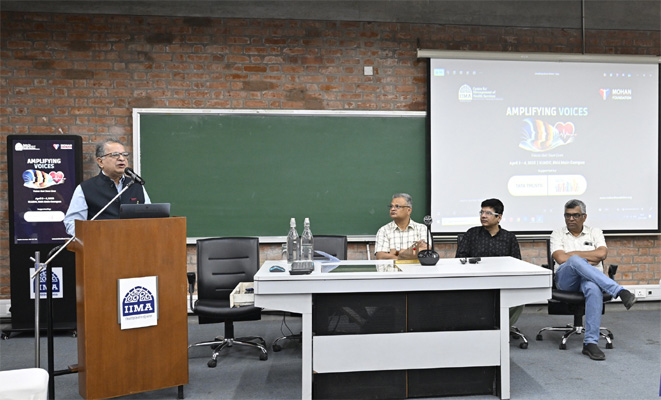
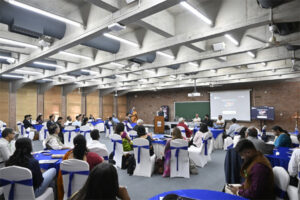
In a powerful call to transform loss into life, the Indian Institute of Management Ahmedabad has become the epicentre of a growing organ donation movement, hosting its first-ever international conference, ‘Amplifying Voices’, aimed at driving awareness, empathy, and action.
Organised by the Centre for Management of Health Services (CMHS) at IIMA in collaboration with the MOHAN Foundation, the two-day conference has brought together a diverse spectrum of stakeholders—from healthcare professionals and policymakers to students, NGOs, and global experts—to address one of India’s most pressing yet under-discussed public health challenges.
Supported by Tata Trusts and the Commonwealth Tribute to Life initiative, the conference underscores a simple yet profound truth: one donor can save multiple lives.
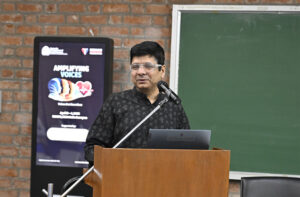
Delivering the inaugural address, Prof. Satish Deodhar said, “During our lifetime, we get multiple opportunities to share love, knowledge, and goodness. And, importantly, organ donation gives us such an opportunity even in our death! With organ donation, we light another human being’s lamp with our own. It warms my heart to see various stakeholders working for this cause and coming together at IIMA to amplify voices for organ donation.”
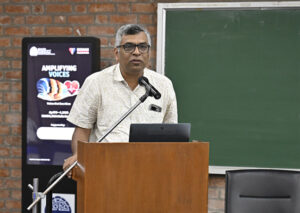
Setting the tone for the movement, Dr. Sunil Shroff emphasised, “Organ donation is not just a medical process—it is a social movement that requires awareness, empathy, and collective action. ‘Amplifying Voices’ is an effort to bring together diverse perspectives, leverage technology, and empower communities to create a sustainable impact in saving lives through organ donation.”
Highlighting the need for a structured approach, Prof. Rajesh Chandwani said, “The path of organ donation, from awareness to implementation, requires a systemic approach at multiple levels. We have been working to raise awareness on this vital subject through films and other modes of awareness, such as plays, comics, flyers, posters, etc. This conference – Amplifying Voices – denotes a comprehensive approach that reflects the importance of combining management science, behavioural insights, and community engagement to address complex public health challenges like organ donation. By bringing diverse stakeholders together, we hope to create scalable, sustainable models that can significantly improve awareness and participation.”
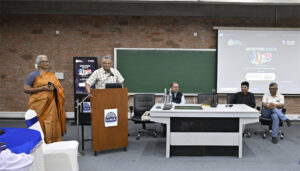
Echoing the importance of collaboration, Prof. Viswanath Pingali added, “Organ donation is a crucial area in public health that requires a multidisciplinary perspective. In this context, we at CMHS are glad to host a conference like this. It is heartening to see people from several disciplines coming together to discuss and find solutions to this complex problem. I look forward to fruitful developments coming out of this event.”
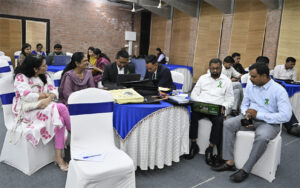
The conference goes beyond conversations—offering hands-on workshops on leveraging artificial intelligence, social media, and digital tools to expand awareness, alongside creative approaches through films, performing arts, and community storytelling.
A key highlight is the screening of the National Award-winning documentary ‘God, Vultures and Human’, directed by Rishiraj Agarwal, which pays tribute to organ transplant coordinators—the unsung heroes bridging grief and hope.
With sessions ranging from youth-led change and grassroots mobilisation to global best practices from Sri Lanka, Bangladesh, and Malaysia, the conference reinforces one message: organ donation is not just a medical necessity—it is a humanitarian responsibility.
As India strives to bridge the gap between organ demand and availability, initiatives like this aim to spark conversations at homes, inspire pledges, and ultimately save lives—proving that even in death, one can give the gift of life.