NE HEALTH BUREAU
AHMEDABAD, MAY 17
For years, 28-year-old Priya (name changed) believed her constant exhaustion, unexplained joint pain and recurring skin rashes were simply part of a stressful lifestyle.
- Rheumatology Association of Gujarat launches dedicated Lupus Patient Support Group in Ahmedabad
- Doctors warn delayed diagnosis remains one of the biggest dangers in lupus treatment
- Nearly 90% of lupus patients are women, mostly between 15 and 44 years of age
- Experts stress awareness, emotional support and early intervention to prevent organ damage
- New initiative focuses on patient education, counselling and long-term disease management
Doctors initially dismissed her symptoms as weakness, vitamin deficiency and anxiety.
By the time she was finally diagnosed with lupus — a chronic autoimmune disease — the illness had already started affecting her kidneys.
Stories like hers are becoming increasingly common across India, prompting doctors and healthcare experts in Gujarat to launch a dedicated Lupus Patient Support Group in Ahmedabad to spread awareness, reduce delayed diagnosis and help patients cope emotionally with the lifelong condition.
The initiative has been launched by the Rheumatology Association of Gujarat (RAG) with support from Antardhwani, bringing together patients, caregivers and medical experts under one platform.
A Disease Often Misunderstood
Lupus is a complex autoimmune disease in which the body’s immune system mistakenly attacks healthy tissues and organs.
The disease can affect the skin, joints, kidneys, lungs, heart and even the brain, making diagnosis extremely difficult because symptoms vary widely from person to person.
Doctors say many patients spend months — and sometimes years — visiting multiple specialists before the condition is identified correctly.
“Awareness remains our strongest tool. Many patients reach us very late because early symptoms are ignored or misunderstood,” said Dr. Reena Sharma, President of the Rheumatology Association Gujarat.
Women Most at Risk
Medical experts at the programme highlighted that nearly 90 percent of lupus patients are women, particularly between the ages of 15 and 44.
Hormonal factors, genetics, stress, infections and excessive sunlight exposure are believed to trigger or worsen the disease.
Common warning signs include:
- Persistent fatigue
- Butterfly-shaped facial rash
- Joint pain and swelling
- Hair fall
- Fever
- Photosensitivity
- Colour changes in fingers and toes due to Raynaud’s phenomenon
For many women, the disease also creates anxiety surrounding marriage, pregnancy and long-term quality of life.
“Delayed Diagnosis Can Damage Organs”
Doctors warned that untreated lupus can gradually lead to irreversible complications involving the kidneys, lungs, heart and nervous system.
“Lupus is highly unpredictable. Early diagnosis and continuous monitoring are extremely important to prevent serious organ damage,” said Dr. Anuj Shukla, Secretary of the Rheumatology Association Gujarat.
Diagnosis usually involves clinical evaluation along with blood investigations such as the Antinuclear Antibody (ANA) test.
Healthcare experts said public awareness remains low because symptoms often resemble common illnesses during the early stages.
More Than Medicine: Emotional Support Matters
One of the strongest themes during the Ahmedabad event was the emotional burden carried by lupus patients.
Since lupus is a lifelong disease with no permanent cure, many patients struggle with fear, uncertainty and mental stress in addition to physical complications.
The newly launched support group aims to provide:
- Emotional counselling
- Reliable medical information
- Guidance on treatment adherence
- Lifestyle management support
- Patient and caregiver networking opportunities
“Lupus requires lifelong management, but today outcomes have improved significantly with proper treatment and awareness,” said rheumatologist Dr. Vishnu Sharma.
Hope Through Awareness and Modern Treatment
Doctors said treatment options for lupus have improved dramatically over the years.
Modern management includes medications such as hydroxychloroquine, corticosteroids, immunosuppressants and anti-inflammatory drugs combined with lifestyle measures like:
- Sun protection
- Healthy diet
- Stress reduction
- Regular exercise
- Timely medical follow-up
Experts noted that with proper care and early diagnosis, nearly 85–90 percent of lupus patients can now lead normal lifespans.
Building a Community Around Invisible Illness
The Ahmedabad support initiative also reflects a growing movement toward patient-centric healthcare in India, where chronic disease management increasingly includes emotional and social support systems alongside medical treatment.
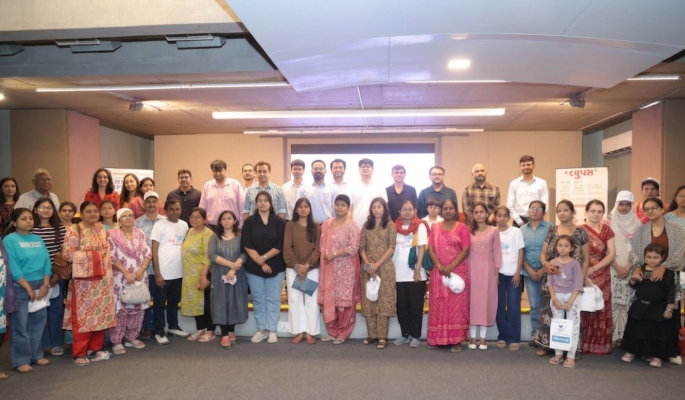
Around 150 participants attended the programme, interacting directly with specialists and fellow patients in what organisers described as an effort to “replace fear with awareness and isolation with community.”
For many patients living silently with autoimmune diseases, the launch represented more than a medical initiative — it offered reassurance that they are no longer fighting alone.