NE BUSINESS BUREAU
NEW DELHI, MAY 20
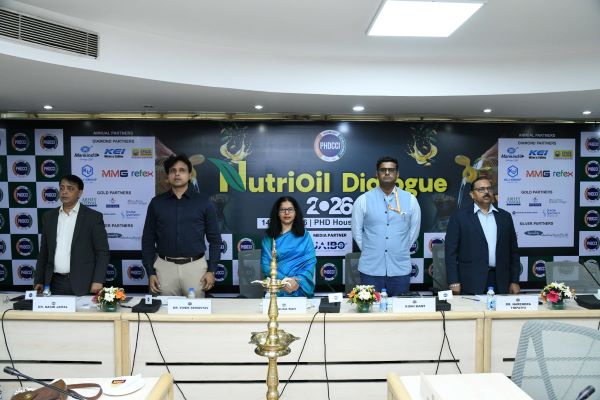
In a significant public health-focused initiative echoing Prime Minister Narendra Modi’s nationwide appeal to reduce edible oil consumption by 10%, the PHD Chamber of Commerce and Industry organised ‘NutriOil Dialogue 2026: Science, Labels & Truth about Edible Oils’ at PHD House in New Delhi, bringing together top policymakers, doctors, scientists, nutritionists and industry leaders for a crucial conversation on healthier living and informed dietary choices.
The conference emerged as a strong human-interest platform focused on improving everyday food habits among Indian families while combating the growing burden of obesity, cardiac ailments and lifestyle diseases.
- PHD Chamber of Commerce and Industry hosts national dialogue supporting Prime Minister Narendra Modi’s appeal to reduce edible oil consumption by 10%
- Doctors, nutritionists and policymakers call for balanced diets and healthier lifestyles to tackle obesity and lifestyle diseases
- Experts debunk myths surrounding palm oil and saturated fats through science-backed discussions
- Speakers urge consumers to focus on complete nutritional profiles instead of misleading front-of-pack claims
- Conference highlights India’s growing push for edible oil security and sustainable palm oil cultivation
Balanced Choices Matter More Than Fear: Experts
One of the strongest messages emerging from the conference was that long-term health cannot be protected by demonising a single edible oil or ingredient. Instead, experts stressed moderation, physical activity and awareness-driven food habits.
Addressing the gathering as Chief Guest, Dr. Alka Rao, Advisor, Food Safety and Standards Authority of India (FSSAI), Government of India, said:
“The objective of the NutriOil conference is to address and dispel several misconceptions surrounding edible oils, including widely debated ingredients such as palm oil, through science-backed conversations and informed public awareness. FSSAI does not endorse the vilification or defamation of any food ingredient without credible scientific evidence. Our stakeholder consultation framework remains open and inclusive, allowing individuals, industry bodies and experts to present scientific data and perspectives for consideration. Palm oil continues to be widely used in Indian households and the food industry owing to its stability and suitability for high-temperature cooking applications. As India’s apex food regulator, FSSAI remains committed to promoting evidence-based nutrition awareness and encouraging balanced, informed dietary choices among consumers.”
PM Modi’s Message Resonates at National Forum
The conference strongly supported Prime Minister Modi’s recent call urging citizens to consciously reduce edible oil intake as part of India’s larger movement toward healthier lifestyles.
Experts at the event said that modern urban lifestyles, rising stress levels, sedentary routines and poor food habits are contributing more significantly to health disorders than any single food ingredient.
Guest of Honour Dr. Rishi Kant, Additional Economic Advisor, Department of Agriculture & Farmers Welfare, Ministry of Agriculture & Farmers Welfare, Government of India, highlighted the importance of edible oil security and sustainable domestic cultivation.
He said:
“India’s renewed focus on strengthening domestic palm oil cultivation is a significant step towards strengthening the country’s edible oil security and reducing import dependence. Through initiatives such as the National Mission on Edible Oils – Oil Palm (NMEO-OP), the government is creating an enabling ecosystem for farmers through improved infrastructure, financial incentives and stronger market linkages. India has also expanded its oil palm cultivation ambitions significantly, with the targeted area increasing from 6.5 lakh hectares to nearly 10 lakh hectares by 2025–26. As one of the world’s most efficient oil crops, palm oil delivers higher yields using comparatively less land, making it an important part of meeting India’s growing edible oil demand sustainably. Continued policy support, industry collaboration and farmer awareness will be critical to unlock the sector’s full potential while balancing economic growth with environmental sustainability.”
Doctors Stress Lifestyle Changes Over Ingredient Blame
During the session titled ‘Palm Oil in Focus: Facts, Science and Perspectives’, Dr. Varun Bansal, Senior Consultant, Robotics and Minimally Invasive Cardiac Surgery, Indraprastha Apollo Hospitals, stressed that moderation and balanced living remain the real keys to health.
“No edible oil is inherently harmful to the human body when consumed in moderation as part of a balanced and healthy diet including Palm Oil. In fact, Palm oil offers a balanced fatty acid composition with less than 50% saturated fats and over 50% MUFA and PUFA, which are considered beneficial for heart health. Scientific evidence today suggests that genetic predisposition, overall dietary patterns and lifestyle habits play a far more important role in long-term health outcomes than blaming a single ingredient in isolation. Lack of physical activity, sedentary lifestyles, stress, tobacco consumption in any form, poor overall eating habits and neglecting health are among the key contributors to rising lifestyle-related health concerns and complications, rather than any one specific edible oil or ingredient alone.”
He further added:
“Consumers should be mindful of excessive sugar intake, including heavily processed sugar-free products and instead focus on balanced nutrition, portion control and informed dietary choices.”
Citing findings published in The Lancet, he observed that excessive sugar and refined carbohydrate intake may pose greater health risks than moderate fat consumption.
“Healthier Food Is More Than Just Labels”
Dr. Rajni Chopra, Professor & Head, Department of Food Science and Technology, National Institute of Food Technology Entrepreneurship and Management (NIFTEM), highlighted the importance of scientific understanding over marketing-driven perceptions.
She said:
“Absence of Palm Oil does not automatically make a product healthier and doesn’t guarantee zero risk of cardiovascular diseases. The overall fatty acid profile of the oil such saturated to mono to unsaturated fatty acid ratio and omega 3 to omega 6 ratio, processing type remains far more important than focusing on a single oil alone. Palm Oil is generally semisolid at room temperature due presence of palmitic acid and also has a very high smoke point which makes it thermally stable oil at higher temperature. Due to semi solid nature, it also imparts desirable functional properties in food products such as snacks, bakery products, confectionery, instant foods, spreads and ready-to-eat items. Palm oil offers total 50% of unsaturated fatty acids (Omega 6 and Omega 9) along with saturated fatty acids and can be used as a good base oil for blending to achieve desirable fatty acid ratio. It’s scientifically proven that due to its high saturated fat content, when palm oil is blended with other high PUFA vegetable oil leading to thermally stable blended oil.”
Science-Backed Nutrition Awareness Gains Momentum
The conference concluded with a broader message that healthier India campaigns must focus on awareness, moderation and sustainable food practices rather than fear-based dietary trends.
Participants also called for stronger public education on reading nutrition labels, balanced consumption patterns and adopting healthier everyday habits — aligning closely with Prime Minister Modi’s public health mission.