NE FEATURES BUREAU
AHMEDABAD, MAY 27
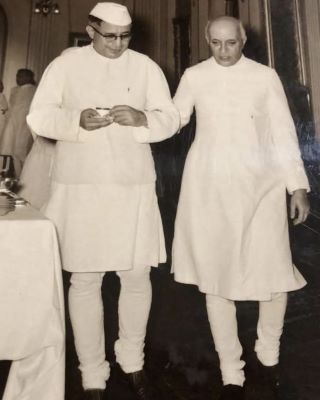
In an age where history often fades behind headlines and hashtags, a quiet but powerful effort in Ahmedabad is set to revive the memory of one of Gujarat’s towering yet underappreciated nation builders — Rasiklal U. Parikh.
- Exhibition on legendary statesman Rasiklal U. Parikh to open at Ahmedabad Management Association on May 29
- Curated through archival research, personal narratives and rare historical material
- Show traces Parikh’s journey from freedom fighter to architect of post-independence governance
- Focus on Junagadh integration, Aarzi Hukumat and landmark Saurashtra land reforms
- Young design researcher from Nirma University leads project to revive forgotten public memory
Titled “A Visionary Statesman: The Public Life of Rasiklal U. Parikh,” a two-day exhibition opening on May 29 at the Ahmedabad Management Association will offer visitors an intimate journey through the life of the freedom fighter, administrator and institution builder whose contributions helped shape post-independence Saurashtra and Gujarat.
The exhibition coincides with Parikh’s 116th birth anniversary and aims to reconnect younger generations with a leader whose role in governance, land reforms and democratic institution-building transformed the socio-political landscape of western India.
A Freedom Fighter Who Helped Shape Modern Gujarat
Born on May 29, 1910, in Limbdi, Parikh’s life mirrored India’s own transition from colonial struggle to democratic governance.
A committed participant in the freedom movement, he was imprisoned during both the Salt Satyagraha and the Quit India Movement. But it was after Independence that his statesmanship left a lasting imprint.
From serving as the Home Minister and later Chief Minister of Saurashtra State to handling crucial portfolios such as revenue, land, home and industry in the Bombay and Gujarat governments, Parikh emerged as one of the key administrators steering a newly independent region through uncertainty and transformation.
As a member of the Constituent Assembly of India, he also contributed to shaping the foundations of modern Indian democracy.
Bringing Forgotten History Back to Public Memory
What makes the exhibition especially moving is the effort by a younger generation to rediscover and retell Parikh’s story.
The project has been curated by Raj Patel, an intern from the Institute of Design at Nirma University, as part of his graduation project. Supported by members of the Parikh family and archival researchers, the initiative combines public history, design research and storytelling to preserve an important yet often overlooked chapter of Gujarat’s political history.
Organisers say the exhibition seeks to address the gap in mainstream historical memory surrounding Parikh’s contributions to state-building and governance reforms.
Five Thematic Galleries of History and Humanity
Spread across five thematic sections, the exhibition will chronicle defining moments from Parikh’s public life and India’s formative years.
Visitors will explore:
- His role in the freedom struggle
- The integration of princely states and Junagadh annexation
- The formation of the Aarzi Hukumat
- The implementation of the landmark Saurashtra Land Reform Act
- The challenges of governance in a newly independent India
The exhibition will also delve into his intellectual convictions, personal struggles, commitment to education and lifelong dedication to public institutions.
Rare archival documents, photographs, narratives and historical accounts are expected to provide a compelling window into the human side of governance and leadership.
A Gathering of Scholars, Citizens and Civic Voices
The inaugural ceremony at AMA on May 29 is expected to bring together historians, academics, civic leaders, students and citizens interested in Gujarat’s political and institutional evolution.
More than just a historical showcase, the exhibition hopes to spark conversations about leadership, public service and the importance of preserving democratic memory for future generations.
At a time when contemporary politics dominates public discourse, the life of Rasiklal U. Parikh stands as a reminder that institution-building, integrity and public welfare remain the true foundations of statesmanship.