- Rare but relentless: Vasculitis affects vessels, mimics common diseases, delays diagnosis
- Support group to drive early detection, referrals, counselling and access to advanced care
- Doctors flag cost barriers to biologics like Rituximab and shortage of specialists beyond metros
- Call for national registry, insurance inclusion and AI-led early diagnosis systems
- Awareness gap between vasculitis and rheumatoid arthritis keeps patients at risk
- The Rheumatology Association of Gujarat and the Indian Rheumatology Association will host the Rheumatology Awareness Walkathon 2026 on Sunday, April 26, at the Riverfront, Ahmedabad, from 7am to 9am
RAJENDRAN G MUDALIAR
AHMEDABAD, APR 19
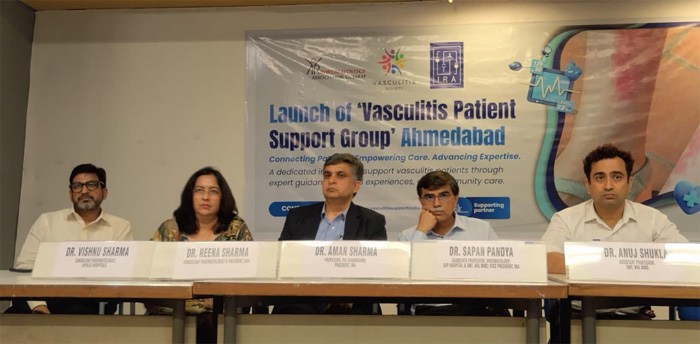
In a powerful push to confront one of medicine’s most underdiagnosed threats, leading rheumatologists—backed by Gujarat Chief Minister Bhupendra Patel—have sounded an urgent call for early detection, affordable care, and national policy focus as the Vasculitis Society of India and Rheumatology Association of Gujarat launched a dedicated Vasculitis Patient Support Group in Ahmedabad, warning that delayed diagnosis of this rare blood vessel inflammation can lead to irreversible organ damage and disability.
Marking Rheumatology Awareness Month, the initiative aims to educate, guide and support patients battling vasculitis—a group of rare autoimmune disorders that inflame blood vessels and can impact organs such as the kidneys, lungs, brain and skin. Globally affecting just 0.02%–0.04% of the population, the disease often masquerades as tuberculosis, infections or malignancies, leading to months—or even years—of diagnostic delay.
In his message, the Chief Minister said, “I am especially happy that initiatives like Vasculitis Support Group and Antardhwani have been launched to reach out to patients.” He congratulated the Indian Rheumatology Association and its Gujarat chapter for expanding awareness and patient outreach.
“Underdiagnosed, underserved—and urgent”: Experts answer the hard questions
On early detection and primary care gaps
Dr Aman Sharma, President of the Indian Rheumatology Association, said, “Vasculitis remains underdiagnosed because it mimics common illnesses. This support group will work with primary physicians to recognise red-flag symptoms early, streamline referrals, and improve access to specialised testing—reducing dangerous delays.”
On awareness gaps vs rheumatoid arthritis
Dr Sapan Pandya, associate professor of rheumatology of SVP and NHL, noted, “Unlike rheumatoid arthritis, vasculitis affects blood vessels and multiple organs, yet awareness is far lower. We aim to bridge this gap through continuous medical education and public outreach so general physicians and patients can differentiate early warning signs.”
On patient challenges—cost, delay, access
Dr Reena Sharma emphasised, “The biggest hurdles are delayed diagnosis, high treatment costs, and limited specialist access. Through this initiative, we will offer guidance, improve referral pathways, and connect patients to affordable treatment options wherever possible.”
On beyond awareness—real support systems
Dr Vishnu Sharma explained, “The support group will go beyond awareness—offering structured counselling, patient mentoring, and guidance on financial options, including access to advanced therapies like biologics.”
On national policy and registry needs:
Dr Anuj Shukla added, “India needs a national registry for vasculitis to improve research and treatment outcomes. We are advocating policy-level inclusion of rare autoimmune diseases under broader health programmes and insurance coverage.”
“System gaps are real—and fixable”: Tough questions on India’s healthcare response
Experts acknowledged systemic issues:
- “Diagnosis delays occur because early symptoms overlap with infections like TB—training at the MBBS and general physician level must improve,” said specialists.
- “There is indeed a treatment gap driven by economics—biologics can be life-saving but unaffordable for many,” they admitted.
- “Rare disease status often limits policy urgency, but collectively vasculitis cases are significant,” they stressed.
- “We need hard data and registries to track how many patients receive standard-of-care treatment,” they added.
Recognising symptoms, restoring lives
Doctors urged the public to watch for warning signs: unexplained fever, persistent fatigue, rashes, nerve symptoms, breathlessness, or kidney issues.
“Compared to rheumatoid arthritis, vasculitis can severely impact quality of life due to multi-organ involvement,” experts said, adding that the support group will include patient mentors, survivor networks, and psychological counselling.
Families, they emphasised, play a critical role: “Long-term autoimmune conditions require emotional resilience—family awareness and support can significantly improve outcomes.”
Policy push: From awareness to action
The medical community called for:
- Integration into national NCD programmes
- Inclusion under schemes like Ayushman Bharat
- Use of AI and digital tools for early diagnosis
- Public-private partnerships to expand care beyond metros
Rheumatology Awareness Walkathon
The Rheumatology Association of Gujarat and the Indian Rheumatology Association will host the Rheumatology Awareness Walkathon 2026 on Sunday, April 26, at the Riverfront, Ahmedabad, from 7am to 9am