R ARIVANANTHAM
CHENNAI, JULY 22
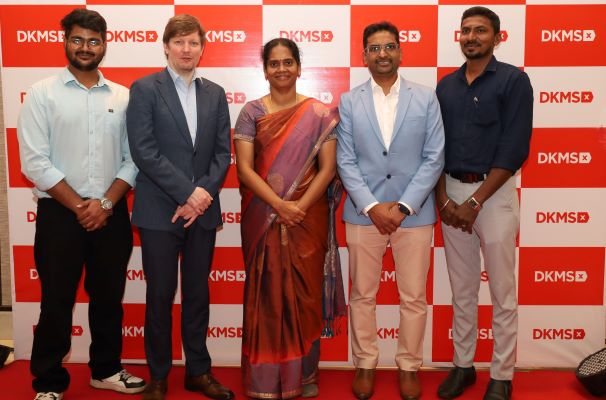
For nearly two years, Samnu John knew the person who had saved his life only as a name connected to a life-changing phone call. On Wednesday, the 40-year-old Chennai marketing manager finally came face-to-face with Paritosh Saxena, the 25-year-old from New Delhi whose donated blood stem cells helped his failing bone marrow begin producing healthy blood cells again.
- A 25-year-old donor’s stem cells defeat a rare blood disorder; two years later, a Chennai survivor’s thanksgiving becomes a powerful call to register as a potential donor
- Samnu John, 40, diagnosed with severe aplastic anaemia, finds a life-saving match after an agonising 18-month wait
- Delhi’s Paritosh Saxena, 25, donates blood stem cells and gives a Chennai marketing manager a second chance at life
- Survivor and donor meet for the first time nearly two years after the transplant in a moving thanksgiving reunion
- Doctors underline that stem-cell transplantation can be the only curative option for patients with severe aplastic anaemia
- DKMS Foundation India calls for greater donor registration, particularly from under-represented communities
Their meeting was more than a reunion. It was a thanksgiving with a difference—and a deeply human reminder that somewhere in a vast country, an unrelated stranger can become the only person capable of giving a critically ill patient a second chance at life.
Samnu had battled unexplained high fever, swelling, rashes and crushing fatigue since 2017. Despite repeated medical consultations, the cause of his deteriorating health remained elusive for years. When his platelet count plunged dangerously low in January 2022, he was rushed to Rajiv Gandhi Government General Hospital (RGGGH), where doctors diagnosed him with severe aplastic anaemia—a rare and life-threatening condition in which the bone marrow fails to produce adequate platelets, red blood cells and white blood cells.
The disease left Samnu vulnerable to infections, uncontrolled bleeding and debilitating exhaustion. A stem-cell transplant became his best—and potentially only curative—option.
But there was a formidable hurdle: finding a genetically compatible donor.
No suitable match was found among his family or friends. Then came an agonising wait of nearly 18 months before an ideal unrelated donor was identified through the DKMS Foundation India registry.
The transplant was subsequently performed by a medical team headed by Dr Aruna Rajendran, Haemato-Oncologist and Bone Marrow Transplant Physician at Madras Medical College/RGGGH.
Today, Samnu has made a full recovery and has returned to work. The meeting with Paritosh marked the emotional culmination of a journey that had once been dominated by fear, uncertainty and the desperate search for a compatible donor.
Dr Aruna Rajendran, Haemato-Oncologist and Bone Marrow Transplant Physician at Madras Medical College/RGGGH, said:
“Aplastic anaemia is a rare and life-threatening blood disease which can lead to bone marrow failure. It will leave patients vulnerable to infections, uncontrolled bleeding, and exhaustion. A stem cell transplant is the only curative option for these patients. It had taken us almost 18 months to find the exact match for him. I am glad to see him fully recovered from his condition. There are several other patients who are still struggling to find a suitable match. Along with science, we also need a proper system and awareness to make stem cell transplantation possible.”
Recalling the years of suffering, Aplastic anemia survivor Samnu said:
“I had to quit two of my jobs because of my severe symptoms. Survival itself was difficult both before and after diagnosis. I was scared both for myself and my family. I was tired of waiting for my donor. It was during those darkest days that we managed to find the right match through DKMS Foundation.”
A stranger who registered—and changed a life
Stem Cell donot Paritosh Saxena, a long-time blood donor, had registered with DKMS Foundation India years earlier after hearing about a family desperately searching for a suitable donor for a loved one. He never expected that one day he would receive a call asking him to donate his own blood stem cells.
He said:
“I felt a deep sense of responsibility when I got the call. Just like everyone else, even I thought stem cell donation required an open surgery and long recovery. But that’s not the case. Stem cells are collected from our arm. I hope this meeting debunks the myths around stem cell donation.”
Having flown from New Delhi to meet Samnu, Paritosh added:
“I have thought about him every day since I got that call. Seeing him healthy, working, and living his life with his children is all I ever hoped for.”
The reunion also highlighted the urgent need to expand India’s stem-cell donor pool. While awareness has improved, the number of potential donors remains inadequate compared with the number of patients who need a genetically matched transplant.
Patrick Paul, Executive Chairman, DKMS Foundation India, said:
“Patients in Tamil Nadu face distinct genetic and socio-economic barriers in finding a match. When more people from Tamil Nadu register as potential stem cell donors, especially from under-represented communities, we don’t just improve match probabilities on a registry spreadsheet but also change the odds for every child and adult waiting for a transplant.”
Since matched sibling donors are relatively scarce, many patients depend on unrelated donor registries to find a genetic match. DKMS Foundation India is urging more eligible people to register as potential blood stem-cell donors.
Individuals aged 18 to 55 years, in generally good health, with a BMI below 40, and not already registered with another donor registry, may be eligible to register.
Samnu and Paritosh’s story is a reminder that a simple decision made by one person can become a medical miracle for another. For someone waiting for a genetically matched stem-cell donor, registration is not merely a formality—it could be the beginning of a second life.