NE NEWS SERVICE
AHMEDABAD, MAR 22
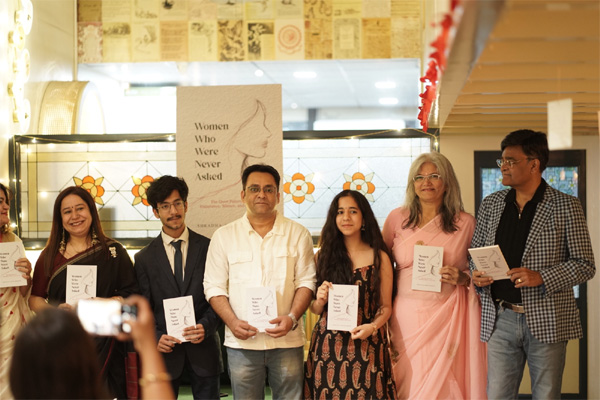
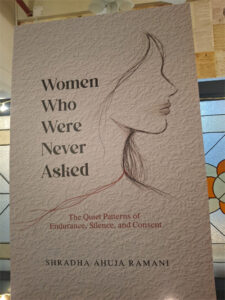
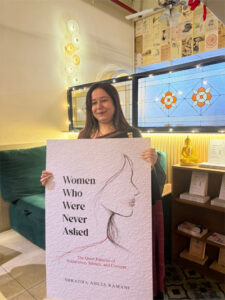
With her 13th book “Women Who Were Never Asked”, Shraddha Ahuja Ramani, Founder-Director of the Ahmedabad Literary Society, delivers a compelling literary and social intervention—one that questions the deeply embedded silences surrounding women’s choices and consent.
A prolific author in English and Hindi, Ramani has mentored over 200 aspiring writers—from students to defence veterans—while continuing her own academic journey with multiple degrees and a doctorate in political science. Through Savitri Publications and her digital platforms, she has been building a vibrant, inclusive literary ecosystem.
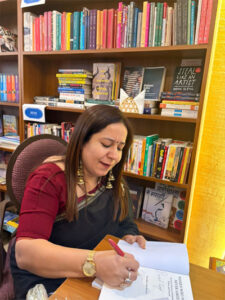
In a deeply personal and heartfelt gesture, the author has dedicated “Women Who Were Never Asked” to her daughter, marking the occasion with special significance as the book’s release coincides with her daughter’s birthday today—adding an emotional layer to a work rooted in voice, identity, and the power of being heard.
In this candid and thought-provoking interaction with Navjeevan Express correspondent R Manickavasagam, she reflects on silence, storytelling, gender narratives, and the evolving culture of reading.
Interview Excerpts
Your 13th book, “Women Who Were Never Asked”, carries a deeply evocative title—what was the defining moment that compelled you to write this book?
There wasn’t a single defining moment. It was a slow accumulation of silences.
We recognise women for their care work, their ability to hold families together, their emotional strength. But very rarely do we pause and ask—was she ever asked what she wanted? Whether it is marriage, motherhood, career choices, or even daily responsibilities, women are often placed into roles rather than invited into them.
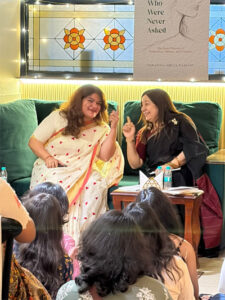
I began to notice how normalized this absence of consent is. Not dramatic, not loud—but deeply embedded in everyday life. This book comes from that realization. It is an attempt to give language to those quiet spaces where women were never asked, yet always expected to give.
At some point, writing it stopped being a creative choice and became an ethical necessity.
The book explores silence and unspoken realities—do you believe society is still uncomfortable listening to women’s truths, or has the narrative begun to shift meaningfully?
There is definitely a shift, but it is incomplete.
Today, women are speaking more than ever before. Platforms exist, conversations are happening, and there is greater visibility. But listening is still selective. Society is comfortable with certain kinds of truths—those that are palatable, inspiring, or neatly packaged.
What still makes people uncomfortable are the inconvenient truths—about power, about control, about everyday inequalities within homes and relationships. So yes, voices have risen, but the depth of listening still needs to evolve.
We are in a transition, not a conclusion.
Having mentored over 200 authors from diverse backgrounds, what common thread of struggle or resilience have you observed among first-time writers?
The most common thread is self-doubt.
Almost every first-time writer carries a hesitation—Is my story important enough? Will anyone listen? And yet, alongside this doubt, there is also an incredible resilience. A quiet urge to express, to be heard, to make sense of one’s own experiences.
What I have learned is that writing is not just about skill; it is about permission. When writers begin to give themselves that permission—to speak without fear—that is when their most authentic voice emerges.
From teenage students to defence veterans and wildlife enthusiasts—how do you adapt your mentorship approach across such varied voices and life experiences?
I don’t try to impose a single framework.
Every individual comes with their own lived reality, their own language, and their own rhythm of expression. My role is not to shape them into a standard writer, but to help them discover their own voice more clearly.
With younger students, the focus is often on building confidence. With experienced individuals, it is about structuring and refining what they already carry within them. But at the core, the approach remains the same—listening deeply and respecting the individuality of each narrative.
In the age of reels and rapid content, how challenging is it to cultivate a sustained reading culture, especially among the younger generation?
It is challenging, but not impossible.
The attention span has changed, yes. The consumption of content has become faster and more visual. But the human need for stories, for depth, for reflection—that has not disappeared.
What we need is not to resist this shift, but to bridge it. Introduce reading in ways that feel accessible. Connect books with lived experiences. Create spaces where reading is not seen as an obligation, but as a meaningful engagement.
If we approach it with rigidity, we lose them. If we approach it with understanding, we bring them back.
As someone who actively supports Dalit writers, what structural or invisible barriers still persist in the literary ecosystem today?
Many barriers still exist, though they are not always visible.
Access remains unequal—access to publishing platforms, to networks, to visibility. Often, voices from marginalized communities are either overlooked or expected to fit into certain narratives that the mainstream finds acceptable.
There is also a subtle gatekeeping that operates through language, validation, and opportunity. Supporting these voices is not just about inclusion, but about creating space where they can speak on their own terms, without being filtered or reshaped.
You have pursued a doctorate in political science along with studies in multiple disciplines—how has this multidisciplinary learning shaped your writing and worldview?
It has given me perspective.
Studying different disciplines allows you to see the same reality from multiple lenses—political, philosophical, sociological, psychological. It prevents you from seeing issues in isolation.
In my writing, this translates into depth. I cannot look at a woman’s story without also seeing the structures around her—family, state, culture, economy. Multidisciplinary learning has made my writing more layered, and my understanding more compassionate.
Is “Women Who Were Never Asked” a literary work, a social document, or a form of quiet activism? Or do you see it as all three?
I see it as all three, but most importantly, I see it as a conversation.
It is literary in its expression, a social document in its themes, and a form of quiet activism in its intent. But beyond categories, it is an invitation—to pause, to reflect, and to ask questions that we often avoid.
Sometimes, change does not begin with loud resistance. It begins with awareness.
What has been the most emotionally difficult story or theme you encountered while writing this book?
The most difficult part was writing about normalised pain.
Not the extreme cases, but the everyday ones—the small silences, the unacknowledged sacrifices, the emotional labour that goes unnoticed. These are harder because they are so deeply accepted that even the women living them sometimes do not question them.
Writing about these realities required me to sit with discomfort, not just observe it.
Looking ahead, what legacy do you wish to build through the Ahmedabad Literary Society and Savitri Publications?
I want to build spaces that are inclusive, honest, and meaningful.
Spaces where writing is not driven only by trends, but by truth. Where new voices are welcomed, nurtured, and respected. Where literature becomes a medium of dialogue, not just display.
If people feel seen, heard, and encouraged to express—then that, for me, is the legacy.
What is your message to the Gen-Next on cultivating the reading habit and its benefits?
Read not because you are told to, but because it expands you.
Reading gives you perspective. It allows you to live multiple lives, understand different realities, and question your own assumptions. In a world that is constantly telling you what to think, reading teaches you how to think.
Start small, stay consistent, and choose what genuinely connects with you. Over time, reading will not feel like a habit—it will feel like a necessity.