NE POLITICAL BUREAU
NEW DELHI/CHENNAI, APR 9
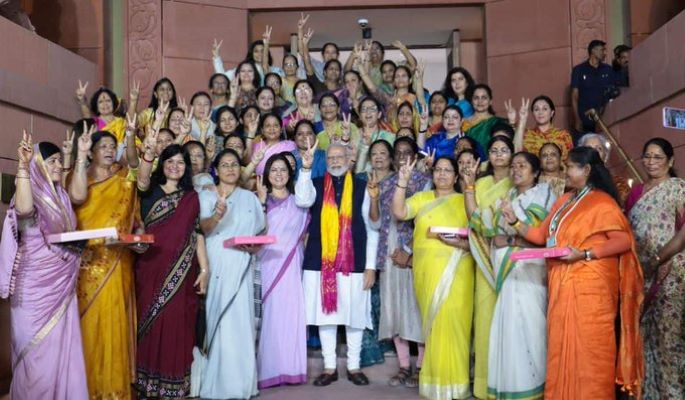
A fresh political debate has been triggered over electoral reforms, with Narendra Modi strongly advocating women’s reservation in legislative bodies, even as M. K. Stalin raised sharp concerns over its proposed linkage with delimitation.
- PM calls women’s reservation ‘need of the hour’ for stronger democracy
- Op-Ed Pitch: Faster reform to make governance more inclusive
- Stalin backs quota but slams link to delimitation exercise
- Southern states may be ‘penalised’, CM warns on representation shift
- Debate deepens over federal balance, OBC justice & census demand
- Political faultlines emerge ahead of structural electoral changes
PM’s Push — ‘No Delay’ on Women’s Reservation
Prime Minister Modi asserted that enhancing women’s representation is critical to strengthening Indian democracy, calling for urgent implementation.
Reservation for women in legislative bodies is the need of the hour! This will make our democracy even more vibrant and participative. Any delay in bringing this reservation will be deeply unfortunate. Expressed my thoughts on the issue in this Op-Ed.https://t.co/vLbxa6iYli
— Narendra Modi (@narendramodi) April 9, 2026
In a post on X, he said: “Reservation for women in legislative bodies is the need of the hour! This will make our democracy even more vibrant and participative. Any delay in bringing this reservation will be deeply unfortunate. Expressed my thoughts on the issue in this Op-Ed.”
Through his Op-Ed, the Prime Minister emphasised that greater participation of women would deepen democratic engagement and governance quality, positioning the reform as a long-pending structural necessity.
Stalin’s Counter — ‘Don’t Link It to Delimitation’
Tamil Nadu Chief Minister M.K. Stalin, while welcoming the idea of 33% reservation for women, strongly objected to tying it with the delimitation process.
Read Also:
“Delimitation or domination?”: Stalin’s fiery warning puts Centre on notice
He described the linkage as politically motivated and unnecessary, arguing that the quota should be implemented immediately under existing constituencies.
Delimitation Debate — Reform or Power Shift?
Stalin criticised the Centre’s proposed delimitation exercise, stating it is “not a genuine reform but an attempt to consolidate political power.”
He argued that increasing parliamentary constituencies contradicts the governance philosophy of efficiency, noting it may not improve administration but could skew political representation.
North–South Divide Concerns Intensify
Raising a key federal issue, Stalin warned that delimitation based on population could disadvantage southern states like Tamil Nadu, which have effectively implemented population control.
He cautioned that such a move would:
- “Penalise” states with better demographic management
- Increase the political weight of northern states
- Reduce the influence of southern regions in Parliament
He further warned this could undermine India’s federal structure and disturb the balance of representation.
Social Justice Pitch — Census & OBC Concerns
Stalin also flagged broader equity concerns, reiterating the demand for a caste-based census to ensure fair representation.
He pointed out that the ₹8 lakh creamy layer ceiling for OBCs has remained unchanged despite economic growth, calling it unjust and in need of revision to ensure inclusivity.
Reform Crossroads — Representation vs Recalibration
The twin issues of women’s reservation and delimitation have now converged into a larger national debate—balancing democratic inclusion with federal fairness.
While the Centre pushes for structural reforms to expand representation, opposition voices stress the need to protect regional balance and social equity.
As India moves closer to potential electoral restructuring, the conversation is no longer just about who gets representation—but how fairly that representation is distributed across regions and communities.