- Deendayal Port emerges as India’s frontline hub for green maritime fuels
- Successful methanol bunkering trial signals readiness for global shipping corridors
- Backed by policy push, infrastructure muscle and global standards compliance
- Big boost to clean trade, investments and India’s 2050 net-zero maritime ambition
NE BUSINESS BUREAU
NEW DELHI, APR 10
In a decisive stride towards decarbonising India’s maritime ecosystem, Deendayal Port Authority (Kandla Port) has accelerated its methanol bunkering capabilities—firmly positioning itself at the forefront of the country’s green shipping transition.
The move aligns with the global maritime sector’s ambitious target of achieving net-zero emissions by 2050, with a strong focus on cleaner alternative fuels such as e-methanol and e-ammonia to reduce greenhouse gas intensity.
Union Minister for Ports, Shipping and Waterways, Sarbananda Sonowal, underscored the significance of the milestone, stating: “This milestone at Kandla Port demonstrates India’s resolve to lead the global transition towards green shipping. By embracing cleaner fuels like methanol and building future-ready infrastructure, we are aligning our maritime sector with international sustainability goals while enhancing efficiency and competitiveness. This is an important step towards our journey to become one of the top maritime nation in the world as we move towards realising the vision of Viksit Bharat by 2047.”
Strategically located on India’s western coast, Kandla Port already has a strong foundation in handling grey methanol, supported by robust infrastructure including tank storage, pipelines and jetties. Building on this, the port is now advancing dedicated methanol bunkering facilities.
A comprehensive readiness assessment by DNV Maritime Advisory Services rated the port at Level 6 on the International Association of Ports and Harbors (IAPH) Port Readiness Level (PRL) scale—indicating strong preparedness in infrastructure, safety and regulatory frameworks.
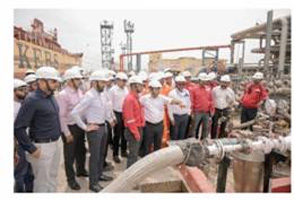
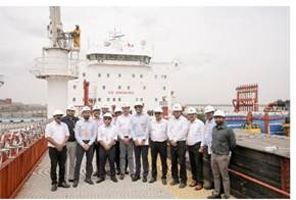
A major breakthrough came on April 2, 2026, when Kandla Port successfully conducted a shore-to-ship methanol bunkering trial, validating its operational and safety protocols. The exercise, carried out in collaboration with leading industry players, including Stolt Tankers, J M Baxi, Aegis Vopak and Indian Oil Corporation Ltd., confirmed compliance with global best practices, with on-site verification by DNV experts.
Highlighting the broader economic impact, Sonowal added: “Our ports are evolving into hubs of innovation and sustainability. Initiatives like methanol bunkering not only reduce emissions but also open new opportunities for investment, technology collaboration and job creation, reinforcing India’s meaningful contribution to the emerging global maritime sector. This reinforces the effort to become net zero emissions by 2050, a vision of PM Narendra Modi ji.”
Looking ahead, the port aims to ensure availability of nearly 500 KTPA of RFNBO-compliant e-methanol by 2028-29, catering to deep-sea dual-fuel vessels, particularly along the high-traffic Asia-Europe trade corridor.
Following the successful trial, Kandla Port is gearing up for the next phase—ship-to-ship methanol bunkering—further strengthening its operational capabilities and global positioning.
With this bold push, Kandla Port is not just upgrading infrastructure—it is steering India into the fast lane of green maritime corridors, shaping a cleaner, resilient and future-ready shipping ecosystem.