- IEEE-led seminar spotlights RF circuits and antenna design for next-gen communications
- Student Chapter launch marks structured research, peer learning ecosystem on campus
- Space Applications Centre experts anchor sessions linking theory with real-world deployment
- “RF design is central from terrestrial networks to space systems,” underscores Dr. Krupali Donda
- Hands-on ANSYS HFSS training enables students to translate concepts into functional antenna models
SCIENCE & TECHNOLOGY BUREAU
AHMEDABAD, APR 19
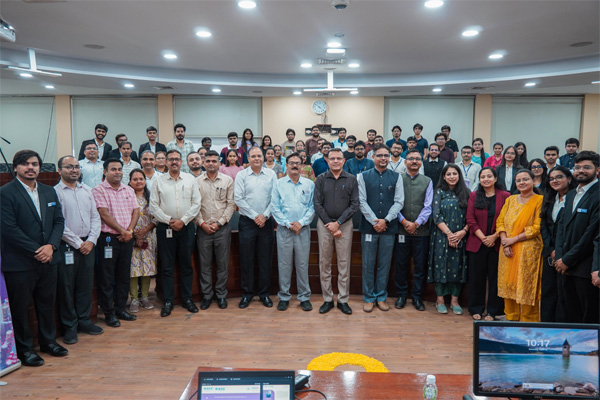
In a decisive push towards future-ready engineering, Adani University hosted a high-impact seminar on radio frequency (RF) circuits and antenna design, where experts emphasised that next-generation communication—from 5G to emerging 6G and space systems—will be powered by advanced RF innovation, even as the campus inaugurated its IEEE Antennas and Propagation Society Student Chapter to foster research-driven learning.
The seminar, organised in collaboration with the Institute of Electrical and Electronics Engineers Antennas and Propagation Society and Microwave Theory and Techniques Society Gujarat Joint Chapter, brought together students, researchers, and professionals at a time when RF technologies underpin modern communication ecosystems.
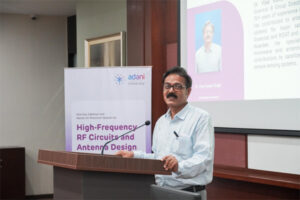
Opening the session, Dr. Krupali Donda highlighted the expanding role of RF design, noting its relevance across platforms ranging from terrestrial communication networks to advanced space-based systems. The programme moved from conceptual foundations to applied insights, reinforcing the need for industry-aligned technical education.
Offering an industry perspective, experts from the Space Applications Centre—a key arm of Indian Space Research Organisation—shared cutting-edge developments. Chief Guest Vijay Kumar Singh outlined advancements in antenna technologies and their critical role in communication and space applications, while Dhaval Pujara elaborated on design principles and emerging trends, bridging theory with deployment realities.
A key highlight was the practical session led by Alok Kumar Singhal, who introduced participants to antenna simulation using ANSYS HFSS, a widely used electromagnetic simulation tool. The hands-on training enabled participants to convert theoretical understanding into real-world design approaches.
With applications spanning 5G, evolving 6G networks, satellite communications, and radar systems, the seminar underscored the strategic importance of RF technologies. By integrating expert-led sessions with practical exposure and launching a dedicated student chapter, the initiative reflects Adani University’s continued commitment to aligning academic learning with industry and research frontiers.