- Principal Secretary M. Thennarasan calls sports-led urban growth a once-in-a-generation opportunity for Gujarat’s sustainable transformation
- Says Ahmedabad’s Metro will be extended up to Sardar Vallabhbhai International Airport as announced by the Centre, boosting future-ready mobility
- IGBC Green Gujarat Summit 2026 highlights Net Zero real estate, hospitality, low-carbon infrastructure and green construction
- Gujarat emerges as India’s fourth-largest green building state with over 1,574 registered projects spanning 1.5 billion sq. ft.
- Government, industry and academia pledge collaboration to create resilient, climate-conscious and globally competitive cities
R MNANICKAVASAGAM
AHMEDABAD, JUNE 13
Declaring that sports infrastructure can become the engine of urban regeneration while sustainability must become a way of life, Gujarat Urban Development and Urban Housing Department Principal Secretary M. Thennarasan, IAS, on Friday urged policymakers, developers and citizens to build cities that are globally competitive yet environmentally responsible.
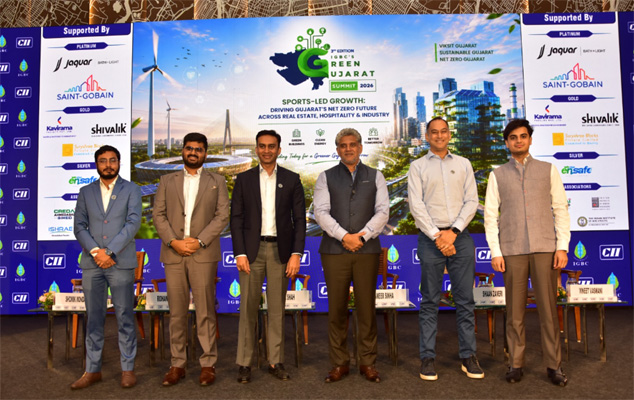
Addressing the 3rd IGBC Green Gujarat Summit 2026 in Ahmedabad, Thennarasan said Gujarat is at a defining juncture as it eyes marquee global sporting events, adding that every new infrastructure project must embed climate resilience and resource efficiency from the drawing board itself.
“Gujarat stands at a defining moment in its urban development journey. As we aspire to host global events such as the 2036 Olympic Games and the World Aquatics Championships, we have a unique opportunity to use sports infrastructure as a catalyst for urban regeneration. Around the world, major sporting events have transformed cities by accelerating investments in mobility, housing, hospitality and public infrastructure. We envision a similar transformation for Ahmedabad and Gujarat—one that is globally competitive, inclusive and future-ready. Metro will be extended up to Sardar Vallabhbhai International Airport in Ahmedabad as per the Centre’s announcement. However, rapid urbanisation and growing resource consumption demand a strong commitment to sustainability. Clean air, efficient water management and resource-conscious construction practices must become integral to the way we build and live. I urge all stakeholders to embed sustainability into both development projects and daily practices to ensure a better future for generations to come. Through progressive policies and incentives, including support for affordable housing, the Government of Gujarat is committed to fostering sustainable urban growth. Our objective is not only to create world-class infrastructure for global events but also to build resilient, liveable and environmentally responsible cities.”
The summit, organised by the Confederation of Indian Industry’s Indian Green Building Council (IGBC), centred on the theme “Sports-Led Growth: Driving Gujarat’s Net Zero Future across Real Estate, Hospitality & Industry.”
Bringing together policymakers, architects, developers, hospitality leaders, sustainability experts and urban planners, the event explored how investments in sports infrastructure can catalyse green urban development, climate-resilient hospitality ecosystems and low-carbon industrial growth.
Gujarat strengthens its green credentials
The summit showcased Gujarat’s remarkable sustainability journey, with the state now ranking fourth nationally in green buildings, boasting 1,574 registered projects covering over 1.5 billion sq. ft. and 750 certified projects spanning more than 1.07 billion sq. ft.
Its green portfolio extends across commercial, residential, industrial, logistics, transit infrastructure and Net Zero developments, reflecting the mainstreaming of sustainable construction practices.
The inaugural session witnessed participation from leading industry voices including Sameer Sinha, Ar. Jayesh Hariyani, Taral Shah and Shaan Zaveri, alongside developers, architects, sustainability professionals and urban planners, reinforcing Gujarat’s ambition to become a national benchmark in green infrastructure.
Sports economy can power sustainable cities
Welcoming delegates, Taral Shah, Chairman, IGBC Ahmedabad Chapter and Managing Director, Shivalik Group, said:
“Sports-led development presents a unique opportunity to drive sustainable urban growth. Every investment in sports infrastructure creates a multiplier effect across housing, hospitality, mobility and public infrastructure. As Gujarat continues its growth journey, our focus must be on ensuring that development is resource-efficient, climate-responsive and aligned with India’s Net Zero aspirations. By embedding sustainability into planning, design and construction, Gujarat can create future-ready cities that are both economically vibrant and environmentally responsible.”
Setting the summit’s context, Ar. Jayesh Hariyani, Immediate Past Chairman, IGBC Ahmedabad Chapter and Chairman & Managing Director, INI Design Studio, observed:
“Across the world, sports have emerged as catalysts for urban transformation, driving investments in infrastructure, tourism, hospitality and economic growth. For Gujarat, this presents a unique opportunity to build cities that are not only more vibrant and connected, but also more sustainable and resilient. As we plan, sustainability must be at the heart of every development decision. By integrating green building practices, resource efficiency and climate-responsive design, we can create a model of growth that supports both economic progress and environmental stewardship.”
Net Zero real estate and green hospitality dominate discussions
One of the summit’s key attractions was the panel on “Net Zero Real Estate: The Developers’ Role in Defining Gujarat’s Urban Growth,” chaired by Sameer Sinha, where leading developers discussed ESG integration, climate-responsive architecture, energy-efficient developments and the business advantages of sustainable real estate.
Another major session, chaired by Ar. Jayesh Hariyani, examined “Sports-Led Growth: Building Gujarat’s Green Hospitality & Sustainable Infrastructure Future,” focusing on eco-friendly hotels, smart amenities and sustainable tourism ecosystems capable of supporting international sporting events.
Experts highlighted that hospitality infrastructure designed around energy efficiency and environmental responsibility could significantly strengthen Gujarat’s sports tourism ecosystem.
Low-carbon construction takes centre stage
The summit also hosted a technical session on “Low-Carbon Construction Solutions for Gujarat’s Emerging Infrastructure,” chaired by Shaan Zaveri, featuring presentations on sustainable materials, water-efficient technologies and innovative building systems capable of reducing the carbon footprint of future projects.
Specialised workshops on low-carbon cement and green interiors further underscored the industry’s growing focus on lifecycle emissions, sustainable design innovation and healthier indoor environments.
The deliberations concluded with a unanimous call for deeper collaboration between government, industry and academia to accelerate green building adoption and position Gujarat as a leader in climate-resilient, Net Zero urban development.