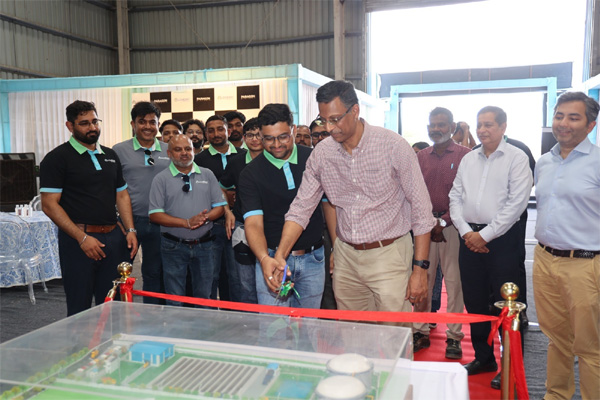

- Alchemy Cleantech and Paragon Biofuels unveil a landmark waste-to-energy facility in Gujarat
- Plant to process 43,800 tonnes of organic waste annually and generate 2,373 tonnes of Bio-CNG
- Project expected to cut 17,000 tonnes of CO₂ emissions every year while creating nearly 200 livelihoods
- Partners chart ambitious roadmap for a nationwide circular energy ecosystem powered by clean fuel and sustainable agriculture
NE BUSINESS BUREAU
ANKLESHWAR, JUNE 23
In a major boost to India’s clean-energy transition and circular economy ambitions, Alchemy Cleantech and Paragon Biofuels on Monday inaugurated the Ankleshwar Bio-CNG Plant, a state-of-the-art waste-to-energy facility designed to transform organic waste into clean fuel, bio-fertilisers and sustainable livelihoods.

Developed through a strategic partnership between the two companies, the Ankleshwar facility represents a significant milestone in India’s quest for energy security, decarbonisation and resource efficiency. The project underscores a new model of sustainable development where waste is converted into valuable resources while generating economic opportunities for local communities.
The Bio-CNG plant has been engineered to process 43,800 tonnes of organic waste annually, converting it into 2,373 tonnes of Compressed Bio-Gas (CBG), a cleaner and renewable alternative to conventional CNG.
The environmental impact is equally impressive. The facility is expected to prevent 17,000 tonnes of carbon dioxide emissions every year, an achievement equivalent to preserving 6,272.6 hectares of forest land or saving nearly 7.95 million litres of petrol annually. The plant will also produce 7,300 tonnes of solid Fermented Organic Manure (FOM) and 27,375 cubic metres of liquid FOM every year, creating nutrient-rich bio-fertilisers that can enhance soil health and support sustainable farming practices.
Speaking on the occasion, Sushant Arora, Founder, Alchemy Cleantech, said: “At Alchemy Cleantech, we believe the future of energy lies not in extraction, but in regeneration. The Ankleshwar Bio CNG Plant is proof that waste is not a problem to be buried — it is a resource waiting to be unlocked. Together with Paragon Biofuels, we are taking a decisive step toward building a truly circular energy economy in India, where every tonne of organic waste becomes clean fuel, fertile soil, and shared prosperity. This is just the beginning; our vision is a network of such plants across the country that collectively transform how India produces and consumes energy.”
Apart from its environmental benefits, the project is expected to become a strong engine of inclusive economic growth. The facility will directly employ around 50 people while supporting approximately 150 indirect jobs through waste collection, transportation, aggregation and allied service networks.

Highlighting the long-term potential of the sector, Susmit Gupta, Managing Director, Paragon Biofuels, said: “Waste-to-clean-energy will be one of the defining pillars of India’s energy security over the coming decades. At Paragon Biofuels, we have strong conviction in this opportunity and are committing INR 500 crores to help scale the sector. The Ankleshwar Bio CNG Plant is an important milestone that demonstrates how capital, technology, and policy can align to create sustainable infrastructure with measurable impact. We are investing in a future where organic waste becomes a strategic national resource—producing clean fuel, supporting rural livelihoods, reducing emissions, and strengthening India’s journey towards a circular and energy-secure economy.”
Industry observers view the Ankleshwar project as a blueprint for future waste-to-energy infrastructure across India’s industrial and urban hubs. The inauguration also signals the beginning of a broader expansion strategy by Alchemy Cleantech and Paragon Biofuels to establish a network of scalable and replicable Bio-CNG facilities nationwide.
With India accelerating its push towards net-zero emissions, renewable energy adoption and sustainable waste management, the Ankleshwar Bio-CNG Plant stands as a powerful example of how innovation, investment and environmental stewardship can converge to create lasting economic and ecological value.