- ‘Know Yourself – Sexual Knowledge For You’ positions sexual literacy as a public-health imperative, not a taboo conversation
- Veteran educationist Dr. Bhadrayu Vachhrajani says the book bridges the gap between classroom biology and real-life sexual awareness
- Built on feedback from over 4,000 adolescents, the English edition addresses consent, respect, mental health, online risks, myths and relationships
- Author urges parents, teachers and healthcare professionals to embrace evidence-based conversations instead of silence and misinformation
- Scientifically illustrated guide for readers aged 13 and above launched in Ahmedabad at ₹299 with an appeal to normalise responsible sex education
R MANICKAVASAGAM
AHMEDABAD, JUNE 26
For centuries, Vatsyayana’s Kamasutra has remained one of India’s best-known texts associated with sexuality. Can India reclaim its civilisational comfort with discussing human relationships while replacing myths and embarrassment with scientific understanding? In an era shaped by smartphones, social media, misinformation and mental health concerns, educator and researcher Dr. Bhadrayu Vachhrajani believes India needs a very different conversation—one rooted not in erotic literature but in scientific understanding, emotional maturity and responsible sexual behaviour.
That philosophy forms the foundation of “Know Yourself – Sexual Knowledge For You”, an English-language guide launched in Ahmedabad under the theme “Sex Education: Not Silence.” Published by ZCAD Publication and priced at ₹299, the book seeks to make evidence-based sexual knowledge accessible to adolescents, young adults, parents, teachers and counsellors.
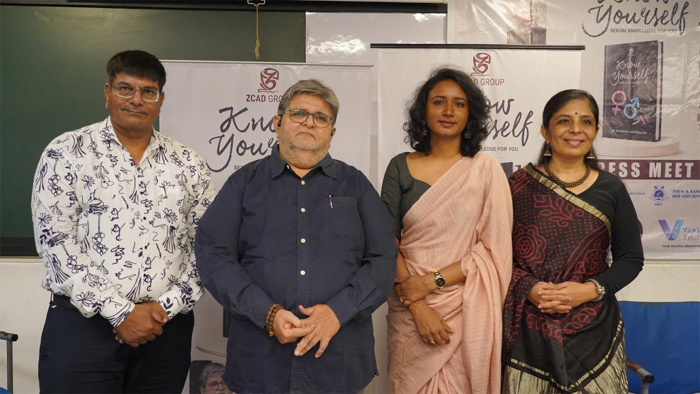
The launch at the Ahmedabad Management Association (AMA) was accompanied by a panel discussion featuring senior gynaecologist Dr. Mitali Vasavada, psychologist Rashmi Jha, academic Dr. Margi Hathi and moderator Tejal Vasavada, all calling for informed dialogue to replace stigma and silence.
Drawing on a 36-year career in education and India’s first Ph.D. in Sex Education completed 38 years ago, Dr. Vachhrajani said the book was written to bridge a glaring gap in India’s sexual literacy.
“While the Kamasutra belongs to a different historical and cultural context, Know Yourself is a scientific guide for today’s generation. Sexual knowledge today is not merely about reproduction or anatomy—it is about consent, respect, personal boundaries, emotional wellbeing, digital-age challenges, healthy relationships and responsible decision-making. The purpose of this book is to replace myths with facts and fear with understanding.”
The author said the need for such a resource became evident because sex education continues to remain uncomfortable even inside classrooms.
“Although the reproductive system is included in the senior secondary biology syllabus, many teachers still hesitate to teach it and simply ask students to read it on their own. That silence creates confusion, and confusion is quickly filled by misinformation from peers and social media. This book attempts to fill that vacuum with reliable, self-learning material for everyone above 13 years of age.”
Before preparing the English edition, Dr. Vachhrajani said he incorporated feedback from more than 4,000 students and adolescents, while building on the success of over 12 editions of the Gujarati bestseller Tamari Jatne Olkho.
He emphasised that the book consciously balances scientific accuracy with Indian social realities.
“We have presented sensitive subjects with dignity, cultural responsibility and scientific credibility. The objective is neither to sensationalise nor moralise, but to educate. The book explains human development from childhood to parenthood through simple language and scientific illustrations, making it equally useful for students, parents, teachers, counsellors and healthcare professionals.”
The author said the publication should not be viewed merely as a private reading guide but as a wider social intervention.
“I hope this becomes more than a book. It should encourage families to begin conversations, help teachers teach confidently, support counsellors and doctors in awareness programmes, and ultimately contribute to better public health. Sexual education is not about promoting sexual activity—it is about promoting informed, respectful and responsible human behaviour.”
During the discussion, Dr. Mitali Vasavada urged parents to build trusting relationships with children and seek authentic medical advice instead of relying on misinformation, while psychologist Rashmi Jha stressed the importance of professional counselling for adolescents struggling with sexual confusion, anxiety or compulsive behaviour rather than suffering in silence.
The organisers said the initiative reflects ZCAD Group’s commitment to fostering long-term social awareness by encouraging scientific thinking and healthier attitudes towards sexuality among future generations.