NE ENERGY BUREAU
NEW DELHI/MUMBAI, AUG 3
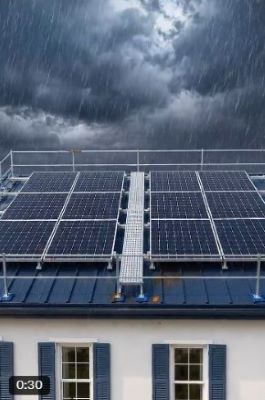
India is racing towards a solar future—but the real test is whether the infrastructure carrying that ambition can withstand decades of sun, rain, humidity and corrosion. As the country accelerates its clean-energy transition, the next frontier is no longer simply installing more solar panels, but ensuring that the steel beneath them remains strong enough to support the green-energy revolution for the long haul.
#Magnelis® by #AMNSIndia offers lightweight, strong and corrosion-resistant steel solutions for rooftop solar structures, ensuring lasting performance in demanding environments.
Link: https://t.co/favP8iccud#SmarterSteelsBrighterFutures pic.twitter.com/PRgoFfcPO7
— ArcelorMittal Nippon Steel India (@AMNSIndia) July 30, 2026
With India’s solar capacity expected to more than double from around 135 GW to 300 GW by 2030, ArcelorMittal Nippon Steel India (AM/NS India) is spotlighting the growing importance of durable, corrosion-resistant steel for solar mounting structures and associated infrastructure.
- As solar capacity races towards 300 GW, AM/NS India makes a case for infrastructure built to last
- Corrosion-resistant Magnelis® steel aims to extend solar mounting structures’ service life and curb lifecycle costs
- Nearly 6 GW of solar infrastructure already supported through 2 lakh tonnes of advanced steel
- Hazira’s dedicated 5-lakh-tonne annual production line adds muscle to India’s renewable-energy supply chain
- AM/NS India targets 1.8 tonnes CO₂ per tonne of crude steel by FY2030 in its decarbonisation drive
The company argues that as solar installations spread across India’s diverse and often harsh climatic conditions, infrastructure designed for 25 years or longer will be critical to protecting asset performance, reducing maintenance and optimising the economics of renewable-energy investments.
When the green revolution needs a stronger backbone
The solar panel may capture the sunlight, but the steel structure holds the clean-energy ambition in place.
AM/NS India has highlighted Magnelis® steel, an ArcelorMittal product featuring a patented zinc-aluminium-magnesium coating technology engineered for superior corrosion resistance. Its distinctive self-healing properties are designed to provide enhanced protection and durability, helping solar mounting structures withstand demanding environmental conditions.
The proposition is particularly relevant as India expands solar projects across coastal, humid, industrial and other corrosion-prone environments.
Longer-lasting structures can potentially mean fewer maintenance interventions, longer asset life and lower lifecycle costs, making durability an increasingly important consideration alongside the upfront cost of renewable-energy infrastructure.
6 GW solar footprint, 2 lakh tonnes of steel
The technology is already making its mark on the renewable-energy landscape.
Magnelis® steel has contributed to approximately 6 GW of solar energy infrastructure, with around 200,000 tonnes supplied for renewable-energy projects.
AM/NS India launched Magnelis® in September 2024 and has established a dedicated production line with an annual capacity of 5 lakh tonnes at its flagship Hazira plant in Gujarat.
The move adds domestic manufacturing strength to an energy transition increasingly dependent on reliable local supply chains for critical infrastructure.
‘Infrastructure designed to last’
Ranjan Dhar, Director & Vice President, Sales & Marketing, AM/NS India, said the country’s renewable-energy expansion must be matched by an equal focus on durability.
“As India scales up solar capacity to meet its clean energy targets, equal attention must be paid to the durability and longevity of the infrastructure being created,” he said.
Dhar added: “Long-lasting, corrosion-resistant steel solutions can help maximise asset performance, optimise lifecycle costs and strengthen the reliability of renewable energy installations.”
He said AM/NS India was committed to supporting the clean-energy transition through innovative and sustainable steel solutions, adding that the company aimed to help build “infrastructure designed to last” and contribute meaningfully to India’s green-growth journey.
From green power to greener steel
AM/NS India’s renewable-energy proposition extends beyond supplying steel to solar projects. Its own decarbonisation roadmap is emerging as another pillar of its sustainability strategy.
ArcelorMittal has commissioned a 975 MW hybrid renewable-energy project in Andhra Pradesh, comprising 604 MW solar, 340 MW wind and pumped hydro storage. The project is expected to meet around 20% of the Hazira plant’s energy requirements while reducing carbon emissions by approximately 1.5 million tonnes annually.
AM/NS India is also working towards replacing 100% of Hazira’s grid power requirements with renewable energy by 2030.
The company is targeting a reduction in emissions intensity to 1.8 tonnes of CO₂ per tonne of crude steel by FY2030, reinforcing its longer-term decarbonisation roadmap.
As India’s first Green Steel-certified producer, AM/NS India is also seeking to strengthen a domestic manufacturing and supply-chain ecosystem capable of supporting the country’s expanding renewable-energy infrastructure.
The next test: Building solar assets for the long run
Government programmes such as PM Surya Ghar and PM-KUSUM are expected to accelerate solar adoption across India, widening the market for solar infrastructure and creating a larger conversation around the materials that underpin it.
For developers, manufacturers and policymakers, the equation is increasingly moving beyond how fast India can install solar capacity to how reliably that capacity can perform over its intended lifetime.
That makes corrosion resistance, structural durability, maintenance requirements and lifecycle economics increasingly important pieces of the renewable-energy puzzle.
India’s clean-energy ambitions are measured in gigawatts. But their success will ultimately depend on the strength of every component supporting those gigawatts.
The solar revolution may be powered by sunlight—but its lasting foundations will need steel that can take the heat.