- 80–90% units down, 20,000 workers jobless—industry seeks urgent Centre–State intervention
- 300% spike in LABSA prices, alleged artificial shortage trigger collapse
- MSMEs crushed between input costs & MNC pricing power in rural markets
- Associations demand quota, price stabilisation & anti-hoarding action
- Diwali warning: ‘No relief now, darkness for thousands of worker families’
NE BUSINESS BUREAU
AHMEDABAD, APR 11
A silent industrial emergency is unfolding in Gujarat—one that threatens not just small businesses, but the economic dignity of tens of thousands of families. The state’s detergent and soap MSMEs—long the backbone of affordable hygiene products in rural India—are collapsing under the weight of a 300% surge in key raw material prices and an alleged artificial supply squeeze. With 80–90% of units already shut and up to 20,000 workers pushed into unemployment, industry bodies are issuing an urgent, coordinated appeal to both the Centre and the state: act now or risk a permanent wipeout of a vital sector.
Ground zero: MSME collapse at scale
Gujarat houses nearly 800–850 small and medium detergent units, sustaining 25,000–30,000 worker families. Today, the sector is in freefall. The closures are not cyclical—they are systemic, driven by runaway input costs and disrupted supply chains that have made production economically unviable.
The LABSA shock: 300% Price surge & supply squeeze
At the heart of the crisis is Acid Slurry (LABSA)—the primary input for detergent manufacturing. Its price has skyrocketed from ₹105 (Oct–Nov) to nearly ₹300, a near tripling in months.
Industry leaders allege that manufacturers of LABSA are leveraging global geopolitical disruptions to create an artificial shortage, distorting domestic supply. Parallel spikes in allied inputs—chemicals and packaging (soap packs jumping from ₹36 to ₹70)—have compounded the squeeze.
MSMEs vs MNCs: An uneven playing field
The fallout is starkest in rural markets where MSMEs traditionally compete with large corporations. While multinational players continue to retail 200g soap at ₹10 (likely from older, lower-cost inventories), small manufacturers say they cannot even price 125g at ₹10 under current costs.
This has triggered fears within the industry of a market squeeze-out, where sustained cost pressures could permanently displace local manufacturers.
Voices from the Industry: A Unified SOS
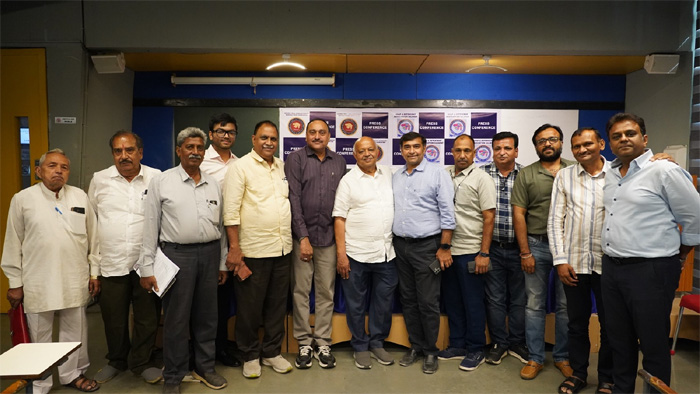
Leaders across two major bodies—the Gujarat Small Scale Detergent Manufacturers Association (GSSDMA) and the Soap and Detergent Association Gujarat (SDAG) —have come together to demand immediate intervention:
- Naresh Jain, Chairman, GSSDMA: “The industry’s very existence is at stake. Without urgent relief, MSMEs will be wiped out.”
- Deepakbhai Sutariya, Secretary, GSSDMA: “A 300% hike in LABSA has made production impossible. Units are shutting by the day.”
- Hitesh Pitroda, Joint Secretary, GSSDMA: “This is not just a price issue—it is a supply crisis. Artificial shortages must be investigated.”
- Neerajbhai, Committee Member, GSSDMA: “Thousands of workers have already lost jobs. The social impact is devastating.”
- Rameshbhai Sudesha, Chairman, SDAG: “Small manufacturers cannot compete with MNC pricing under current conditions. The field is no longer level.”
- Hemangbhai Patel, Secretary, SDAG: “If immediate steps are not taken, Diwali will bring darkness to thousands of worker families.”
Policy prescriptions: What needs to be done—now
Industry bodies have outlined a targeted, time-bound response framework:
- Raw Material Reservation: Allocate 20–30% LABSA quota exclusively for MSMEs
- Price Stabilisation Mechanism: Temporary cap or oversight on key input pricing
- Anti-Hoarding Enforcement: Probe alleged artificial shortages and cartelisation
- Credit & Working Capital Support: Emergency MSME relief lines via banks
- GST/Input Relief: Temporary tax easing on critical inputs to restore viability
Given the strategic importance of MSMEs—contributing significantly to employment and local supply chains—policy experts argue for joint Centre–State task force action to stabilise the sector.
A preventable crisis—if policymakers act
India’s detergent industry is not just about consumer goods; it is a public health enabler and a rural economy stabiliser. Allowing its MSME base to erode could have cascading effects—from job losses to reduced affordability of essential hygiene products.
The message from Gujarat is clear: this is not a market correction—it is a market failure. With decisive intervention, recovery is possible. Without it, the damage may be irreversible.