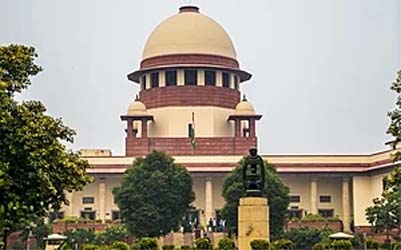
- SC flags need to examine fingerprint, iris verification for future elections
- Bench led by CJI Surya Kant says proposal can’t apply to ongoing Assembly polls
- Plea cites ‘ghost voting’ and electoral fraud as threat to democracy’s purity
NE LEGAL BUREAU
NEW DELHI, APR 13
In a significant development that could reshape India’s electoral framework, the Supreme Court of India on Monday agreed to examine a plea seeking the introduction of biometric verification—fingerprint and iris scans—at polling stations to prevent duplicate and fraudulent voting.
A bench comprising Chief Justice Surya Kant and Justice Joymalya Bagchi clarified that such measures cannot be implemented for the ongoing state Assembly elections, but left the door open for future electoral reforms.
“However, whether such a recourse deserves to be followed before the next parliamentary election and/or state assembly elections needs to be examined. Issue notice,” the bench observed while seeking responses from the Centre, the Election Commission of India, and several states.
The plea, filed by advocate Ashwini Kumar Upadhyay, raises serious concerns over electoral malpractices, arguing that existing safeguards are insufficient to curb identity fraud during voting.
“The injury to citizens is extremely large as bribery, undue influence, personation, duplicate voting and ghost voting still affects the purity and integrity of the electoral process,” the petition submitted.
The case is expected to trigger a wider constitutional and technological debate on balancing voter privacy with electoral transparency, especially as India explores modernisation of its democratic processes.
Legal experts note that while biometric authentication could strengthen voter identification, it may also raise concerns around data protection, infrastructure readiness, and inclusivity—issues likely to be closely examined as the matter proceeds.