R ARIVANANTHAM
CHENNAI, APR 24
A complex web of caste equations, personal rivalries and emerging political forces is reshaping the electoral battlefield in Tamil Nadu, raising a critical question: did the BJP–AIADMK alliance underestimate the disruptive potential of smaller parties and breakaway leaders?
- Multi-cornered contest dents bipolar narrative as smaller forces gain tactical relevance
- V. K. Sasikala–S. Ramadoss axis seen targeting AIADMK vote base in key regions
- Seeman and Vijay add new layers to triangular-plus battle
- Community arithmetic—Thevar, Vanniyar and Devendrakula Vellalar votes under spotlight
- Narrow margins and electoral roll revision factor heighten impact of “spoilers”
- BJP–AIADMK combine faces test of consolidation amid splintered mandates
What was once expected to be a straight contest between the Dravidian majors has evolved into a multi-cornered fight, with outfits led by V. K. Sasikala, S. Ramadoss, Seeman and K. Krishnasamy emerging as potential vote-splitters in crucial constituencies.
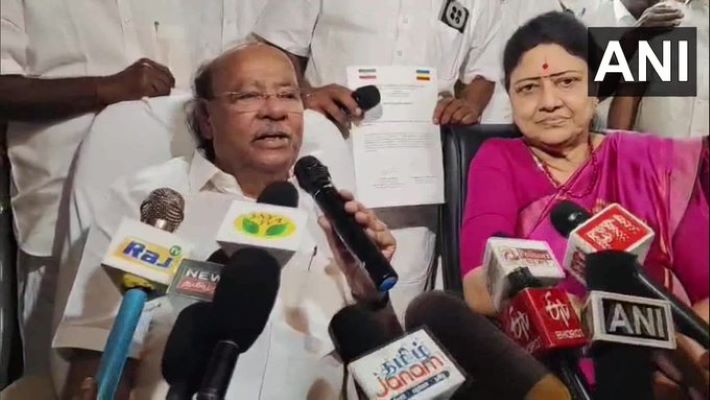
At the centre of the churn is Sasikala—popularly known as “Chinnamma”—who has floated the All India Puratchi Thalaivar Makkal Munnetra Kazhagam (AIPTMMK) and aligned with a faction of the PMK led by Ramadoss, often referred to as “Dr Aiyya”. Political observers say the alliance may not be in contention to win seats but is strategically positioned to dent the AIADMK’s traditional vote bank.
Sasikala’s moves in southern districts—particularly among Thevar and Mukkulathor voters—have drawn attention. By fielding influential community leaders in seats like Thirumangalam, Usilampatti and Andipatti, her camp is attempting to tap into perceived discontent against AIADMK leadership.
Parallelly, Ramadoss has focused on Vanniyar-dominated belts, fielding candidates in nearly 37 constituencies. His sharp rhetoric over alleged “betrayal” within political alignments could sway sections of the Vanniyar vote, a factor that may prove decisive in tightly contested seats.
Adding to the NDA’s concerns, K. Krishnasamy has fielded candidates in about 61 constituencies, particularly in western and southern regions, after failed alliance talks. His pointed attacks on AIADMK leadership signal fragmentation within potential support bases.
Meanwhile, the presence of Seeman and Vijay has further expanded the contest, drawing youth and first-time voters into alternative political narratives—making the electoral math even more unpredictable.
The stakes are amplified by historical data: in the 2021 elections, over 25 constituencies were decided by margins under 3,000 votes. With the added variable of electoral roll revisions and increased turnout, even a few thousand votes siphoned off by smaller players could swing outcomes.
While the BJP–AIADMK alliance remains focused on consolidating its base, the growing influence of these regional actors underscores a shifting political landscape—where even those not in direct contention for power can play decisive roles.
As one senior political observer noted, “In Tamil Nadu’s evolving electoral matrix, victory may not just depend on who gains votes—but on who loses fewer to the margins.”