NE HEALTH BUREAU
CHENNAI, APR 7
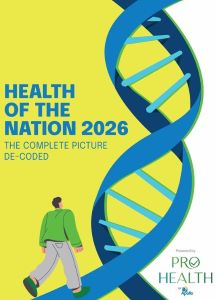
India’s health crisis is no longer a future threat—it is unfolding silently and far earlier than expected, warns the latest Health of the Nation 2026 report released by Apollo Hospitals on World Health Day.
India moves forward every day—
it’s time our health awareness does too.
Discover what lies beneath.#HealthOfTheNation2026 https://t.co/RLTIq6o4l5 pic.twitter.com/ttyqWdcoiO— HospitalsApollo (@HospitalsApollo) April 7, 2026
Drawing from over three million preventive health assessments conducted in 2025, the report reveals a striking shift: diseases are appearing younger, progressing unnoticed, and often slipping through conventional diagnostics—making a compelling case for proactive and personalised healthcare.
- Apollo Hospitals unveils Health of the Nation 2026 on World Health Day
- 2 in 3 young adults at risk of NCDs; warning signs emerging before symptoms
- 8 in 10 working professionals overweight; diabetes and hypertension rising silently
- Women face hidden burdens—anaemia, early breast cancer demand urgent screening
- Advanced diagnostics reveal risks missed by routine tests, from fatty liver to heart disease
- Shift from reactive care to predictive, personalised healthcare becomes critical
At the heart of the findings is a worrying trend—two in three young adults are already at risk for non-communicable diseases (NCDs). Among working populations, nearly half have prediabetes or diabetes, while 8 in 10 are overweight, signalling a widespread but largely invisible health burden.
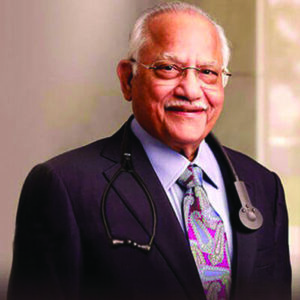
Highlighting the need for a paradigm shift, Dr. Prathap C Reddy, Chairman, Apollo Hospitals Group said: “The true strength of a nation depends on the well-being of its people. For too long, health checks were viewed as routine blood tests and vitals—merely a reactive response driven by fear. Today, we are signalling a significant change. Genuine health is personal, proactive, and highly precise. Since no two lives are the same, our approach to prevention must be as individual as the people we serve. We are pushing the boundaries of science – from gut microbiome health to advanced long-term risk patterns – because a comprehensive health check is the ultimate act of self-stewardship.”
Young & Working India: Risks Before Symptoms
We power India’s workforce.
Health powers us.The full picture drops 7 April.
Health of the Nation 2026.#ApolloHospitals #HealthOfTheNation pic.twitter.com/JzQxAEmYl0— HospitalsApollo (@HospitalsApollo) April 6, 2026
The report reveals that health risks are already embedded early in life. One in five individuals under 30 is prediabetic—yet at this stage, reversal is possible, with 28% managing to return to normal through intervention. In contrast, only 7% above 50 achieve reversal.
More than half of those assessed were obese or had abnormal cholesterol levels. Nearly 70% were deficient in Vitamin D, and about half had low Vitamin B12. Alarmingly, two-thirds of individuals under 30 showed poor physical fitness—affecting flexibility, strength, and balance long before symptoms emerge.
Women’s Health: The Hidden Burden
You think it’s just hormonal. But your body is rewriting the rules.
Don’t miss what this really means. April 7. Live on our YouTube.#ApolloHospitals #HealthoftheNation pic.twitter.com/c5cHQSmUHX
— HospitalsApollo (@HospitalsApollo) April 6, 2026
Women continue to face unique and often undiagnosed risks. Anaemia remains widespread, while breast cancer is being detected earlier—at an average age of 51, nearly a decade sooner than in Western populations. Among women over 40 screened, one in 359 had breast cancer despite showing no symptoms.
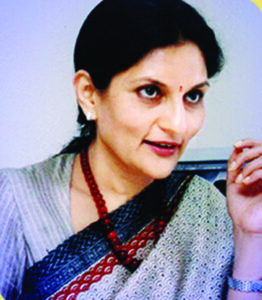
Emphasising this gap, Dr. Preetha Reddy, Vice Chairperson, Apollo Hospitals Group said: “Every woman’s well-being is a force multiplier that strengthens families, communities, and the economy. Estimates suggest that closing the women’s health gap could add up to $1 trillion annually to the global economy by 2040. Yet, our data shows that women in India continue to carry a significant health burden that often goes undetected.
At Apollo, we see women’s health as both a national priority and a shared responsibility. It begins with rethinking care through a more personalised lens, one that is aligned to a woman’s biology, life stage, and risk profile. Self-care is not a privilege; it is power and it fuels a healthier, stronger, and more prosperous India.”
Beyond Blood Tests: Hidden Risks Emerge
Your health story goes beyond what reports show.
We looked deeper.
The full picture is coming.Health of the Nation 2026 · April 7#ApolloHospitals #HealthOfTheNation pic.twitter.com/JlPxnSIXjR
— HospitalsApollo (@HospitalsApollo) April 5, 2026
The report underscores that routine tests alone may not be enough. Among those with fatty liver detected via ultrasound, 74% had normal liver enzyme levels—masking the condition. Similarly, 45% of asymptomatic individuals undergoing coronary calcium scoring showed early signs of atherosclerosis.
Gut health is emerging as a critical early indicator, with healthier individuals showing greater microbial diversity, while those with metabolic disorders saw a 9% decline.
Predictive Healthcare: The Way Forward
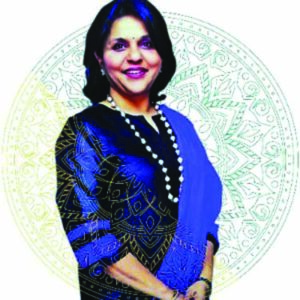
Calling for urgent action, Dr. Sangita Reddy, Joint Managing Director, Apollo Hospitals Group said: “Healthy longevity is not a matter of chance, it requires early, continuous action. The right health check at the right time can detect heart disease and cancer at Stage 1, when they are most treatable.
The future of healthcare lies in predicting disease through population data, geographic insights, and the role of lifestyle and epigenetics. Apollo ProHealth combines predictive risk assessment, advanced diagnostics, and physician-led evaluation, personalised to age, gender, and risk profile.
India must move beyond symptom-led care to a predictive, continuous, and personalised approach. Don’t postpone your health, schedule a checkup today.”
Encouragingly, the report also highlights that timely intervention works—56% of individuals with hypertension and 34% with diabetes showed improvement after following medical advice, reinforcing that early detection must be paired with sustained action.
The findings paint a clear picture: India’s health risks are no longer visible only in hospitals—they are silently embedded in everyday life, demanding awareness, early screening, and continuous care.